Two patients can walk into the clinic with the same diagnosis: triple-negative breast cancer (TNBC).
They may receive the same treatment regimen. Yet one patient’s tumour may respond, while another’s may not.
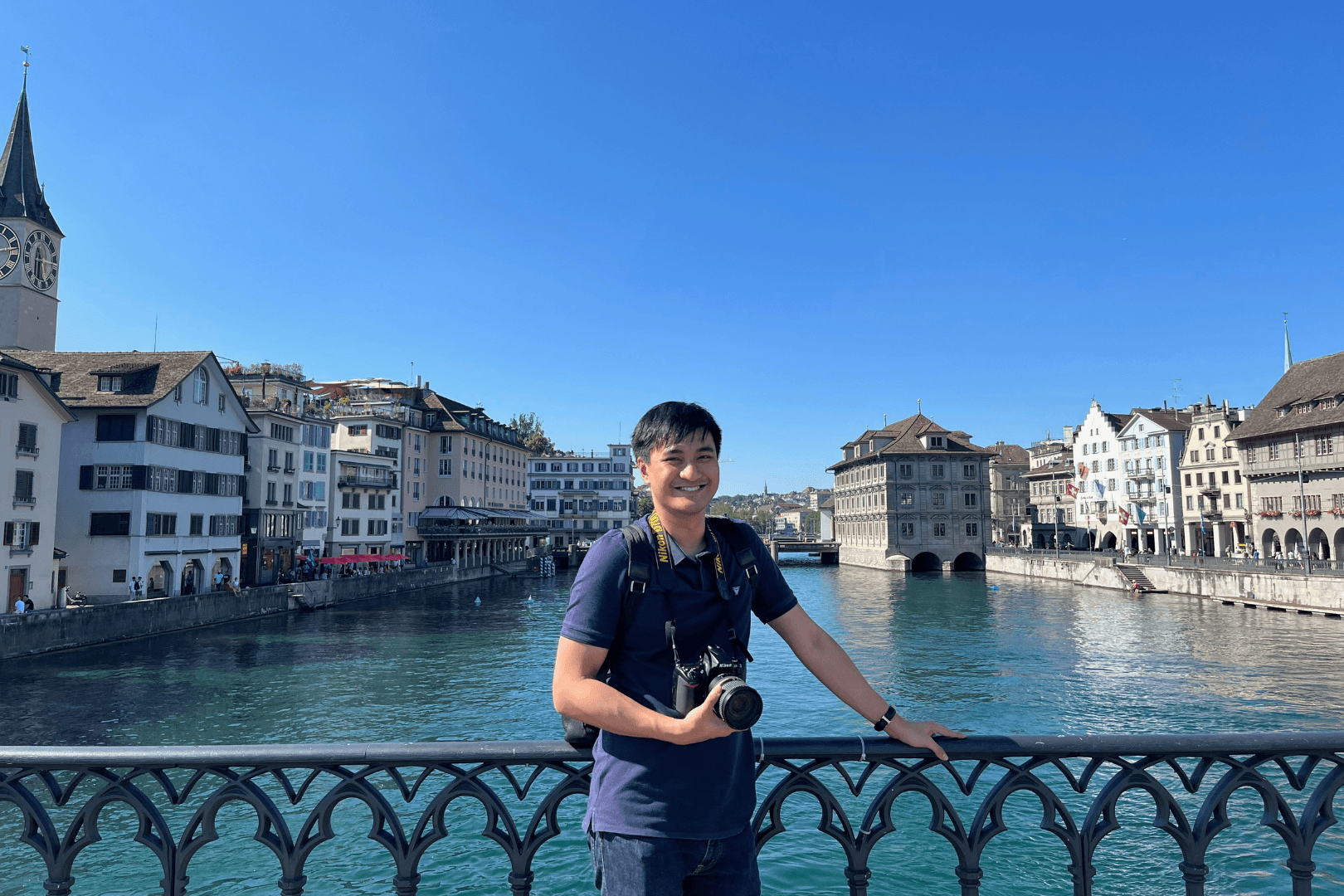
For Dr Clinton Yam (Medicine ‘08), the question of why was one he could not leave alone.
“Could the answer lie in clues hidden within the tumour itself?”
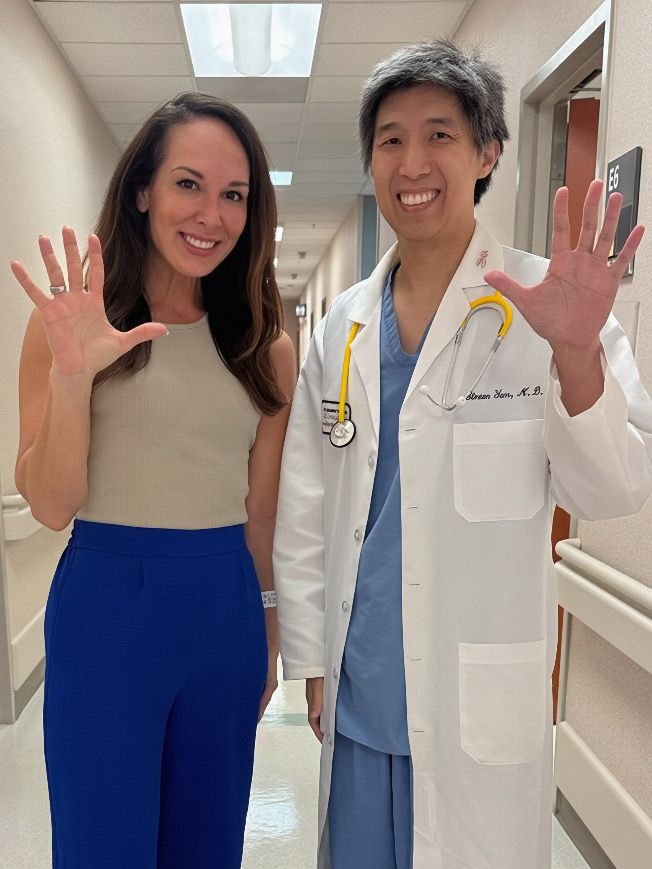
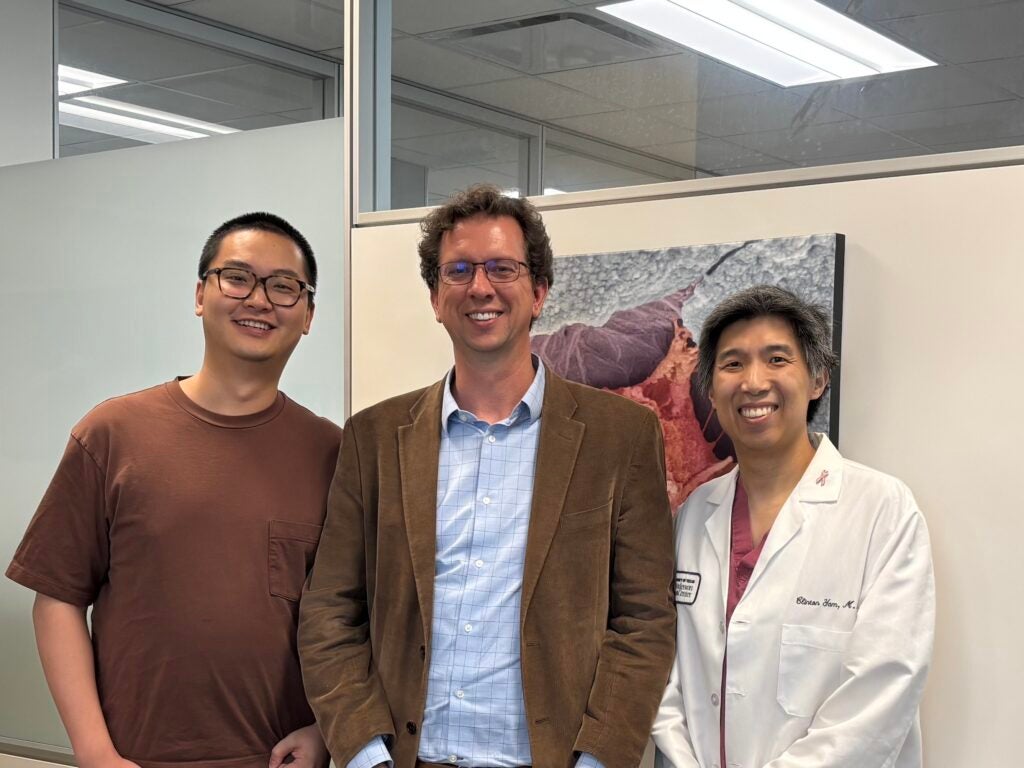
That question set in motion an ambitious research effort at the University of Texas MD Anderson Cancer Center, where Dr Yam teaches, practises, and leads Team Science and Innovation for Breast Medical Oncology.
The research effort, which started in 2015, grew to involve more than 30 collaborators across disciplines, with analysis of over 427,000 individual cells from 101 patients and spatial mapping of tumours from 44 patients.
More than a decade on, the work has produced the most detailed map yet of TNBC. Published in Nature in May 2026, the study offers novel insights to why some tumours respond to chemotherapy while others resist it.
A life shaped by science and service
Long before he was studying cancer cell by cell, Dr Yam was already fascinated by how things work.
“My parents read volumes of encyclopaedias to me at bedtime,” he recalls. “In primary school, I loved completing the cards in the Singapore Science Centre’s Young Scientist Badge Scheme, earning badges, like ‘I Am a Young Geneticist’ or ‘I Am a Young Astronomer’, and eventually had enough to fill a shirt.”
Like his love for science, the instinct to help others was seeded early.
Dr Yam shares, “Growing up, I saw how my grandparents were always trying to help others, even those they did not know very well. They frequently welcomed distant relatives from Malaysia, who stayed with us. That ingrained in me the need to be kind to others, and to do something meaningful with my life.”


Medicine was a natural intersection of the two drives. At NUS, his curiosity was sharpened into discipline, from learning to think quantitatively to approaching problems from first principles.
“That foundation in scientific thinking has been really important in my development as both a clinician and a researcher,” he says. “It taught me to look beyond what is already know and ask what is driving the behaviour or symptoms.”
Going out of your comfort zone
His path eventually took him from Singapore to the United States, first to the University of Pennsylvania for an internal medicine residency, and then to MD Anderson for a fellowship in medical oncology.
Singapore had prepared him well for the pace, discipline, and expectations of medicine. Moving to the US brought a different professional environment, one that encouraged him to develop new ways of contributing to a team.
“One of the biggest things I learned was to speak up more confidently,” he says. “In Singapore, we tend to be more reserved. In the US, sharing your perspective and expressing your ideas confidently is an important part of contributing to a team.”
At MD Anderson, that openness extended to the way researchers approached difficult problems.
“You’re surrounded by people who are trying to solve very difficult problems. We see patients with the most challenging types of cancer from all over the world. The perspective is, don’t just ask what is possible today, but what’s possible tomorrow,” he says. “So start with a rigorous question, and pursue it with rigorous science.”
Targeting TNBC
One such question was already emerging from his clinical work: what was lay beneath the broad label of TNBC, at the level of individual cells?
“TNBC is not one disease,” says Dr Yam. Accounting for 15 to 20 percent of breast cancer diagnoses, the cancer is defined by what it lacks: three proteins that fuel tumour growth—oestrogen receptors, progesterone receptors and the HER2 receptor.
Without these therapeutic targets, patients cannot benefit from hormone-blocking or HER2-targeted therapies. TNBC is also often more aggressive and associated with poorer outcomes, making the need for better treatments especially urgent.
Answering this question would require research that pushes beyond established approaches, with no guarantee of what the results might reveal. For Dr Yam, the urgency is grounded in what he sees every day in the clinic.
“I’ve seen how deeply cancer can affect a person’s life and the lives of the people who care about them,” he says. “The impact can ripple through families, relationships, and communities. Every patient has a life beyond their diagnosis, and that’s what makes finding better treatments so important.”
Starting from first principles: What is happening at the cell level?
“For a long time, what we know about TNBC has come from bulk sequencing. We take the whole tumour and sequence everything together,” explains Dr Yam. “Think of it as a smoothie. You get an overall picture of what’s in the tumour, but you don’t know which ingredients came from which cells.”
The team instead combined two complementary technologies. Single-cell sequencing revealed what was happening within individual cells, while spatial transcriptomics, which was named Nature’s Method of the Year in 2020, showed where those cells were located within the tumour.
The spatial mapping is particularly important because, as Dr Yam explains, “two cells can have very different functions depending on who their neighbours are.”
For instance, macrophages — immune cells that clear damaged cells and debris — can play very different roles within a tumour. Depending on the signals they receive from surrounding cells, they can help the immune system attack the tumour or, conversely, support tumour growth.
This context-dependent behaviour helped reveal just how complex TNBC is. For the first time, researchers identified eight distinct TNBC “neighbourhoods” or ecotypes — recurring communities of cancer, immune and support cells that live and interact together. Crucially, some of the ecotypes were linked to poorer responses to treatment.
“Using these data, we identified a 13-gene signature that may eventually help predict which tumours will respond to chemotherapy,” Dr Yam elaborates.
Team science in action
Achieving this level of granular understanding required research at a significant scale and close coordination across disciplines. “From a practical perspective, we would not have been able to pull this off 10 years ago,” Dr Yam admits.
Tumour biopsies had to be performed before treatment began for each patient; tiny needle-sized tissue samples then had to be optimised for single-cell sequencing. Then came the enormous task of sequencing hundreds of thousands of cells, spatially mapping tumours and processing vast datasets, made possible thanks to advances in computing power and data analytics.
Finally, there was the complex work of interpreting the data and relating these findings to treatment response. But technology was only part of the equation. The project also depended on team science – bringing together expertise from across disciplines.
“We have people with expertise in breast cancer, in pathology, single cell genomics, computational biology, spatial biology and immunology. And of course, data science,” Dr Yam lists. “Every person knows their area extremely well and the challenge is to figure out how these different disciplines fit together.”
Leading team science also required strong communication and translation of expertise across disciplines. Clinicians had to explain the practical realities of obtaining biopsy samples, while computational biologists had to make complex analyses such as heat maps and single-cell data accessible to the clinical team. “There must be a willingness to see the question or the problem from someone else’s perspective,” he says.
A Foundation for What Comes Next
The findings are just the beginning of rethinking how TNBC is understood and treated.
The 13-gene signature may eventually help identify which tumours are more likely to respond to chemotherapy, but it still needs further clinical validation.
“One study doesn’t answer every question,” Dr Yam emphasises. “It creates new questions and gives others the tools to answer them as well.”
Ultimately, the goal is to translate these discoveries into more effective care for patients with TNBC.
“The research has helped us understand some of the biological differences between tumours that respond to chemotherapy and those that don’t,” Dr Yam says. “If it can lead us to finding better treatments for each patient, I think that’s what will make the work truly meaningful to me.”
-
What AI Can’t DoMr Xue Wen Tan (Engineering ‘19, PhD ‘25) became an AI scientist after gradu... -
The Voice That Went ViralA decade after joining her family’s Michelin Bib Gourmand restaurant, Ms Zara ... -
Delayed, More Deliberate, and Less Fertile: What the Latest General Household Survey Tells Us About Marriage in SingaporeSingaporeans aren't marrying less — they're marrying later and more deliberate...