
When should young Singaporeans start thinking seriously about housing?
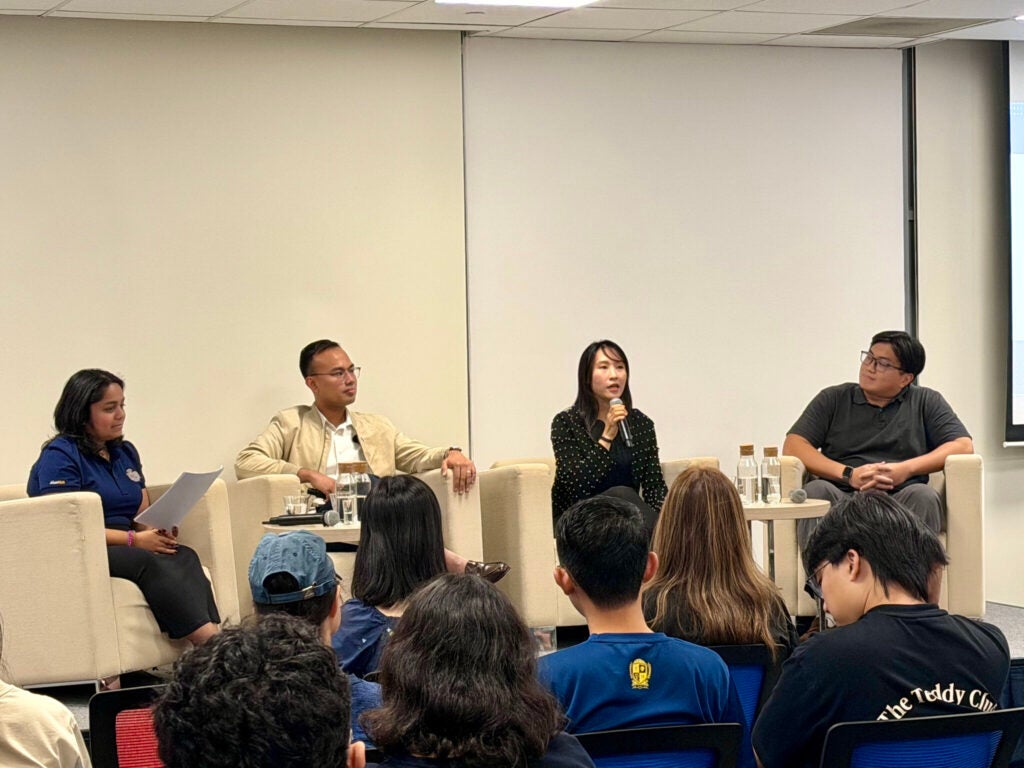
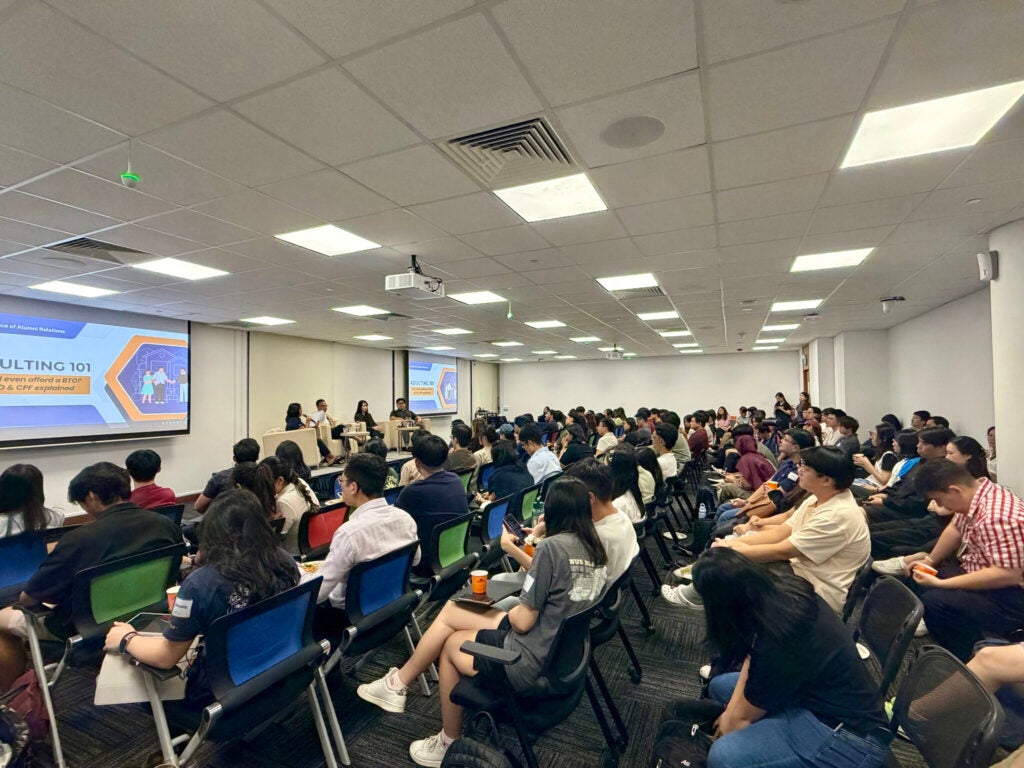
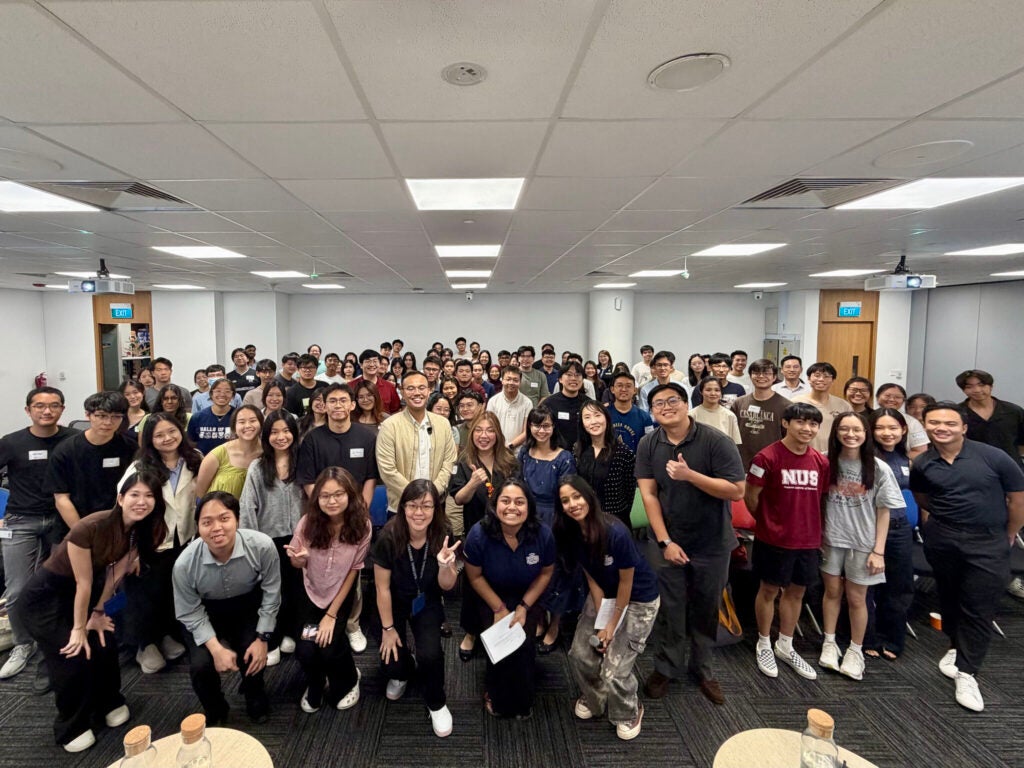
That question shaped Adulting 101: “Can I Even Afford a BTO? BTO & CPF Explained”, held on 18 March at the Shaw Foundation Alumni House. Organised by the NUS Office of Alumni Relations, the session brought together students and alumni for a practical discussion on Singapore’s public-housing landscape and what it means to plan for a first home.
Emceed by Student Alumni Ambassadors Taavishi Gandhi (Year 2, College of Humanities and Sciences) and moderated by Claudia Ruth Selvakumar (Year 2, Arts & Social Sciences), the panel featured Ms Ho Yi Ling (Business ’08), Senior Communications & Engagement Manager (Partnerships & Outreach) at HDB; Mr Irwin Hafiz (Design and Environment ’18), Property Advisor at PropertyWin; and Mr Wei Yongji (Arts & Social Sciences ’21), Partnerships Manager at Access Singapore and a homeowner. Together, they examined not only the mechanics of buying a flat, but also the broader questions of timing, financial preparedness and long-term decision-making.
For many young adults, the prospect of buying a first home can feel both urgent and distant at once. It is often treated as something to think about later, after graduation, after starting work, or once life feels more settled. Yet the panel suggested that housing decisions begin much earlier, with a clearer understanding of the options available and the financial commitments they entail.
UNDERSTANDING THE PATHWAYS TO HOME OWNERSHIP
A key part of the discussion centred on the different routes into public housing. For Ms Ho, one of the most important starting points was to clarify that buyers are not navigating a single pathway. Build-to-Order (BTO) flats, resale flats, Sale of Balance Flats (SBF) and Shorter Waiting Time (SWT) flats each come with different implications for price, waiting time and flexibility. Rather than searching for a universally “best” option, she encouraged first-time buyers to consider which pathway best fits their stage of life and practical needs.
That distinction became especially important in the discussion of timelines. Mr Hafiz noted that while a BTO flat may be more affordable than a comparable resale flat, it also typically comes with a longer wait before keys are collected. Resale flats, by contrast, may allow buyers to move in much sooner. The choice between the two, therefore, is shaped not only by budget, but also by when buyers hope to move and how much flexibility they require in the years ahead.
The panel also addressed terms that often feel opaque to first-time buyers, including the HDB Flat Eligibility (HFE) letter and the Minimum Occupation Period (MOP). Explained within the broader planning process, these were framed less as technical hurdles than as part of a longer sequence of decisions about eligibility, financing and future goals.
AFFORDABILITY AND FINANCIAL READINESS
For Ms Ho, affordability was shaped by more than the listed price of a flat. She explained that a home purchase is typically made up of four broad components: housing loan, CPF savings, housing grants and cash. Seen in those terms, affordability depends not only on whether a buyer can commit to a purchase upfront, but whether the overall financing arrangement remains sustainable over time.
That emphasis on structure also informed the panel’s discussion of planning tools. The HFE letter, Ms Ho and Mr Hafiz noted, can give prospective buyers a clearer picture of whether they are eligible to purchase a flat, the loan amount they may qualify for, and the grants they may receive. Applying for it early, they suggested, helps buyers understand their financial position before they find themselves rushing to respond to a launch or purchase opportunity.
Grants were another important part of the discussion. While they can provide meaningful support for first-time buyers, especially those at the start of their careers, Ms Ho stressed that they should be understood alongside loan eligibility and household income. Lower-income buyers may receive more support, but they may also face tighter borrowing limits. The question, therefore, is not simply how to maximise grants, but how grants, CPF usage, loan quantum and cash flow work together.
Mr Hafiz extended that point by turning to the longer-term implications of monthly repayment. Whether instalments are serviced through CPF or cash, he noted, can shape a buyer’s financial flexibility later on. A housing decision, in that sense, should be assessed not only by whether it can be made at the point of purchase, but by whether it remains manageable over time.
A FIRST HOME AS A LONG-TERM DECISION
Beyond policy and financing, the panel also turned to the more personal realities of buying a first home. Drawing from his own experience, Mr Wei said that one of the most important conversations couples can have is not simply about how much money they have, but how they think about money together. “The more important thing is how you guys see money,” he said, referring to questions of savings habits, fairness and how financial responsibility is shared over time.
That point resonated strongly with the audience the session was addressing. Housing decisions are often made at a stage when careers are still developing, income trajectories may still be uneven, and longer-term plans remain uncertain. Planning early is not only about securing access to grants or entering the market sooner. It is also about creating enough clarity for more informed and realistic decisions.
Mr Hafiz further cautioned against treating a first purchase as a perfect or final home. “It can be just a stepping stone towards your next home and eventually your ideal home,” he said, shifting the discussion away from the pressure of getting everything right at once and towards a more measured understanding of home ownership as a process.
Adulting 101 reflected a concern that resonates widely among students and young alumni: not simply whether home ownership is possible, but how it can be approached with greater clarity and foresight. By clarifying housing pathways, unpacking the financial structures behind affordability, and grounding the discussion in lived experience, the panel offered a more legible starting point for those beginning to think seriously about a first home.
-
When Change Feels Too Big: Supporting Neurodivergent Individuals Through Life’s TransitionsStarting school, entering university, beginning a new job or forming a relations... -
ShrugMyShoulder: Around the World in 10 HotelsIn the past four years, ShrugMyShoulder founders Ms Marilyn Chew (Design and Env... -
Introducing the NUS Food & Travel MapLooking for somewhere new to eat, shop, stay or explore? Discover your new favou...