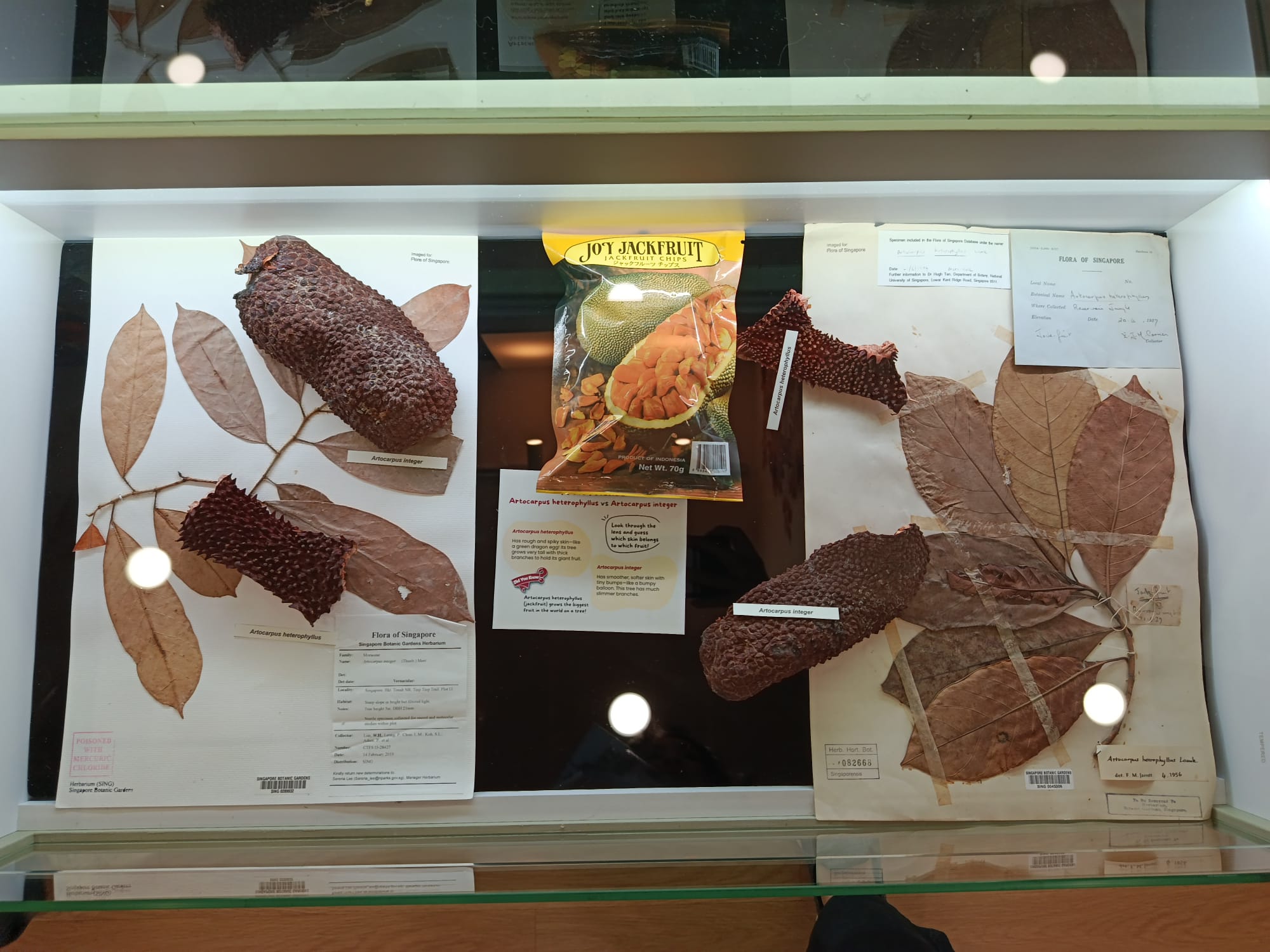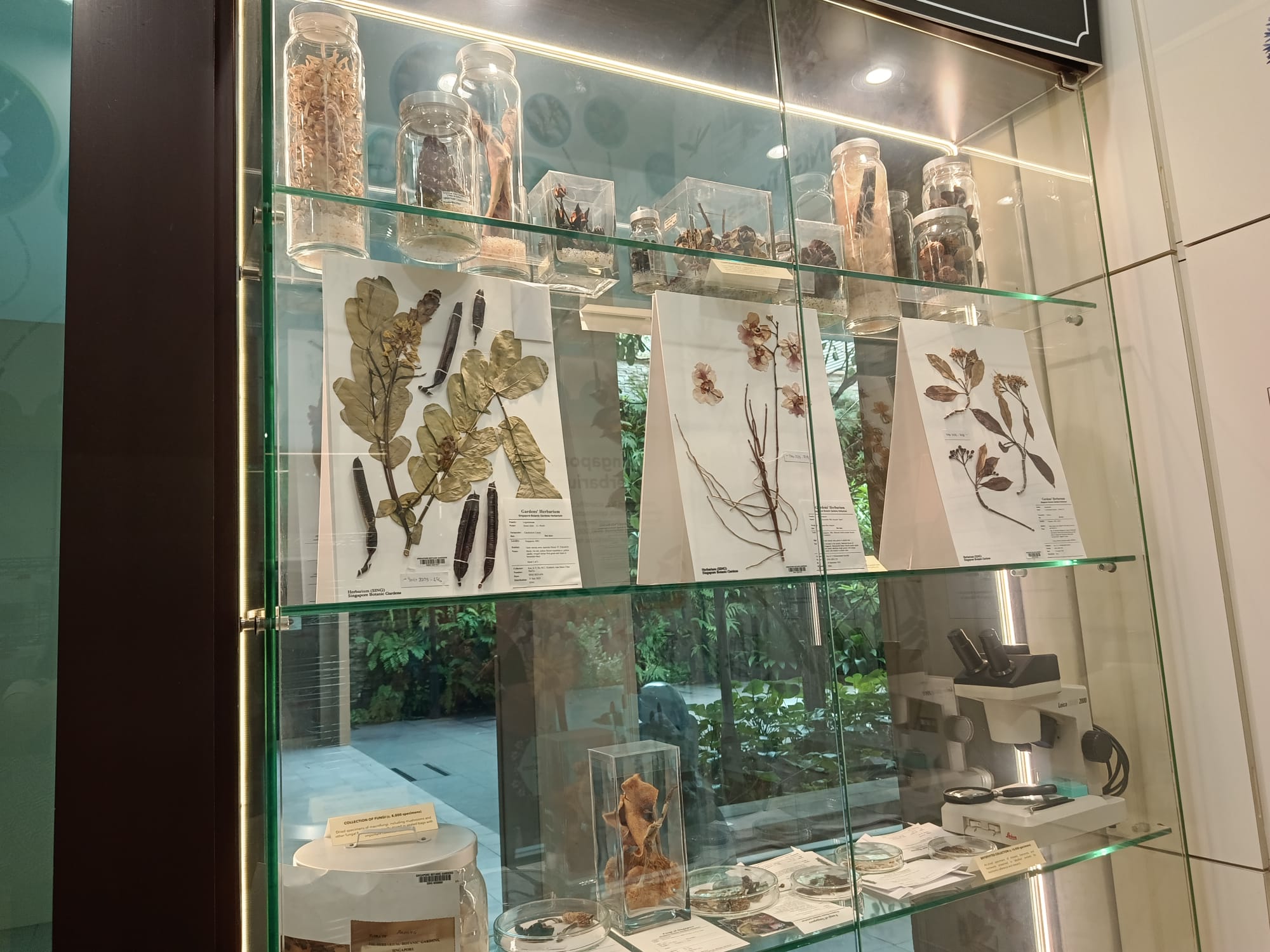

Imagine this scenario—a patient is admitted to hospital after eating wild mushrooms foraged during a walk. Doctors suspect poisoning, but before deciding on a course of treatment, they need to know exactly what species has been consumed. They pick up the phone and call… a herbarium.
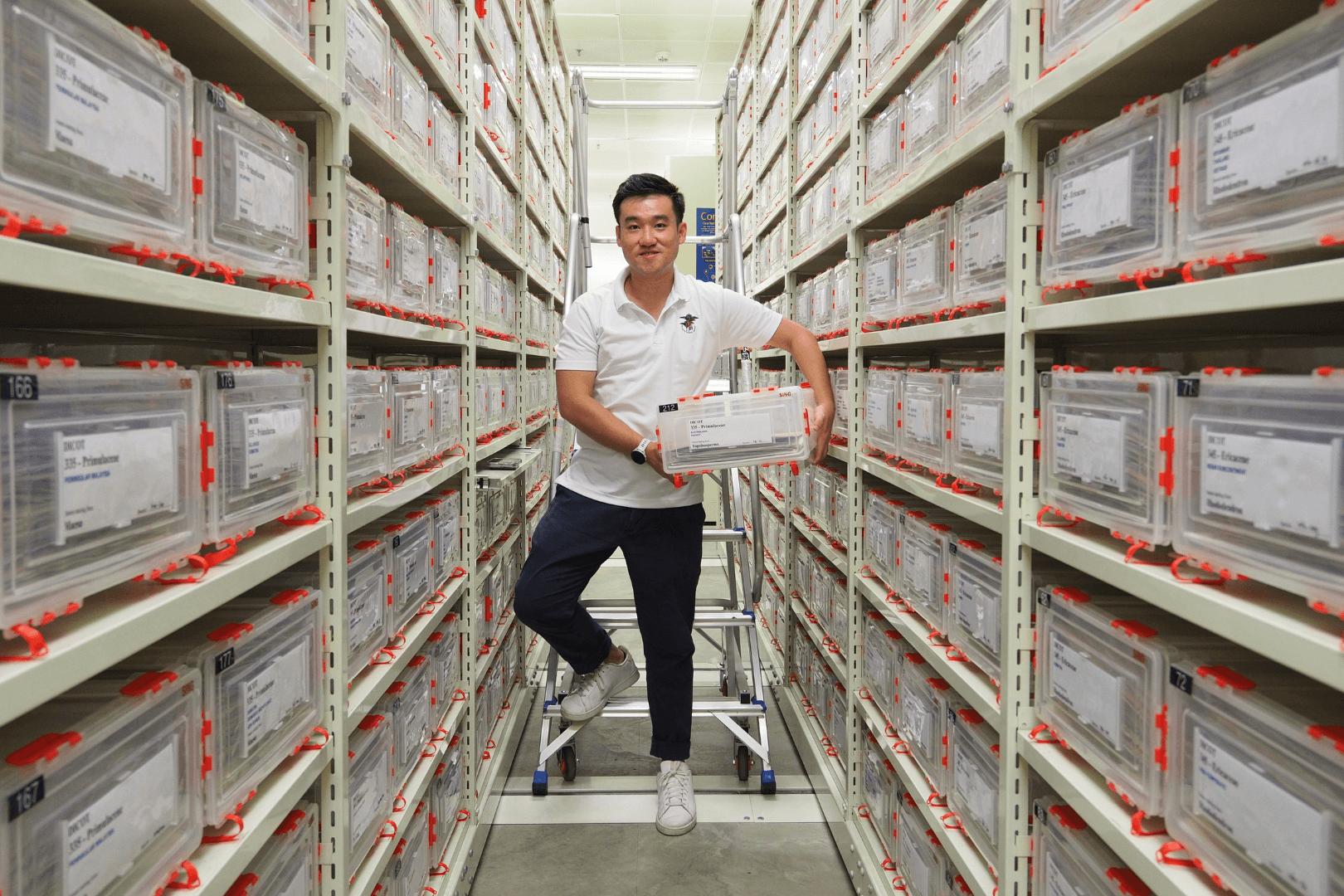
No, not a greenhouse of herbs, but a library of preserved plants used for research. In Singapore, this facility is tucked inside the Singapore Botanic Gardens. Housing almost 800,000 preserved plant and fungi specimens, including some collected more than two centuries ago, the Singapore Herbarium is one of Southeast Asia’s most important botanical reference collections.
While requests from hospitals are rare, they underscore why correctly identifying plants matters. It is why an entire scientific discipline is devoted to naming and classifying them. Accurate identification underpins everything from medical discoveries and biodiversity conservation to climate change research and crop resilience. A misidentified species can delay medical treatment or send scientists pursuing the wrong answers.
BRINGING THE HERBARIUM ONLINE
Until now, much of that knowledge has remained locked inside cabinets, accessible only to researchers able to visit the Herbarium in person.
That is about to change.
As project manager of the Singapore Herbarium’s digitalisation initiative, NUS Life Sciences alumnus Mr Ethan Eng (Science ‘19) is helping transform the collection into what will become Southeast Asia’s largest online herbarium database. Every specimen is being photographed in high resolution, catalogued and linked to its accompanying data, allowing researchers around the world to examine collections that once required expensive international travel.
“The whole aim of this is really to build a super database where every single plant in the world is easily searchable with the click of a button,” says Mr Eng.
Digitisation allows scientists to compare specimens across countries from their desktops, while reducing the need to transport fragile collections that are often impossible to replace.
SEEING THINGS DIFFERENTLY
For Mr Eng, the project extends well beyond scanners and databases.
Prior to joining the National Parks Board, he had co-founded one of Singapore’s earliest kombucha breweries. The resourcefulness he developed as an entrepreneur now influences how he approaches one of Singapore’s oldest scientific institutions.
“When I was hired, it was literally blank walls,” he recalls of the Herbarium’s public gallery. “We had to decide what kind of information we wanted the public to know about the Herbarium, about digitalisation and why it’s important.”
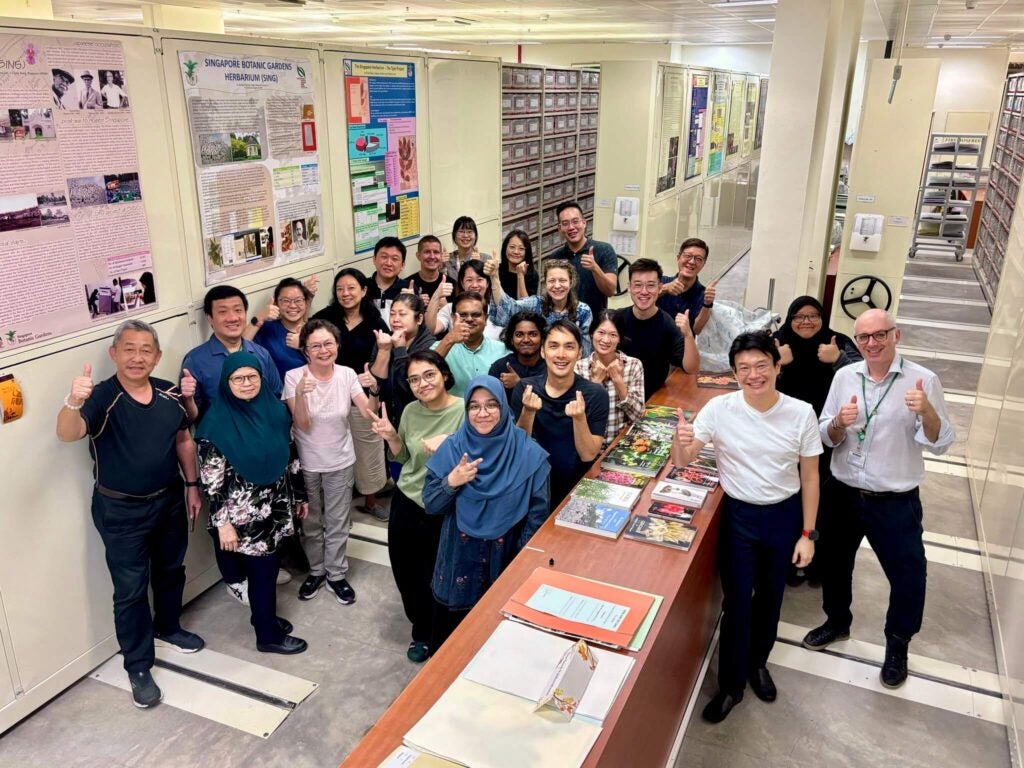
Although employed as digitalisation project manager, Mr Eng soon found himself designing an exhibition, developing workflow applications, producing educational videos, spearheading social media campaigns, and working with designers, scientists and technology vendors.
“I didn’t know I would be designing a gallery,” he says with a laugh. Before the exhibition opened, he adds, “literally no one knew what a herbarium was.”
Coming in with fresh eyes proved to be an advantage. Questions that seemed obvious to him, he realised, were often the very questions first-time visitors would ask.
“For many of the staff, certain things were common sense. But because I had just come in, I asked a lot of questions. Those questions turned out to be exactly the things visitors wanted to know.”
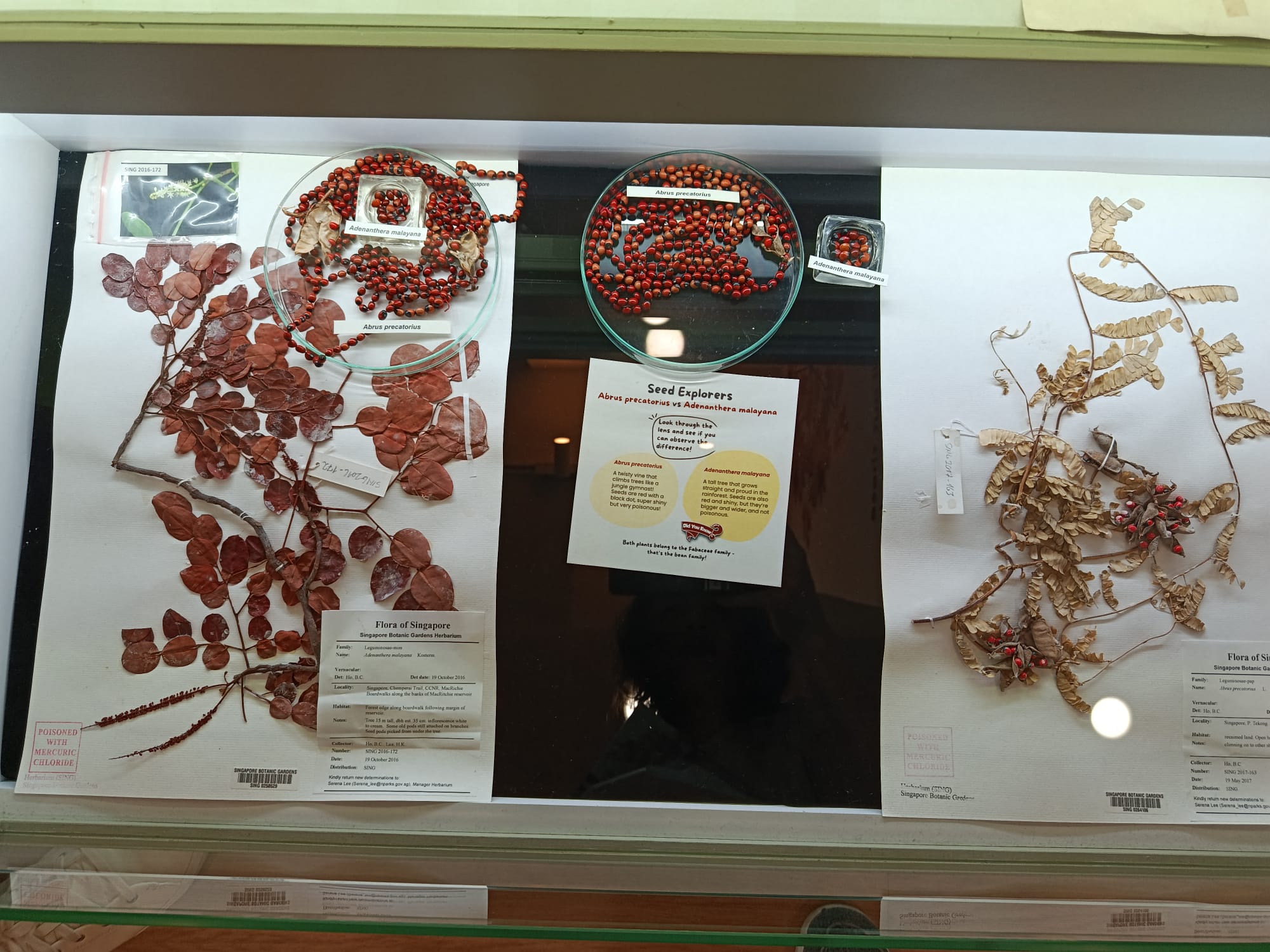
The result was Pressed in Pixels, an exhibition accompanying the digitisation project that invites visitors to distinguish between easily confused species such as jackfruit and cempedak, discover why seemingly identical seeds can differ dramatically — one medicinal, the other poisonous — and learn why “type specimens” serve as the official reference for naming newly discovered plants.
THE INTERDISCIPLINARY ADVANTAGE
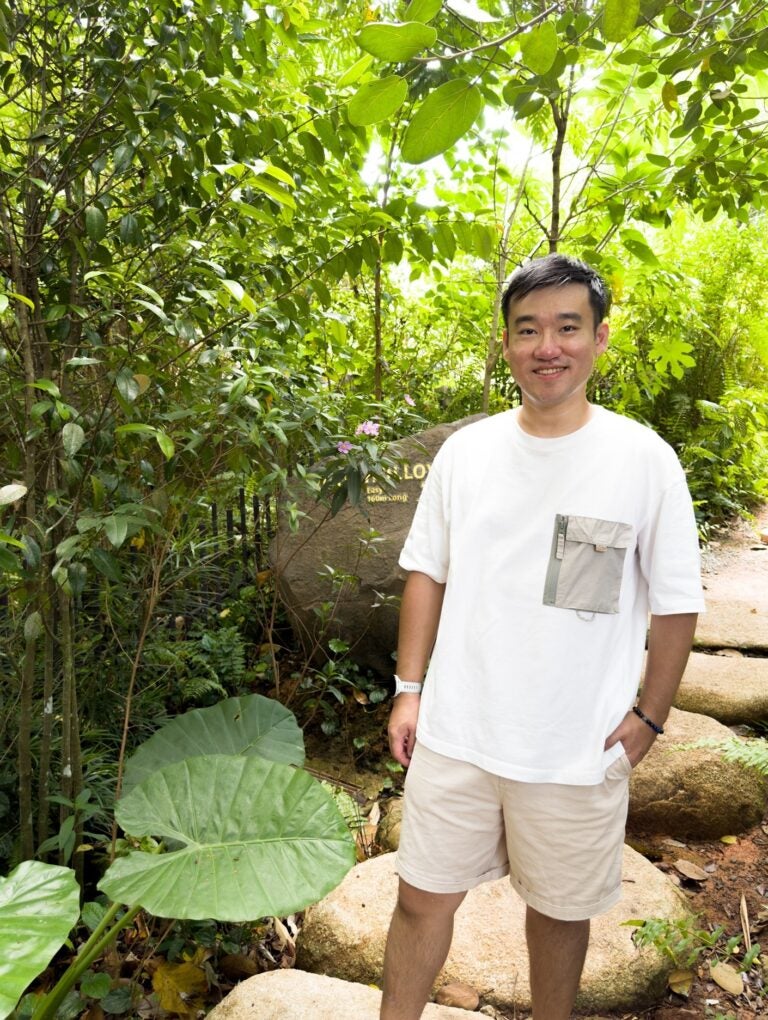
Plants were not always Mr Eng’s passion. Having studied physics and chemistry in junior college, he only developed an interest in natural history during long walks from Mount Faber to Hort Park as a break from studying. He recalls discovering the concept of “plant blindness” — the tendency to see vegetation as little more than a wall of green — before gradually learning to notice the differences between species.
At NUS, he indulged his intellectual curiosity, deliberately venturing beyond the sciences to take modules in business, theatre and entrepreneurship alongside his Life Sciences degree. “I tried to make full use of my time in university by studying things that I found interesting, instead of just focusing on science.”
It’s clear that his skill set also includes technological wizardry. At the Herbarium, he developed automation tools that reduced repetitive work for the digitisation team. One quality-control application cuts the time needed to process flagged images from almost a minute to less than five seconds, saving dozens of staff hours every quality-control cycle.
Rather than viewing disciplines in isolation, Mr Eng enjoys connecting ideas across fields — a practice he believes is humanity’s enduring advantage over AI.


“That habit of connecting dots across seemingly unrelated fields has become one of my most valuable career assets,” he says. “AI is impressive at synthesising information, but there’s a difference between pattern matching and having lived those experiences.”
Today, bridging different worlds has become the defining feature of his work. Whether explaining botanical research for families visiting the Herbarium, designing digital tools for colleagues or making centuries-old collections accessible to scientists around the world, he is constantly finding ways to connect people with knowledge.
For researchers studying climate-resilient crops, discovering new medicinal compounds or simply trying to identify a poisonous mushroom, centuries of botanical knowledge will no longer begin inside a cabinet in Singapore. It will begin with a click.
-
Food and the CityFor Mr Dhanenthiran Mohanadas (MAUD ’11), a sweet potato is never just a sweet... -
Beyond the LabMs Koh Mingshi (Science MSc ’04) traded laboratory experiments for strategy, p... -
The Business of Doing Good: Behind India’s Crowdfunding LeaderWhat began as a microfinance experiment became India’s leading crowdfunding pl...