
For someone whose research delves into cutting-edge artificial intelligence (AI) and human-machine collaboration, it’s surprising to know that Associate Professor Suranga Nanayakkara (Engineering ’05, PhD ’10) was humbled by everyday infrastructure.
In 2001, he arrived in Singapore to embark on his undergraduate programme at the National University of Singapore (NUS) and remembers wondering why it was taking so long to get from the aeroplane to the airport.
“I was walking and walking and didn’t realise that I was actually walking through the airport, because I had no idea what an aerobridge was,” the 44-year-old chuckles. “That was how naive I was—and it explains why I was eager to study overseas: to experience things I wouldn’t have ordinarily been able to back home in Sri Lanka.”


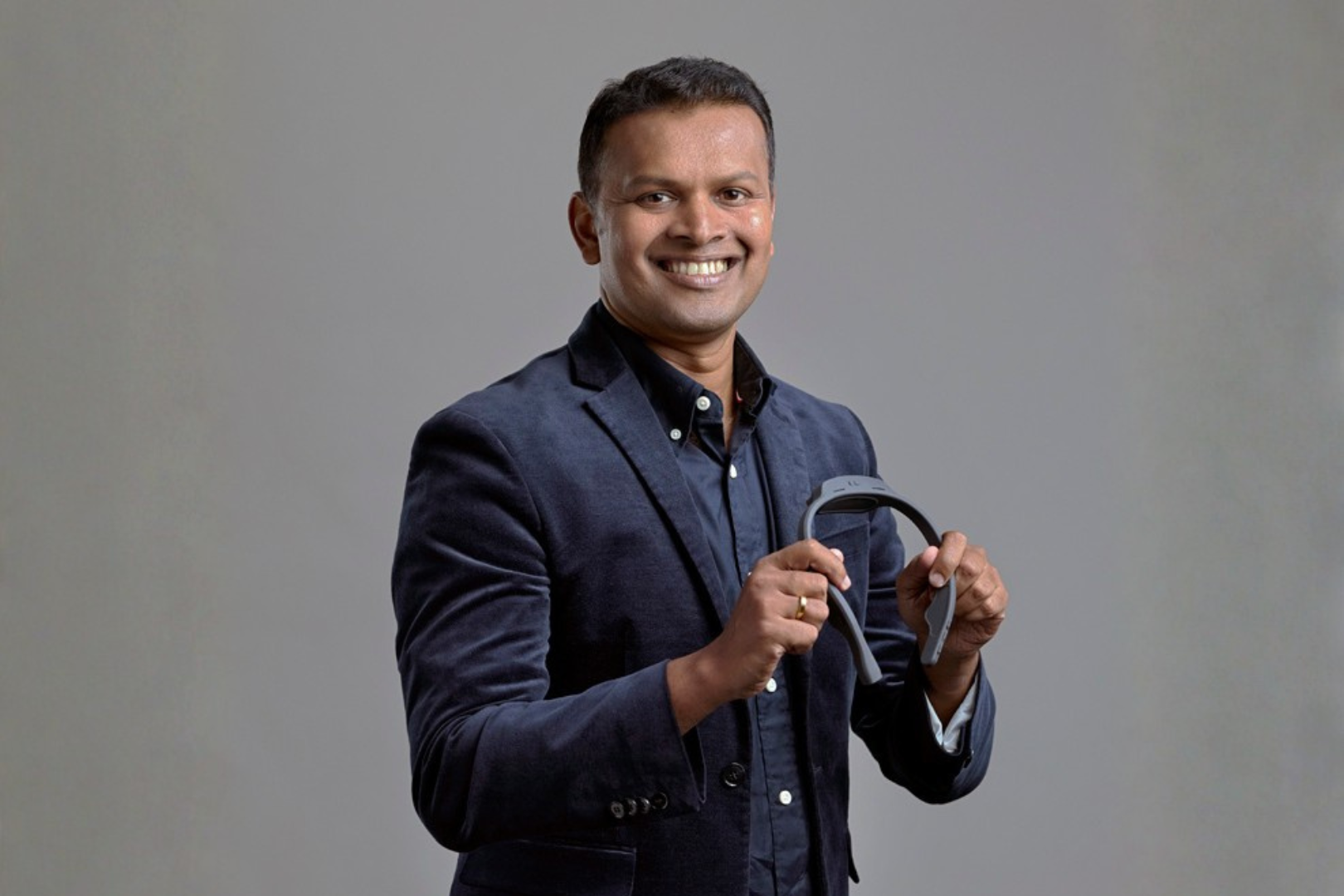
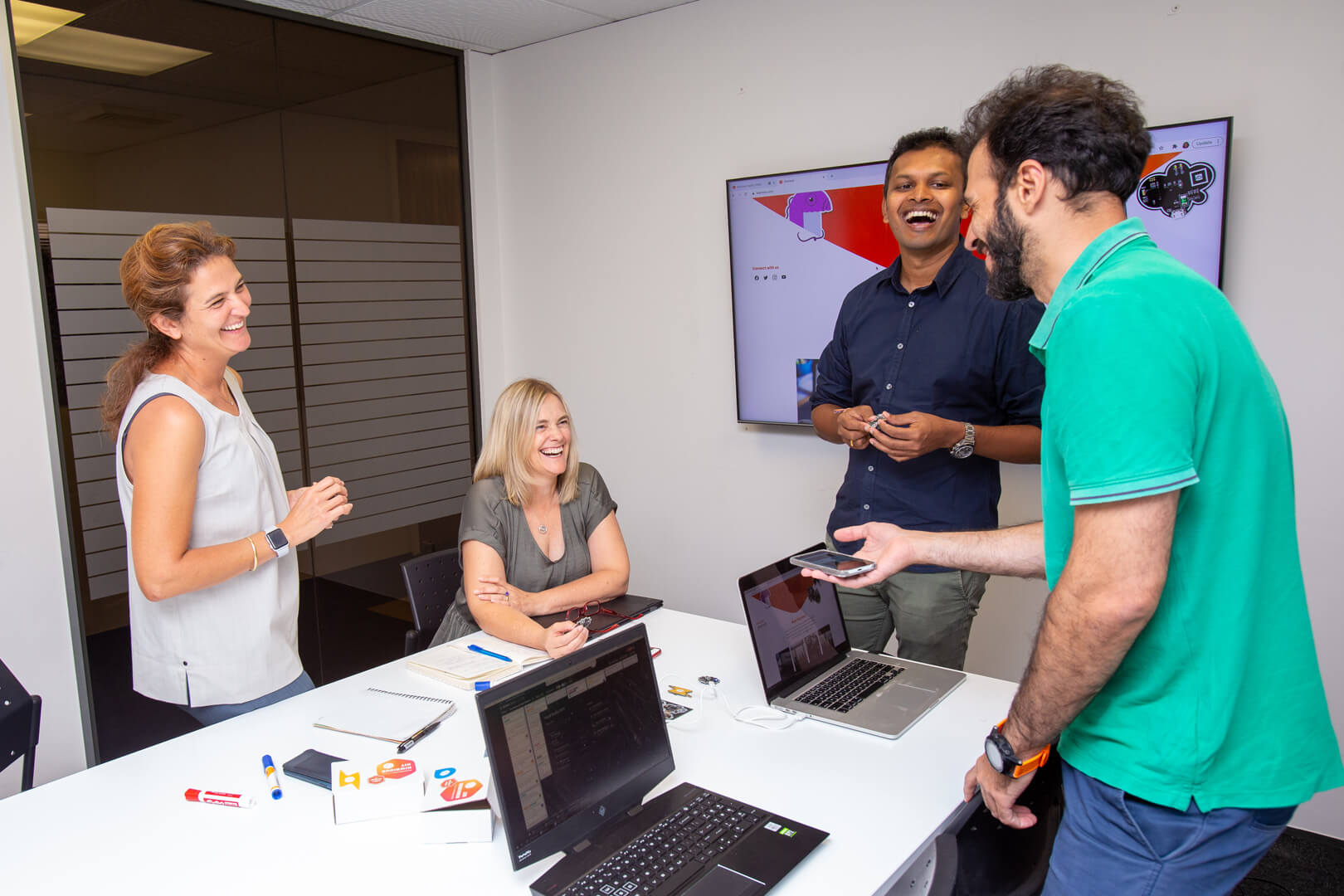
That idea of opening the door to new experiences has informed much of Assoc Prof Nanayakkara’s career. Today, as the Principal Investigator of the Augmented Human Lab at NUS, he leads an interdisciplinary team designing human-computer interfaces and tools for assistive and augmented technologies.
Look him up on the Internet and you’ll find a list of inventions he has worked on to help those with impaired sight and hearing. Most recent is AiSee, an AI headset that helps people with vision loss to commute and shop. It uses AI to interpret the surrounding environment and provide real-time audio guidance, helping users navigate public transport, avoid obstacles, and move safely through complex everyday settings.
Such inventions have earned Assoc Prof Nanayakkara the reputation of being a champion for inclusive technology. He believes that all of us are challenged in some way, and that technology can assist with this. “If you go to a Japanese supermarket, you may be hindered if you don’t read the language. So, there are applications of such creations for those of us who don’t have ‘disabilities’,” he explains.
He adds that creating things for the most extreme needs—in this case, the visually impaired—can be a good starting point as you address broad needs. “And then you adapt from there.”
One lesser-known motivation is his desire to improve how things are designed. For him, this isn’t abstract. Poorly designed technology doesn’t just inconvenience—it can exclude. “It does more harm than good,” he says, sharing a story about his early days with the Internet. “I thought the Yahoo Messenger notification, which sounded like a click, was someone knocking at the door. You can only imagine how foolish I felt. It goes to show how important the right design is.”


THE CONFIDENCE TO FAIL
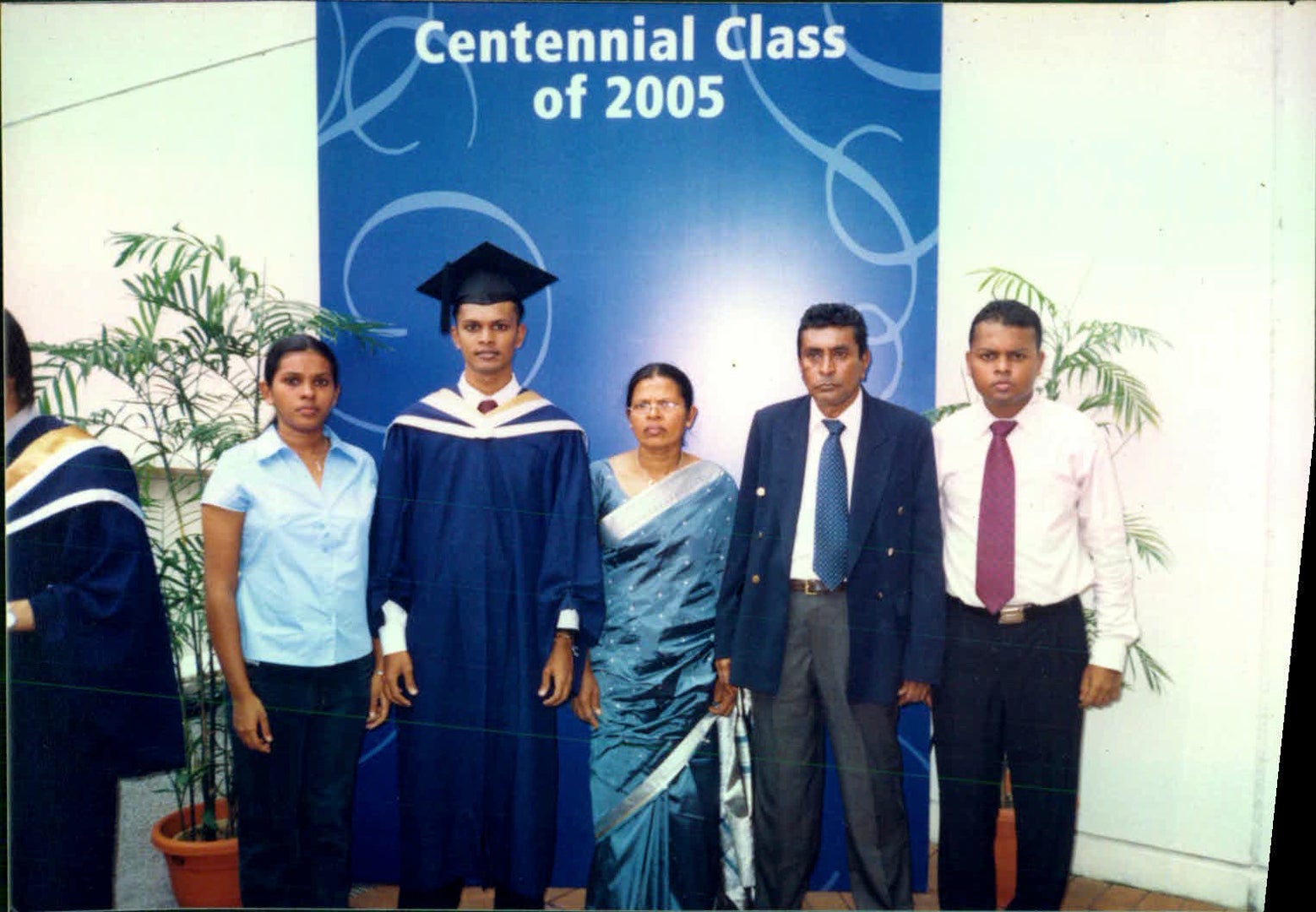
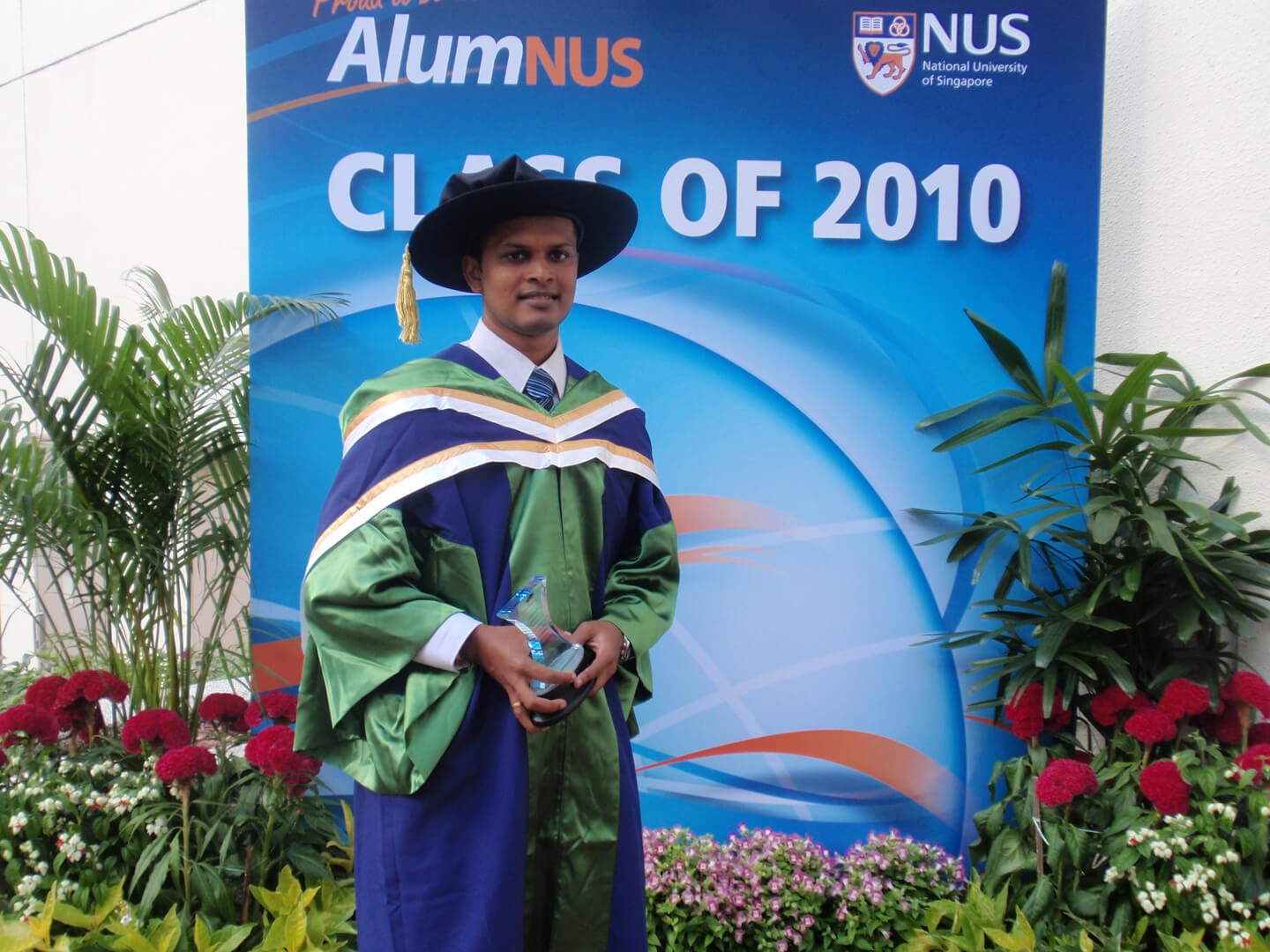
Assoc Prof Nanayakkara returned to NUS in 2022, having first enrolled in the University on an undergraduate scholarship. Postdoctoral studies took him to the Massachusetts Institute of Technology, followed by academic stints at the University of Auckland and the Singapore University of Technology and Design. These roles have allowed him to mentor hundreds of students over the years, a good many of whom benefited from his entrepreneurial streak. “I have formally started close to a dozen startups, many of which were failures,” he says matter-of-factly.
He doesn’t shy away from explaining further. Some ventures suffered because of staffing decisions, while others were strategic ones. “One of the first things we worked on was a patent for a low power gesture recognition system. It was eventually licensed to Samsung, but they didn’t develop it further. That made me realise that you can’t give away your knowledge too early.”
It’s a lesson he shares readily to participants of his popular module at the School of Computing on the principles of technology entrepreneurship. He hopes that speaking openly and honestly about his shortcomings will help his students. “I want them to see that there is a lot of value in failure. You can learn a lot. I want to give them the confidence that it’s okay to fail.”
He brings the same mantra to a Stanford-style bootcamp he runs in Sri Lanka every year. Centered on innovation, the programme aims to nurture entrepreneurship and tech skills in the country’s youth. Describing the experience as eye-opening, Assoc Prof Nanayakkara says, “The students have very small dreams. Some want to have a job where they can wear a tie and a long-sleeved shirt. I try to encourage them to dream bigger: I want to help them overcome the self-doubt and give them the exposure to dream.”
I want to give (students) the confidence that it’s okay to fail.
LIKE FATHER, LIKE FAMILY
The conversation turns to what kept his own dream going. Here, too, Assoc Prof Nanayakkara answers with refreshing honesty. “My father was an auditor who later became an alcoholic. My mother, who is an engineer by training, singlehandedly raised us. So, everything I have done is a way of giving back to my mother and thanking her for all that she has done. It’s my way of showing gratitude.”
He is married to a fellow NUS graduate and Sri Lankan. “We were actually in the same math Olympiad back in Sri Lanka, but we met while we were at the University. Our kids were born at NUH and they’re now 15 and 12.” Both are trilingual, he adds with pride. In some ways, they are already following in his footsteps by sharing their knowledge with the world, starting with his elder daughter’s YouTube channel, which shares about places around the world as well as educational topics such as navigating the Primary School Leaving Examination (PSLE).
Family is extremely important to Assoc Prof Nanayakkara, who notes that he owes a lot to his relatives. “They lent me clothes, money and even a watch to wear. So, I always want to support them because they supported me when I had nothing.”
QUICK TAKES
His proudest venture: The assistive device he first built over a decade ago—then called FingerReader—failed multiple times before evolving into a viable spinoff called AiSee. AiSee is now deployed in public spaces like Gardens by the Bay, the device—a smart headphone—uses a tiny camera, computer vision and audio feedback to help users with visual impairment navigate and access information.
On AI: A tool, not the goal. For him, the vision comes first—in this case, enhancing human potential—and AI is simply one of many ways to get there. “It’s like the idea of portable music. The Walkman was a way of achieving that.” The tools will change, but the intent stays. Those who learn to use AI will thrive, but creative confidence, judgment and problem-solving still matter. And just because something can be built doesn’t mean it should—what matters is deciding what kind of technology we actually want to shape our lives.
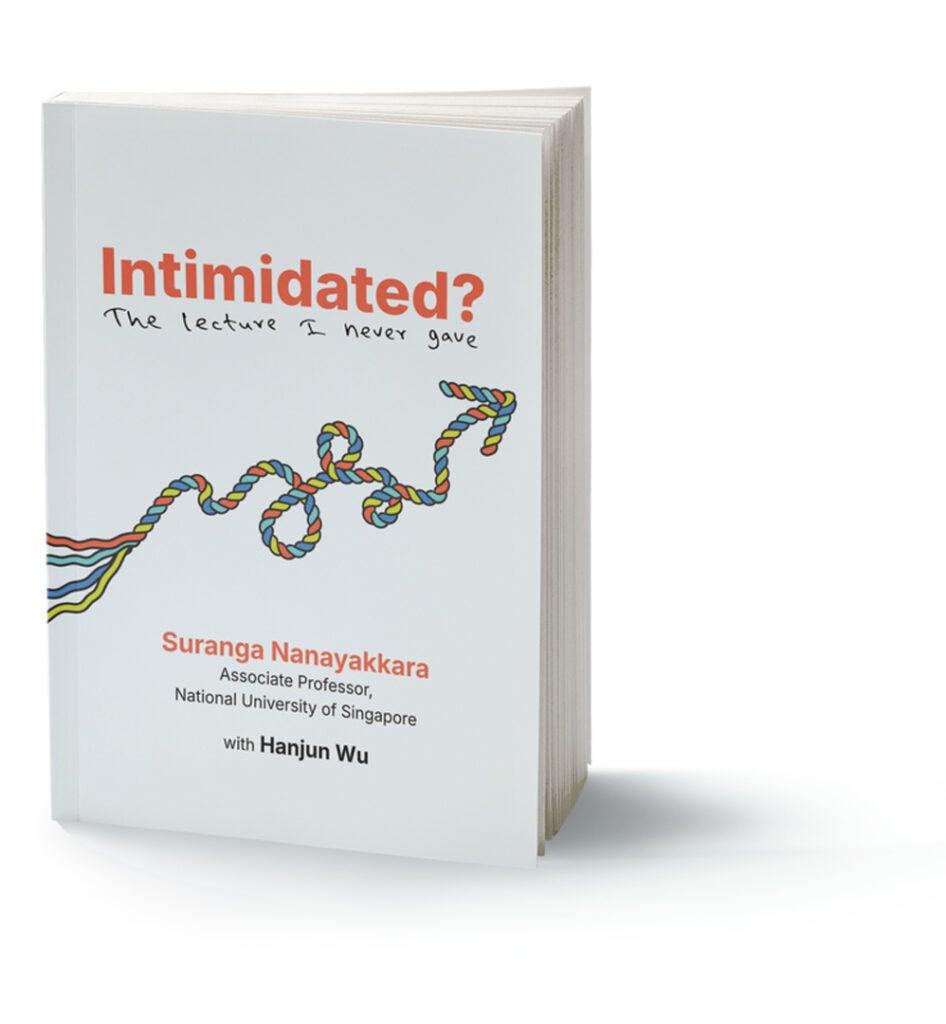
Assoc Prof Nanayakkara, together with Hanjun Wu (MComp ’25), is the co-author of Intimidated? The Lecture I Never Gave, available now.
-
Planting Seeds for the Future: How Sylvia Chan is Shaping the Next Generation of TalentFrom solving complex problems in semiconductor manufacturing to guiding students... -
Touch Grass, SeriouslyIn an age where technology influences much of what we think and do, Professor Si... -
Turning Waste into Wonder: The Couple Behind Brambe’s Sustainable Design StudioNUS alumni Mr Bernie Ang (Design and Environment ’21, MArch ’21) and Ms Aman...