


After choosing to attend NUS together and marrying while still students, Mr Darien Tan (Business ’23) and Ms Joanna Wong (Arts & Social Sciences ’21) seemed destined for corporate success. Within a few years of graduation, the tech sales representative and UX designer were earning a combined annual income of S$250,000.
Then in September 2024, Mr Tan quit his job after a near-death accident, deciding that “life was too short to spend working for money without purpose”.
With dreams of travelling the world, Ms Wong quit to join her husband and became the content creator behind the duo’s travelogues as well as financial literacy videos.
They also started a company called Kin Wills, now with a team of seven, specialising in will-writing and estate planning which they run on the go between continents.
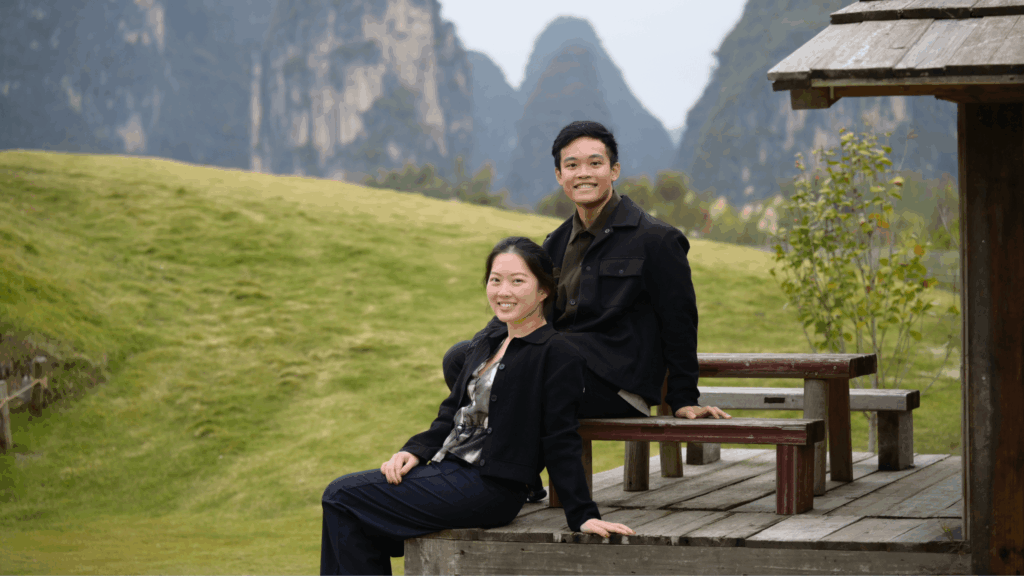
He credits the University’s flexibility as formative, citing decisions such as taking a gap year, dropping his Honours and enrolling in a general education module called “Thinking Like an Economist”, which left a lasting impression. The course delivered a lesson he applies in his work: everyone is driven by incentives.
He added, “There are multiple paths and definitions of success. Since my dream was to run businesses, travel and see the world, build wealth and have the freedom to decide how I spend my time, I decided to live it.”
As a new class of graduates emerges from NUS this year, it is clear that beyond a stable 9-to-5 job, they are equipped to traverse a whole range of alternatives—entrepreneurship, side hustles, content creation, remote work, freelancing, investing, micro-retirement, stepping back for sabbaticals—in order to live a life of their own design.
Their NUS education enables this. Alumni in alternative careers often mention the liberating influence of programmes such as NUS Overseas Colleges (NOC), which provides entrepreneurial internships around the world, career consultants who shed light on their inclinations, the university’s strong support network of alumni and the broadening of the educational curriculum to support lifelong learning.
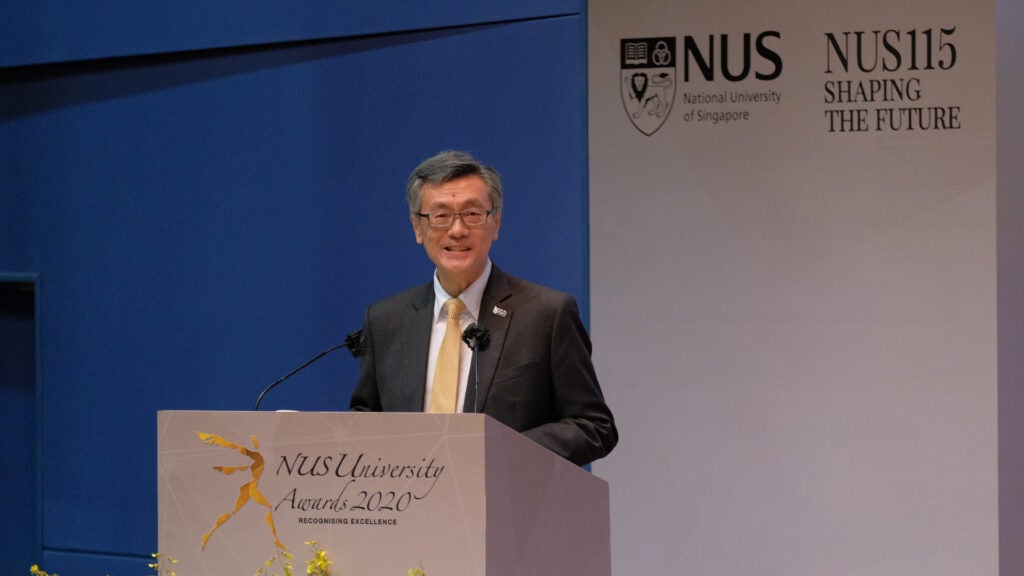
At a speech delivered during the University Awards in 2020, NUS President Tan Eng Chye (Science ’85) spoke about the introduction of interdisciplinary, integrative university education, noting the aim to “educate and empower our graduates to be adaptable, resilient and innovative, so that they can thrive in a complex, uncertain world.”
And this uncertainty is one factor which has inadvertently triggered the rise of alternative careers globally.
For instance, in the United States, in a survey of over 1,000 professionals conducted by the Upwork Research Institute, 52 percent of those in their 20s freelanced in 2023. This compares to 30 percent of those in their 50s doing the same.
NOT JUST YOLO
According to Dr Wang Senhu, Assistant Professor in the NUS Department of Sociology and Anthropology, there are many reasons for a shift towards careers that are “much more fluid, fragmented, and adaptive” — and it’s not just because young people are thinking “you only live once” (YOLO).
One, labour markets are more volatile, long-term security is harder to attain, and today’s graduates do not want to suffer burnout if they witnessed it in their predecessors.
Said Dr Wang, “When stable rewards seem less guaranteed, people may shift toward values like meaning, identity, and self-expression because the older bargain — work hard now and security will follow — feels less credible than before.”

Two, firms have become more flexible. Technology has evolved to a point which enables work from anywhere, anytime, supporting the creation of new and exciting income-generating roles.
Three, there is stronger emphasis on self-development, personal meaning and work-life balance. Said Mr Tan Kok Guan (Engineering ’96), Principal Career Coach at career coaching firm Broccolise, “Among younger professionals, I see a growing emphasis not just on getting a job, but on finding work that offers growth, meaning, flexibility and alignment with personal values.”
Freedom of time and a sense of purpose in work are far more important today than a generation ago.
According to the 2024 Quest for Meaning at Work report by global recruitment agency Manpower and job platform Jobs_that_makesense Asia, 97% of Singapore respondents yearned for a sense of meaning in their careers. With a majority of respondents aged between 18 and 35, the findings are particularly reflective of how younger professionals view work today.
Ms Shilpa S Nath (Science ’11), who took a sabbatical after suffering job stress, said: “Growing up I used to think that success meant having a great position in a company, having a great salary, having a house. But today, I feel success is having peace of mind, a healthy body, being able to go back home and having the time and energy to build my community, talk to people and hang out with my friends.”

INEQUALITY IN FREEDOM
However, Dr Wang sounded a note of caution against over-romanticising the idea of alternative careers.
He explained that the playing field is not equal, and that everyone has different degrees of freedom to make those choices. For instance, some graduates have “family resources that allow experimentation” while others have to start earning in a hurry. To him, socioeconomic background and support is a far more important enabler of an alternative career than individual traits like ambition and resilience. “What looks like courage at the individual level is often scaffolded by structural advantage.”
Some fields of study are also more open to out-of-the-box careers than others, and not everyone has the stomach and confidence to take those risks. He said, “The rhetoric of ‘designing your own career’ can be inspiring, but it can also obscure the unequal conditions under which different people make those choices.”
An alternative career transfers uncertainty to the individual, and that can be a particularly heavy burden if flexibility is not a choice. It can lead to unstable contracts, unpredictable hours or platform-based work. “That is flexibility that can produce stress rather than freedom,” said Dr Wang.
If such a two-tier system emerges — one group experiencing flexibility as freedom and another as precarity — he believes it would widen societal inequality and become one of the most important issues in the future of work.
Also, once heavy financial commitments enter the picture—think children, a home mortgage, or healthcare costs for an elderly parent—a steady paycheque, bonuses, medical benefits, clear career promotion ladders and opportunities to learn and exercise leadership, can be very comforting. Said Dr Wang, “Flexibility can be liberating in the short term but costly in the long term. The consequences of immediate autonomy versus cumulative security may only become visible over time.”

SKILLS OVER CVs
At the moment, those in alternative careers are not the majority. Associate Professor Lim Ghee Soon from NUS Business School said that anecdotally, most of the recent NUS graduates he encountered prefer the stability of a permanent full-time job in an organisation.
Data shows that NUS graduates are still very much in demand amongst employers. According to the latest Joint Autonomous Universities Graduate Employment Survey 2025, jointly conducted by NUS and other Autonomous Universities, more than nine in 10 NUS graduates across 18 degree programmes secured employment within six months, with higher or similarly strong starting salaries for graduates from 20 courses as compared to the previous year.
Professor Aaron Thean, NUS Deputy President (Academic Affairs) and Provost, said in a NUS News article that this is something to be proud of, especially given “today’s cautious job market”.
It is also heartening that for those who secure full-time jobs, HR practitioners are well aware that young people are looking for something different in their careers and would look kindly on an applicant who made a career detour to take a sabbatical or embark on a startup.
Said Ms Linda Teo (Science ’94), Country Manager, ManpowerGroup Singapore, “Hiring is increasingly skills-based, with greater emphasis on transferable capabilities and the ability to grow as roles evolve, rather than narrowly defined job titles or strictly linear career histories.”
She added that those trying to pivot into heavily regulated sectors that require industry‑specific experience, or to re‑enter fast‑moving industries after a career break, may face a more challenging transition due to higher expectations around demonstrating current relevance. Even so, the key question recruiters ask is consistent: “It is whether the candidate can demonstrate the skills, readiness, and relevance needed to perform effectively in the role.”
And if there is a need to explain a career pause or pivot, Mr Tan Kok Guan advised, “What matters is being able to show intentionality: what led to the decision, what you were exploring, and what you took away from the experience. Even if the move was not perfectly planned, thoughtful reflection makes a meaningful difference.”
What is clear is that the world of work is changing fast. Whether in a full-time job or an alternative career, the advice from NUS alumni and career coaches is to build up a network, develop transferable skills and good work habits, and slow down occasionally to reflect.
Said Mr Tan Kok Guan, “Careers are rarely linear, and the dots often only connect in hindsight. While you may not be able to predict the future, you can focus on taking thoughtful, informed steps in the present. In many ways, it is these small steps, taken consistently, that shape the path ahead.”
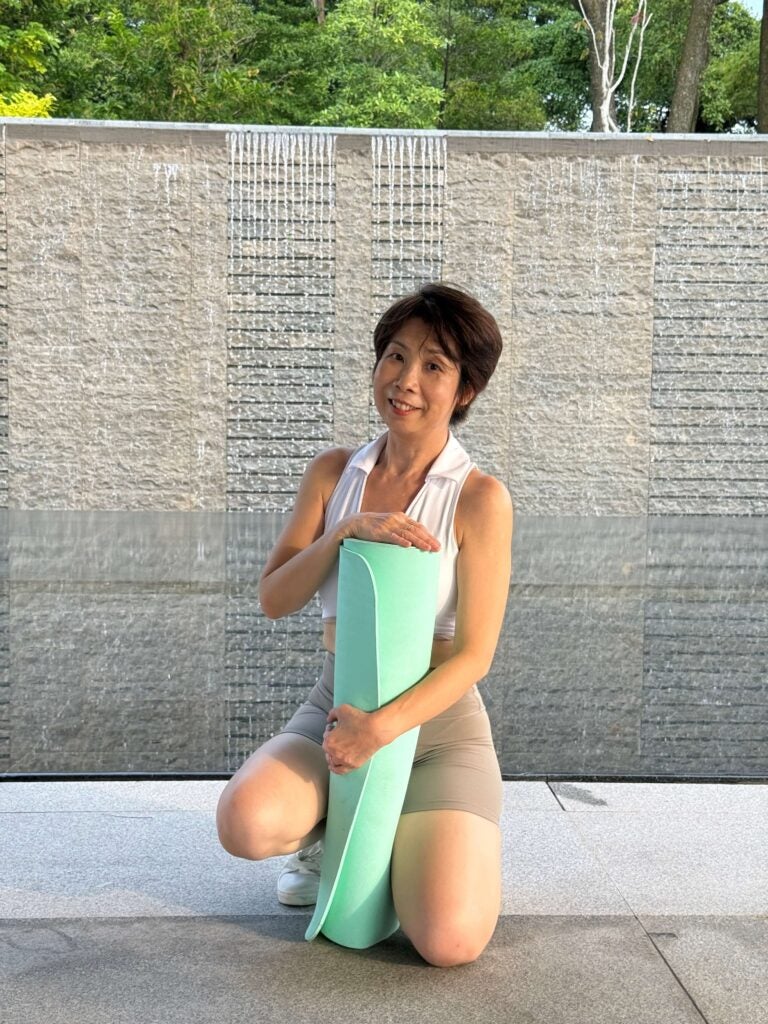
FREEDOM TO STRENGTHEN: C-SUITE PILATES TEACHER
Strength for the second act (of her life)—that is the current life mission of Ms Wang Yoke Choo (Computing ’93), a former regional C-suite IT leader turned aspiring Pilates instructor.
“I faced some health challenges in the past year, and I decided to refocus on my health and wellness as I move into my senior years,” said Ms Wang, who learnt Pilates years ago to recover from old injuries and found that the low-impact strengthening exercise was great for keeping her strong, flexible and mobile.
In February 2025, she walked away from an IT career spanning 30 years marked by stellar growth and sales figures. Her last role was Regional Vice-President (Asia Pacific) at a company specialising in AI-powered workflow automation software.
Now training to become a fully certified Pilates instructor, she acknowledges that she will earn less than what she used to. But at this stage in her life, she does not have a heavy financial burden.
With decades of experience in the fast-moving tech industry where she has always encountered new challenges, and clarity from maturity, it was an easy choice that she made without hesitation — she wanted to move from mental to physical work, a decision friends and family fully supported.
She reflected, “I believe that a happy family and a healthy and happy self contribute to the definition of success when one is to look back at one’s life. Even if I do not make anything out of this, it will still help me to stay active and healthy, both mentally and physically.”
FREEDOM TO REST: KOREA SABBATICAL
Ms Shilpa S Nath (Science ’11) was so stressed at work she was losing her hair, couldn’t keep food down, and was making repeated trips to the hospital A&E. She was also, at 32, at the highest point of her career, leading change communications for a major bank’s data and privacy transformation and earning more than she ever had. “I had a lot of fears about leaving,” she said.
What changed her mind were two questions from a leadership coach: What is the cost of your staying? And how much do you actually need to live without a job?
She realised her health was too high a price to pay — and that she had a comfortable level of savings. This financial reality check, she stressed, is critical for anyone who is thinking of taking a break: “To enjoy a sabbatical, we cannot be worrying about survival.”
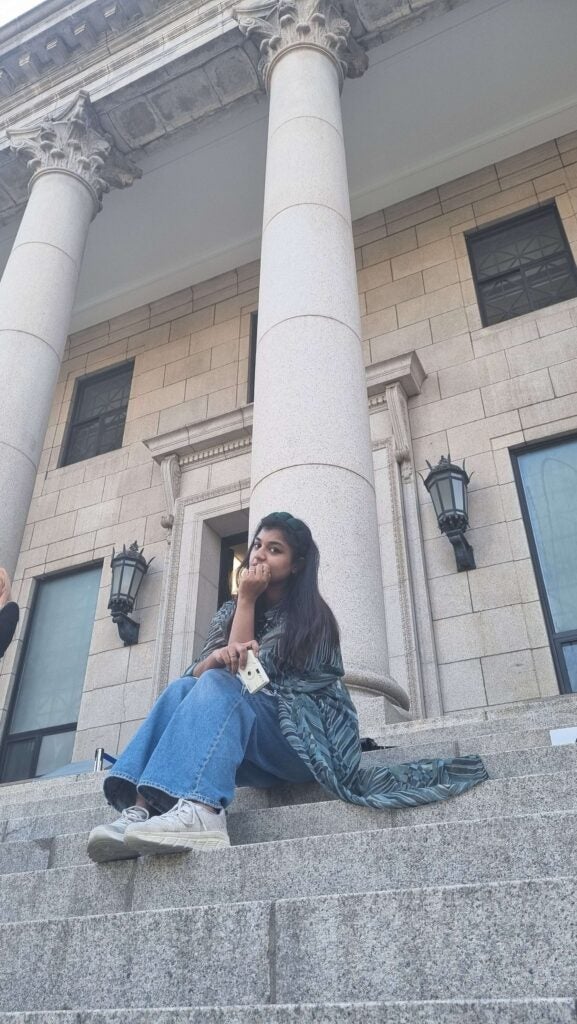
She moved to Seoul to study Korean at Korea University in June 2022, indulging in her loves for the language and travelling. For the first eight months, she gave herself “permission” to do nothing but attend class. In that time, looking at LinkedIn — full of posts about her friends’ work achievements — and restraining her inner workaholic proved most challenging, even as she attended class with kids nearly half her age.
While she was worried that she would become irrelevant, lose her networks or fail to find a job when she was ready, it proved unfounded. Taking on small projects led to an “accidental” full-time role in March 2025 as the Community & Communications Lead at the AI Verify Foundation in Singapore.
The sabbatical did not sully her CV. Ms Nath, who has also built communities like Kali Club to support people who want to design their own life, said: “Nowadays, taking a sabbatical has become quite commonplace. Employers also realise that when people pace themselves and take a career break, we come back more energised.”
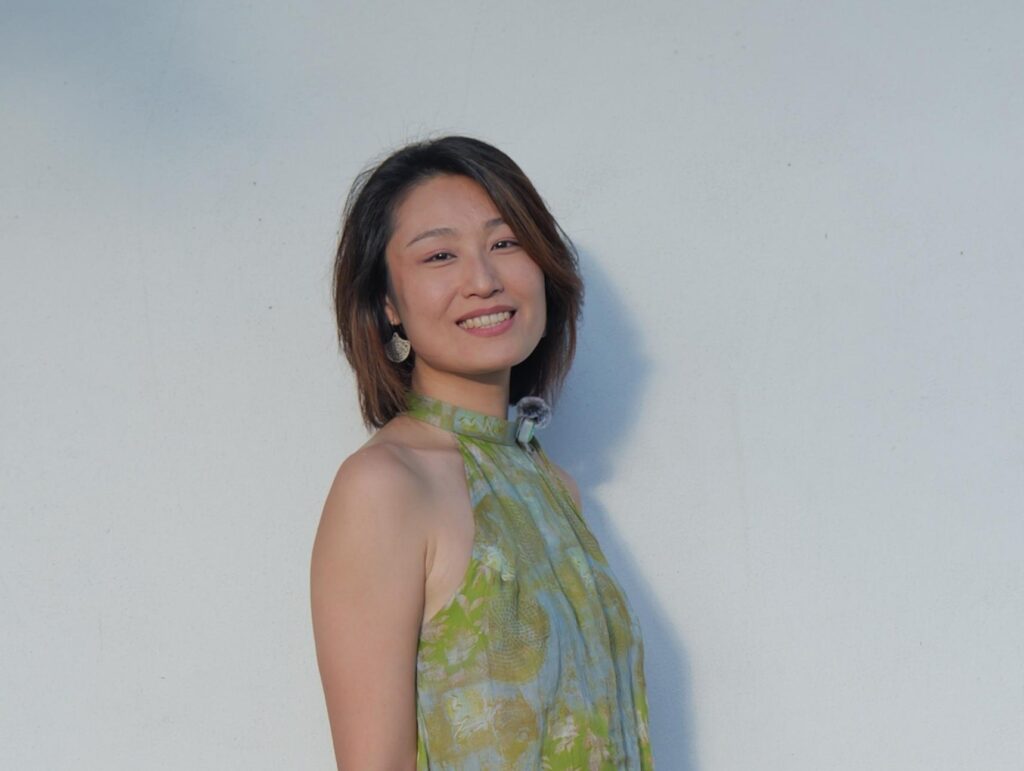
FREEDOM TO BUILD: AI MARKETPLACE FOR LOVE
Ms Claire Li (Engineering ’11) always knew she was wired differently. While still studying at NUS, she took a career assessment that placed her in the top 2 per cent of people who actively welcome change, and suggested she might thrive as an artist, promoter, or teacher.
“Even though I graduated with an engineering degree, I naturally gravitated toward roles where I could promote ideas, influence people, and use creativity,” said Ms Li. “In a way, I’ve always been entrepreneurial, even while working in corporate environments.”
She never worked as an engineer, instead spending nearly 15 years at the likes of Google, Palo Alto Networks, and Tencent, working on talent ecosystems and inclusive hiring strategies. But still, she wanted to build something of her own.
The spark came unexpectedly: at an AI startup pitching event in Singapore, she found herself one of only three women in a room of a hundred. When a Microsoft Founders Hub leader challenged her to pitch on the spot, she rose to the challenge. Soon after, she was admitted into the programme, which supports startups, and took the leap into full-time entrepreneurship. Her startup, TrueVibe, is an AI-powered matchmaking platform designed for busy professionals seeking meaningful connection.
This is her second attempt; she has failed before. In 2017, she co-founded an e-learning startup which she ran for a year before she ran out of money and had to return to full-time work. That experience, she said, makes this attempt far less daunting. “I’ve planned for a three-year runway, and I’m a lot more confident pitching my ideas from Day 1,” she said.
Ms Li faces financial uncertainty and the pressure of wearing every hat at once, but she is at peace with herself: “My world-class NUS education led me to work in top companies, but I never felt like it was a perfect fit. Now I am free to define success on my terms and it’s about creating something that brings real impact to people.”

FREEDOM TO TRAVEL: 38 COUNTRIES IN FOUR YEARS
When Ms Marilyn Chew (Design and Environment ’17) and Mr Low Jian Sheng (Computing ’19) received the keys to their BTO flat in 2020, instead of waiting five years for the flat to be completed, they chose to spend their rental budget enjoying the rest of the world.
Four years and 38 countries later, the digital nomad couple have figured out how to earn an income from content creation, entrepreneurship and remote consulting.
Ms Chew co-founded two digital marketing companies: @sgfoodiefam, which features food, travel, and lifestyle videos in Mandarin for social media, and @shrugmyshoulder, which features travel adventures and tips from the couple. Mr Low is a software engineer.
Their office might be a café in Mexico City, a hotel in Botswana, or an Airbnb in Cape Town where they have been known to catch a morning surf before their first meeting. “Our departure from the corporate world wasn’t about putting our careers on hold,” said Ms Chew. “It was about changing the environment in which we build them.”
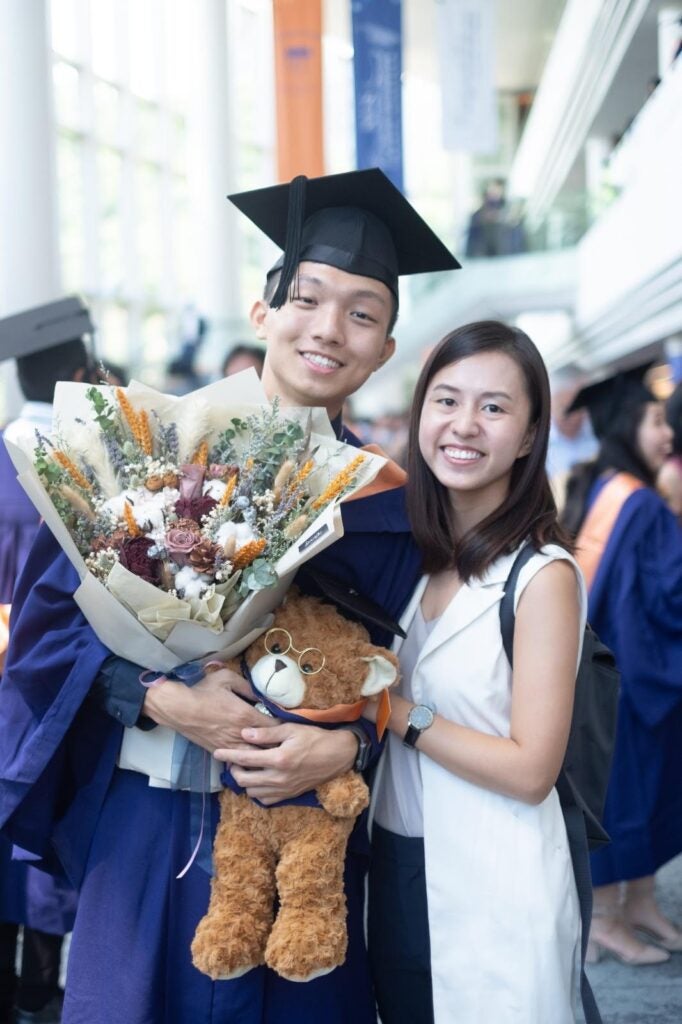
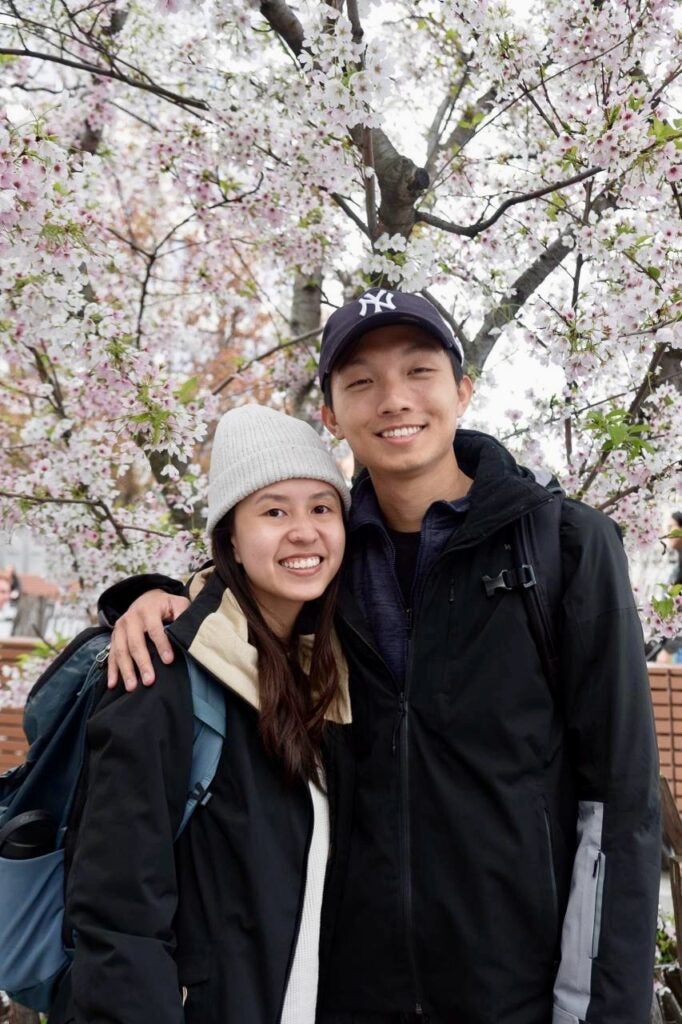
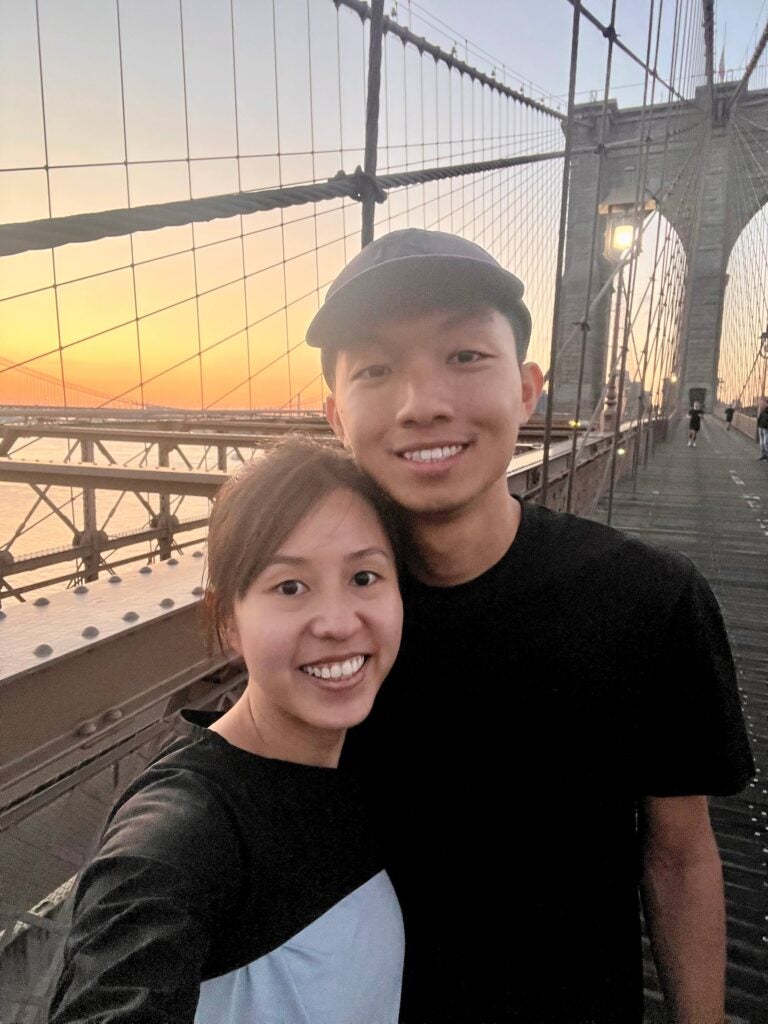
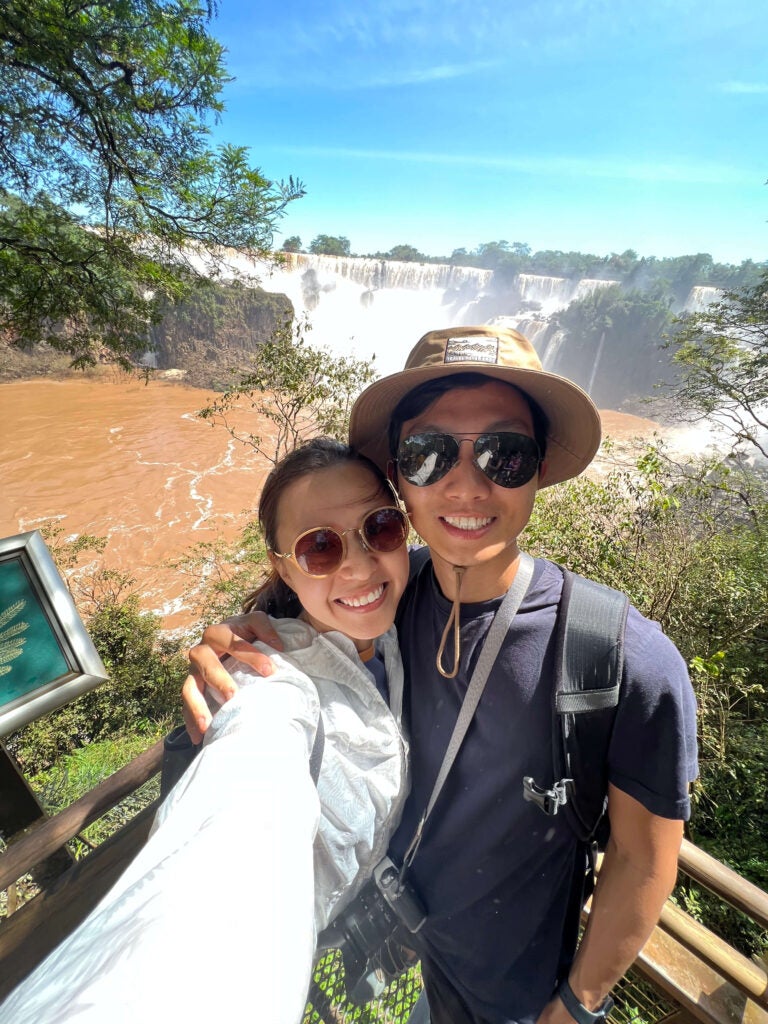
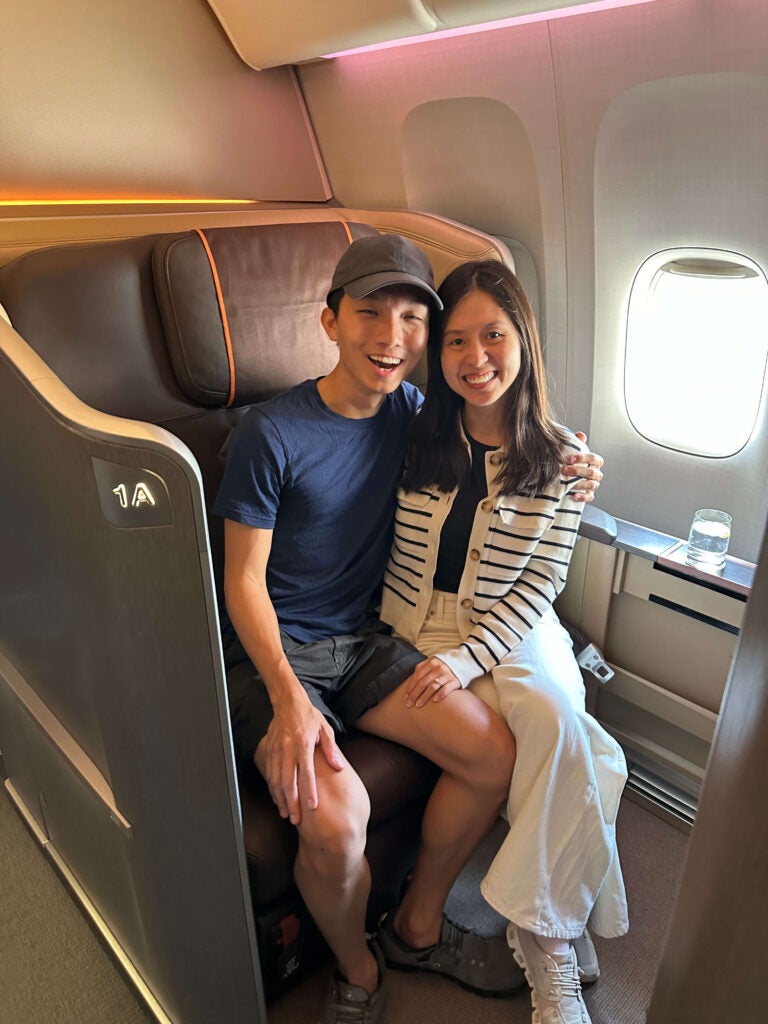
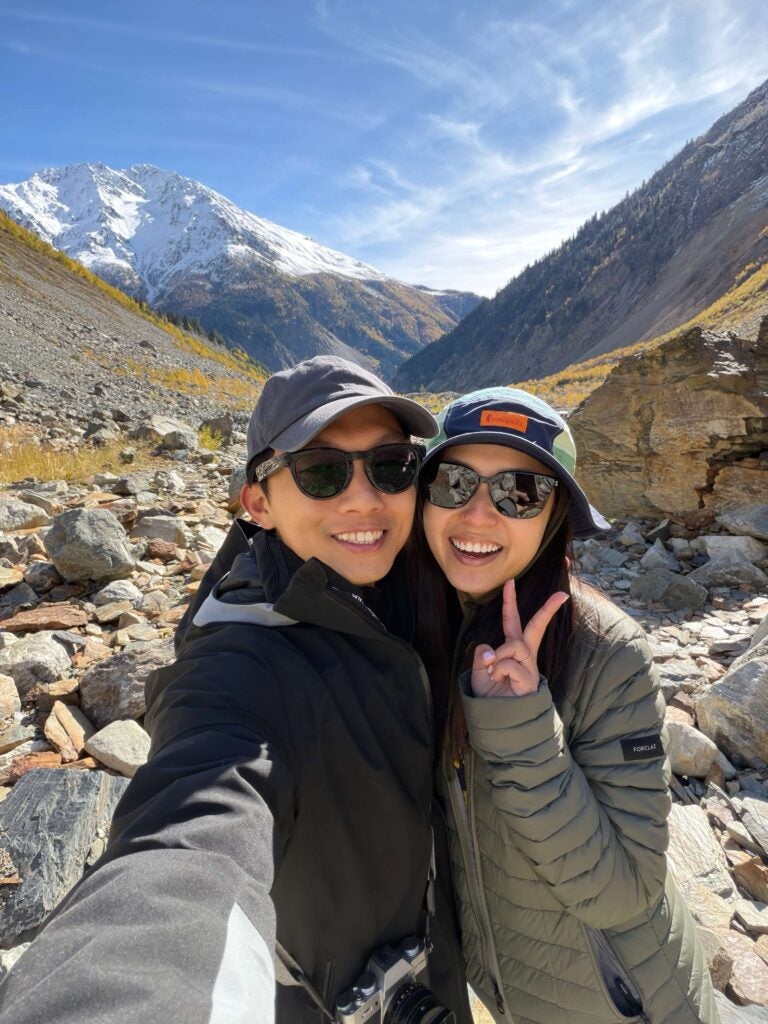
That mindset is firmly rooted in their experiences as NOC alumni. Getting a taste of New York’s startup world in their twenties stripped away the fear of starting from scratch and sparked a curiosity about the world.
There are trade-offs. WiFi is sometimes erratic and they have to pull the occasional all-nighter to bridge time zones. “We have to focus and be productive in any situation,” said Mr Low.
But both agree that the life they have built — skydiving, surfing, chatting with a taxi driver in Zimbabwe who lost his life savings to hyperinflation, witnessing life in Syria after a war — has been worth every inconvenience.
They have since gotten the keys to their new flat and moved in December last year. However, their travel schedule, which is locked in until early 2027, remains as packed as ever.

FREEDOM TO REINVENT: FROM BREWING KOMBUCHA TO DIGITALISING PLANTS
Mr Ethan Eng (Science ’19) was his own boss for a while. But after five years of running one of Singapore’s first kombucha microbreweries, he decided to apply his skills to in a corporate setting. Today he is a project manager at the National Parks Board (NParks).
To some, returning to a 9-to-5 after running your own show might look like a step back, but Mr Eng does not see it that way.
“Rather than leaving entrepreneurship, I saw it more as expanding my repertoire,” he said. “The entrepreneurial mindset never really switches off. It just finds new outlets.”
He is visibly excited talking about his work at NParks. Mr Eng manages Southeast Asia’s largest herbarium digitalisation initiative at the Singapore Botanic Gardens Herbarium, helped develop the herbarium’s first content creator campaign, explored public-private fundraising, and initiated a partnership with LASALLE College of the Arts. Some of these were inbound opportunities the team decided to pursue, while others fell outside the usual boundaries of the role entirely, requiring him to figure things out from scratch with the full support of his boss.
“I’ve always been resourceful enough to identify the gaps in my knowledge and go find what I need to fill them,” he said.
As with numerous NOC alumni, he attests to how the experience fuelled his entrepreneurial desire. He spent one year in Stockholm, where he interned at an established life sciences startup while attending lectures at KTH Royal Institute of Technology. Being surrounded by PhD-holders who were a blend of “serious science and entrepreneurial energy” reinforced his desire to start Kombynation Co., the kombucha company he co-founded in his final NUS semester.
Returning to a corporate setting needed some getting used to. Decisions that flowed freely now drip through governance layers and stakeholder sign-offs, though he has come to see the value in that structure too.
Having taken well to his new role, he continues to find ways to improve processes by harnessing the possibilities that new AI tools bring, drawing on the entrepreneurial instincts he has carried with him throughout his career. He said, “People with non-linear paths often bring exactly the kind of cross-domain thinking, adaptability and bias for action that organisations increasingly need.”
FREEDOM TO CARE: FROM EXPERIENCE TO ADVOCACY
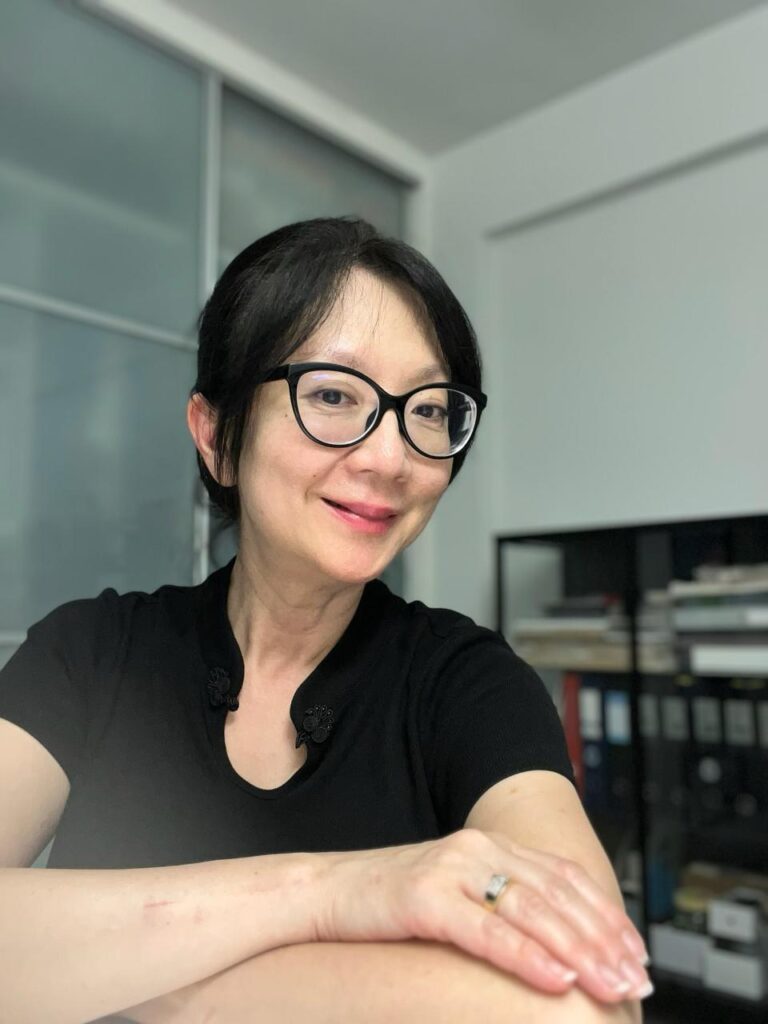
Ms Janet Yeo (Design & Environment ’88) began her career as a sales and design consultant specialising in French kitchen cabinetry. She spent over two decades in the furniture industry before partnering with a university schoolmate in his interior architectural consultancy firm.
Over the past four years, she balanced running the business alongside caring for her mother, who was living with dementia. The experience proved deeply transformative — reshaping her outlook on life, career and care.
“Witnessing her decline — from a fiercely independent woman to someone who felt lost without my physical presence — was deeply painful. It also opened my eyes to the realities of ageing, and the gaps in how our environments and society support older adults,” said Ms Yeo.
Ultimately, it propelled her to advocate for a greater understanding of ageing, pursue a Master of Gerontology, and found AgeWise Life, a platform focused on ageing advocacy, education and community engagement around eldercare.
One of the primary challenges of this mid-life career pivot has been transitioning from a familiar industry into a new and evolving field. “While academic knowledge can be acquired, the practical aspects — such as navigating regulations, building networks, and establishing the right partnerships — have been more complex and less straightforward,” said Ms Yeo.
To ensure financial stability, she continues to maintain a foothold in interior architectural work, while gradually building AgeWise Life through pilot service programmes and stakeholder engagement. Despite the challenges of balancing an existing career alongside a newer one, she remains clear in her intent.
“Through this work, I hope to contribute meaningfully to how we support ageing with dignity and purpose.”
-
 What AI Can’t DoMr Xue Wen Tan (Engineering ‘19, PhD ‘25) became an AI scientist after gradu...
 -
 The Voice That Went ViralA decade after joining her family’s Michelin Bib Gourmand restaurant, Ms Zara ...
 -
 Delayed, More Deliberate, and Less Fertile: What the Latest General Household Survey Tells Us About Marriage in SingaporeSingaporeans aren't marrying less — they're marrying later and more deliberate...