LISTEN AND LEAD
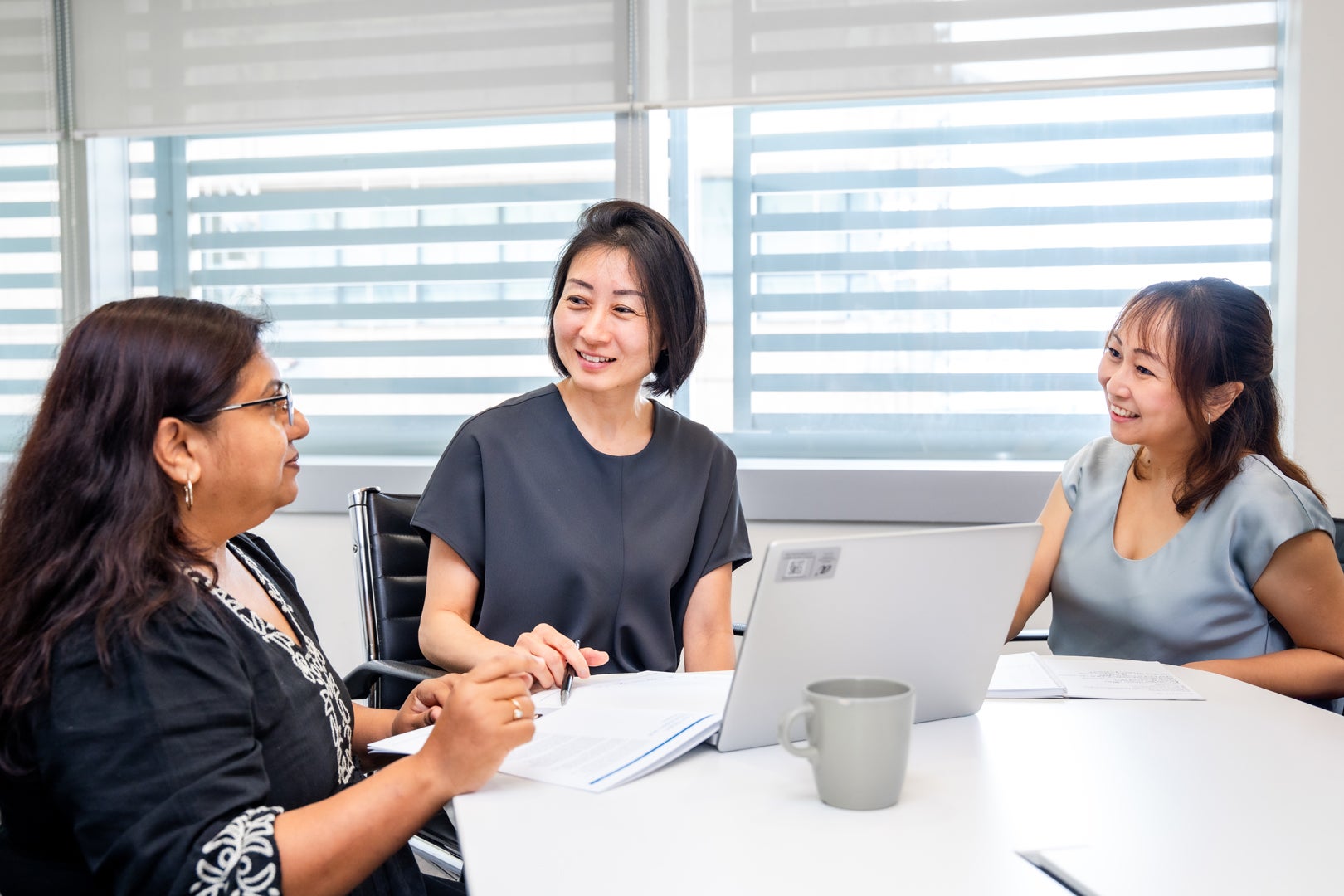
Today, Ms Koh leads TRUST in close collaboration with co-developing agencies GovTech, Ministry of Health and health-tech agency Synapxe. Speaking in a meeting room at Biopolis, Ms Koh offers clues as to why she is effective at bringing people together. She’s personable, self-deprecating and quick to chuckle. During the photoshoot for this article, she was considerate of a colleague’s time, remarking, “I bet you didn’t wake up this morning thinking you would have to pose with me!”
Her most vivid memories of NUS are similarly people-centred. As an undergraduate, she helped organise orientation camps, once transforming a dilapidated dwelling into a haunted house experience for new students. During her postgraduate years, she forged friendships over long nights in the laboratory.
She also remembers the support of Assoc Prof Chew. “We were sharing the same open laboratory, working day and night,” she recalls. “He would come back on Sundays, sometimes with his kids, not just to see his lab but stop to chat with the rest of us.
“It’s very nice that you’re not an invisible undergraduate student or postgrad. Somebody is actually spending time talking to you, to understand what you’re doing.”
The experience shaped how she approaches leadership today. Success, she believes, is never individual. “When you’re successful, bring others along,” she says. “Create opportunities for the next generation, show them what’s possible, and help make these spaces more accessible than we found them”.
That people-centric philosophy is reflected in the way she manages TRUST’s growing ecosystem of clinicians, engineers, policymakers and data scientists. “People have very different languages when it comes to communicating and very different definitions of success,” she says. “As a leader, it’s important to spend time listening and understanding where different people are coming from and what matters to them.”
Assoc Prof Chew is not surprised that the graduate student he once shared ideas, food and laboratory space with has found herself in this role. He remembers her as always having been that “diligent and careful scientist”, very “systematic” and “thoughtful”. “One could already see those big-picture thinking qualities,” he says.
BUILDING CONFIDENCE
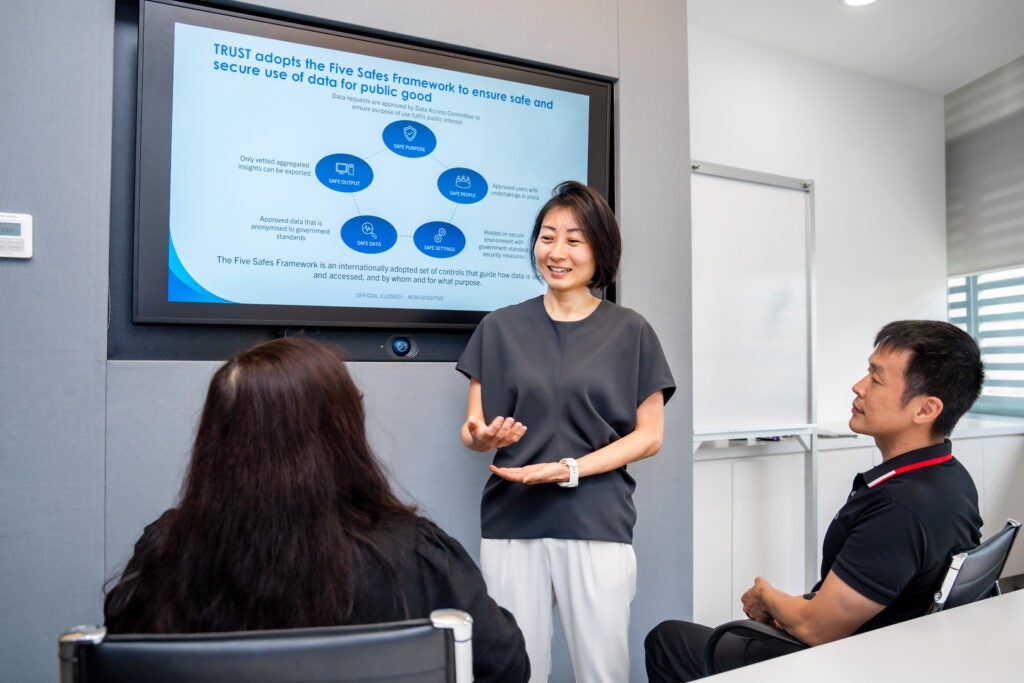
For Ms Koh, the big picture includes strengthening public trust in the system itself, where the stakes are sensitive health information. To this end, the data shared at TRUST is anonymised and secured, while access requests undergo rigorous review to ensure projects serve the public good and have scientific merit.
The platform is already supporting research spanning artificial intelligence and machine learning, infectious diseases, metabolic and endocrine health, and population health. Researchers are using the data to better understand diseases, identify risk factors, develop new interventions and evaluate public health policies. Plans are underway to adapt the platform and its governance and access frameworks to other research domains beyond health.
Its significance could extend well beyond Singapore. Much of the world’s biomedical research has historically been built on datasets that are overwhelmingly Western. Asian populations are often under-represented.
“That means if the underlying data that’s used to generate new therapeutics or drugs comes from such a biased data set, it will most likely not benefit our region and our Asian phenotype,” says Ms Koh. “Having this resource now means a lot to Asian biology and health challenges affecting Asian populations today.”