WHO SHE IS
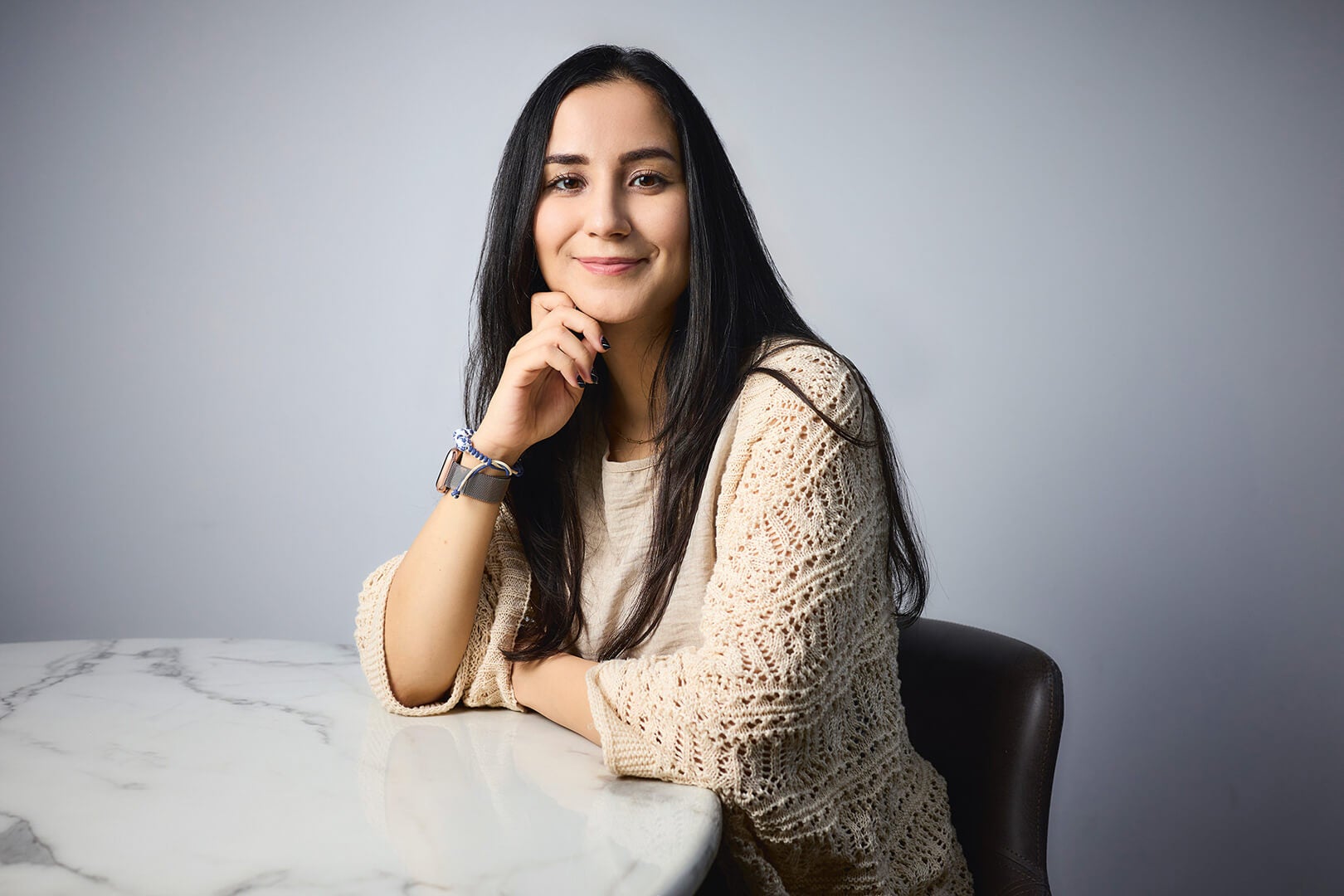
Ms Zhala Sarmast was nominated along with her teammates for the 2016 Nobel Peace Prize for their efforts in empowering women through sports. Currently a Technical Content and Communications Strategist with SepPure Technologies, she is also a published author with a keen interest in music.
When Ms Zhala Sarmast was a young girl in Kabul, Afghanistan, she attended the kindergarten at her parents’ workplace, the National Radio and Television of Afghanistan (RTA). Her early introduction to cycling came through her father, who would cycle to work with her daily. “He had a small seat at [the] front of the bike [where I would sit],” she recalled. “I have really fond memories of my dad. When he was done with work, we would cycle to get ice cream and then go back home.”
Ms Sarmast lost her father to cancer when she was just five, but she continued to carry the love he had for cycling in her own life. But as she grew older, she found that the sight of a female on a bicycle would draw disapproving looks from strangers. “Decades of conflict have significantly influenced Afghan society,” she explained. “This has contributed to a noticeable tendency toward conservatism among many people in the country, though certainly not all. It was heartbreaking for me to not be able to cycle so easily anymore.”
In 2013, however, Ms Sarmast came across an exhibit for the Afghanistan National Women’s Cycling Team. Intrigued, she struck up a conversation with the team and obtained the telephone number of the coach. But her hopes faced a hurdle in the form of her mother, who cited safety concerns. Eventually, her mother relented on the condition that she stay in constant contact. She started out in the Afghanistan Cycling Federation and joined the under-18 cycling team. After consistently doing well in competitions, she joined the national team and has been part of it since.
The team has participated in countless competitions. This includes races in the many provinces of Afghanistan — where the team would be escorted by police cars to ensure its safety — as well as international competitions and tournaments, including in India, France, Switzerland and elsewhere.
The danger in Afghanistan was particularly acute. “I’ve had teammates who were physically attacked. I, too, was pushed off the bike once,” she revealed. Another teammate lives with a lifelong spinal injury after a security guard unleashed a dog on her, causing her to fall.
In 2016, the team, which included Ms Sarmast, was nominated for a Nobel Peace Prize. Ms Sarmast co- authored two books, Redefining the Rules and #MyVoice (Vol. 7), where she discussed the awareness their efforts created. “It was a significant milestone, because it highlighted the challenges that Afghan women were dealing with on a daily basis and the great impact that every action could have,” she explained. “When we joined the cycling team, our purpose, for the most part, was to cycle and to become professional cyclists. But somehow we simultaneously became activists as well.”
A TRANSFORMATIVE TIME AT YALE-NUS
Ms Sarmast, the third child of two engineers, attended a summer programme at Yale University, where she met Yale-NUS undergraduates. “That experience gave me a closer look at Yale-NUS — Singapore’s first liberal arts college — and I became deeply interested. The curriculum seemed to be intellectually very engaging, and the community seemed unique – full of bright, driven and talented students. I was also drawn to the interdisciplinary common curriculum, the incredible faculty, and so much more.” She enrolled in Yale-NUS in 2018.
She calls her experience at Yale-NUS “transformative”. “It really changed me into a different and, I think, better person,” she shared. “There are so many layers to the Yale-NUS experience, and that made it more special.” Students often enjoyed having informal chats with friendly professors over coffee or a meal. The fact that it was a residential college facilitated friendships as well. “I feel like when we live in a place with a community for four years, it really turns us into a family. The term ‘home away from home’ becomes very fitting.”
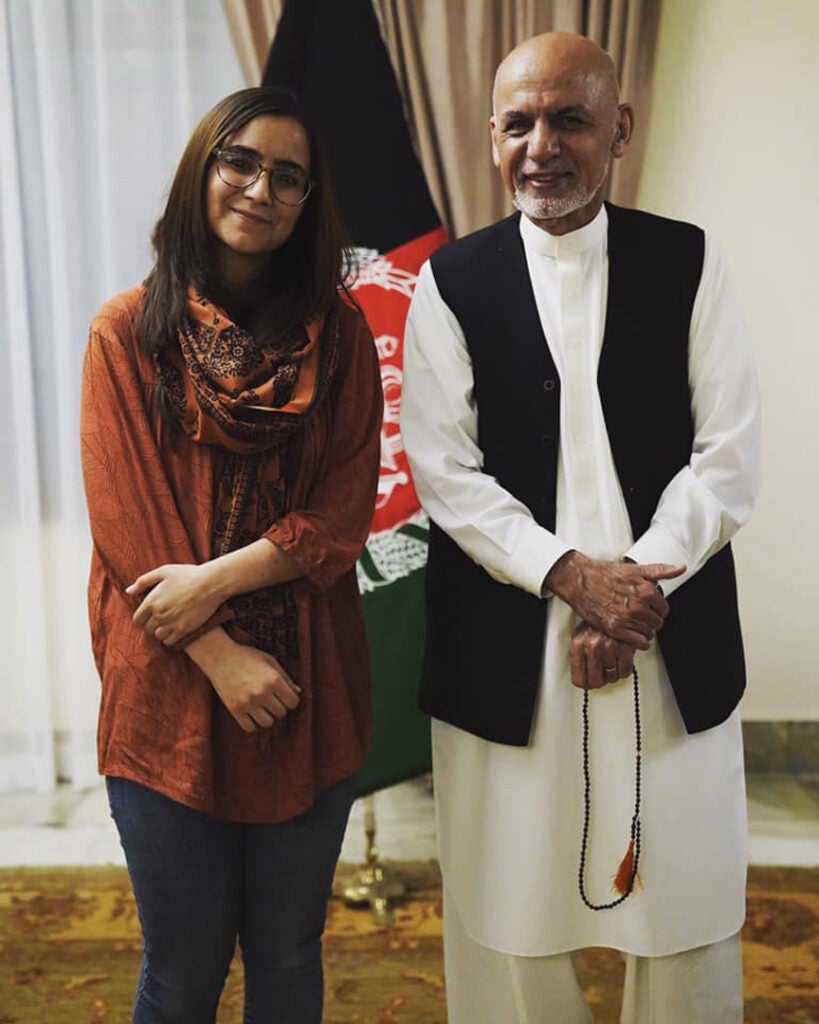
Ms Sarmast took full advantage of the many opportunities available to her as an undergraduate. During the summer of 2019, she was part of a research project at the office of former Afghan President Dr Ashraf Ghani, creating a documentary on him and working on his presidential campaign. In subsequent summers, she engaged in a variety of activities: researching ‘Islam and Sexuality’ with Professor Gretchen Head; interning with the BW Group; and working with Professor Stephen Monroe as a Research Assistant on a study exploring whether qualifications are advantageous to historically marginalised candidates in Afghanistan. In her final year, Ms Sarmast worked with Professor Chan Kiat Hwa on a biochemistry project using peptide hydrogels and attended the Yale Summer Institute in Bioethics.
THE DAY THE MUSIC DIED
She remembers the date the Taliban returned to power: 15 August 2021. She had dislocated her knee and taken two semesters off to recover from the injury back home. “I believe that things happen for a reason. If I [had been] in Singapore, my family would [have been] stuck in Afghanistan. My sister and I played critical roles in managing all paperwork to apply for visas and have our family relocate” she said, adding that by September 2021, her family members had left Afghanistan.
Ms Sarmast calmly described horrific happenings growing up in Afghanistan, whose political instability stretches back decades, predating not only the Taliban, but even the Soviet invasion of the country in 1979. Growing up, she continuously encountered explosions and bombings. In 2014, a suicide bomber came to a concert held by the Afghanistan National Institute of Music (ANIM), founded by her uncle and the only music school in the country. Fortunately, her uncle survived, though he was badly injured. “While the past two decades of democratic transition brought significant progress, many influential figures working to create inclusive opportunities often faced violent opposition from extremist forces – and far too many became targets as a result,” said Ms Sarmast.
For someone that grew up in an artistic family — her grandfather established Radio Afghanistan’s Big Orchestra, her uncle is the first Afghan to earn a PhD in music, and she herself has been a member of ANIM’s Guitar Ensemble — it is painful for her to accept that music is now banned in the country. After the Taliban returned, musical instruments were destroyed in the country, including in her uncle’s music school. “There are times when the Taliban [conduct] house checks unannounced. If instruments are found inside, it can be extremely dangerous,” she said. Her uncle ultimately evacuated his students and moved his school to Portugal.
After years of promoting women’s rights through cycling, it has been a source of heartbreak for Ms Sarmast to see Afghan women being forced to take many steps backwards: women are no longer allowed to work or be seen in public. “Even when they are at home, the curtains must be drawn,” she revealed.
As such, members of the cycling team fled Afghanistan, and after many attempts to leave, Ms Sarmast finally returned to Singapore in 2022 and continued her studies at Yale-NUS. Her most recent race with the team, which still represents the country but is based outside of it, was the Afghan Women’s Road Championship in Aigle, Switzerland the same year.
THE WHEELS KEEP TURNING
Having returned to Singapore to complete her degree, Ms Sarmast chose to stay here, and currently works as a Technical Content Strategist for NUS spinoff SepPure Technologies. Established in 2018, the company specialises in the engineering and manufacturing of hollow fibre membranes for organic solvent nanofiltration. Ms Sarmast is also thinking of pursuing her master’s degree. “I am yet to decide whether I want to do something interdisciplinary, where I can focus both on media and science at the same time, or whether I would want to make my concentration more niche,” she revealed.
What tops Ms Sarmast’s list of goals, however, is to see more of her mother. “My dad passed away about 18 years ago, and I went abroad when I was 16.” Her mother and brother live in Germany, while her sisters live in the US. Afghans face visa issues with many countries, making it hard for the family to reunite. “My mum has been living by herself for several years, so I want to be closer to her,” she shared.
Ms Sarmast is thankful that at least her family has managed to escape, but is mindful of those who have been left behind. “We try our best to contribute, one way or another to people and our families in Afghanistan. But there’s only so much we can do.”
In the meantime, Ms Sarmast has kept up her cycling routine, and is prepared to join the Afghan national team if a significant event comes up. “I do cycle quite a bit in Singapore,” she shared, adding that she recently went for her first ride with the local Matador racing team, and was surprised by the number of cyclists on the roads early in the morning. “[The teams] all start at 5am sharp, and they’re pretty much done by 10am after having done some really competitive, long rides,” she observed. “What I struggle with is having to stop at every traffic light, because that kind of negates the whole point of training to some extent! It’s a bit challenging, for sure, but I’m happy that there are still teams that I can train with in Singapore.”
To hear her speak about what she envisages for her future reflects the unquenchable hope Ms Sarmast possesses, despite all she has seen and experienced in her young life. “Growing up in Afghanistan came with so many challenges, but I feel there was always a collective sense of hope in the country that inspired me,” she said. “I always looked at [the] people, and it always gave me hope.”
Main photo by Aik Chen. Other photos provided courtesy of Zhala Sarmast.
-
From One Family to Many: The Living Legacy of the LausEvery legacy gift has a life story to tell, and precious values to pass on. For ... -
Answering a Higher CallingSingapore’s inaugural ASEAN-Chevening Scholarship recipient Mr Danial Hakim (L... -
Changing the Way the Cookie CrumblesHow a trio of NUS graduates built a thriving business by turning food waste into...