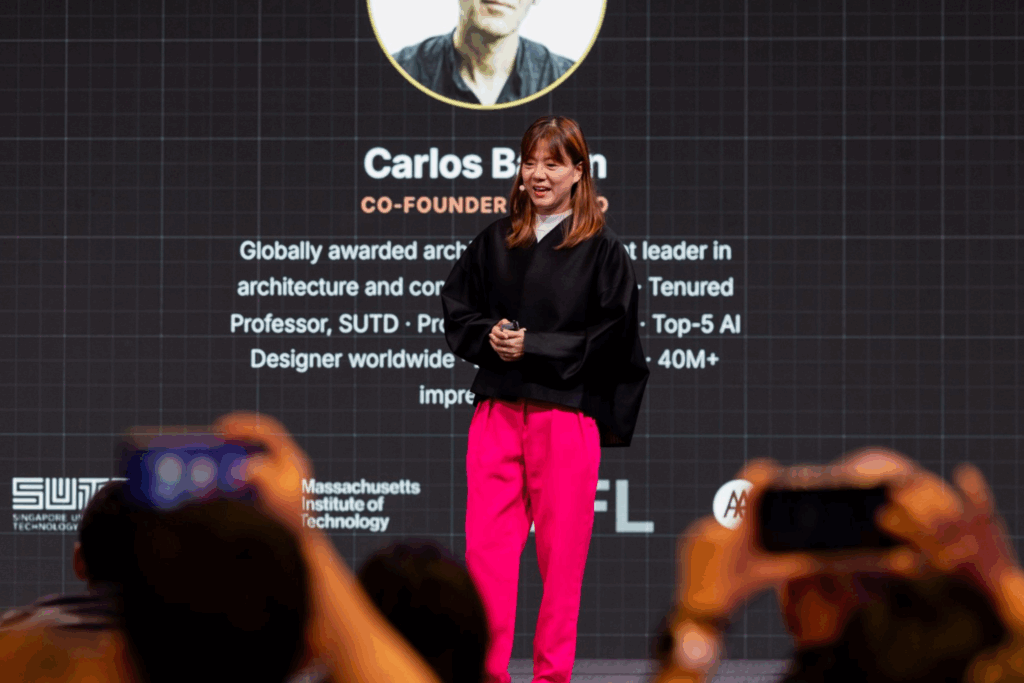
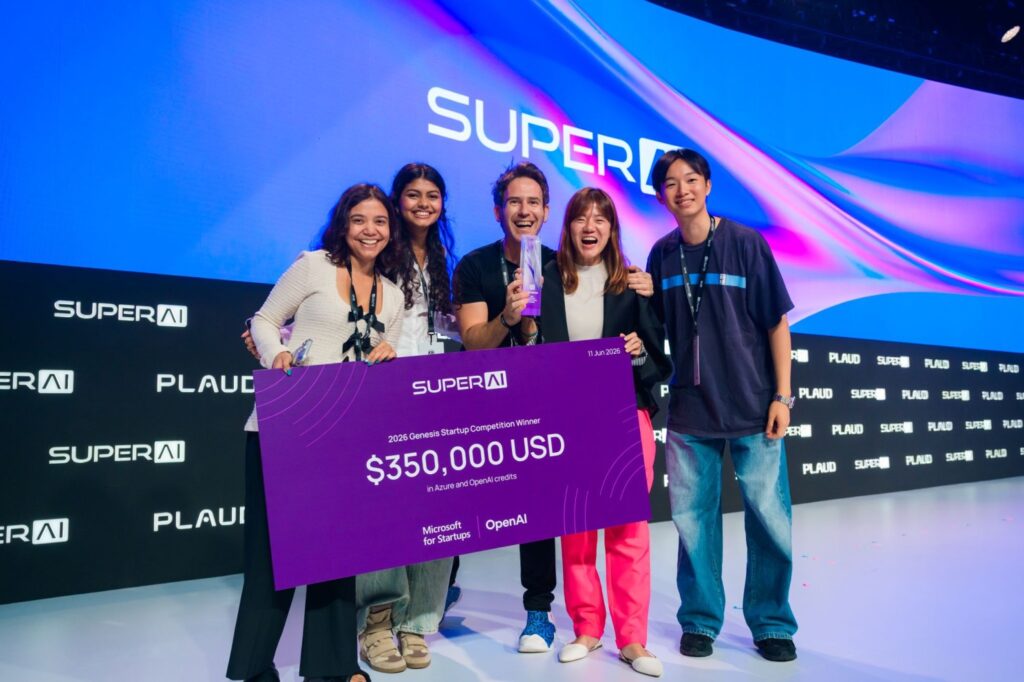
“Open the funnel as early as possible, so people know about you and your product,“ she urges. She is referring to the multi-stage marketing model that guides potential supporters from brand awareness through to financing, and eventually becoming loyal advocates. It is advice that she returns to repeatedly, when sharing her insights.
For new entrepreneurs, opening the funnel means “forming investor-side traction a lot earlier”. They should build an active professional network, earn the trust of probable early backers, and convince them to “cross the line” to commit their first $10,000, $50,000, or $100,000, before the formal round opens.
Fortunately for today’s startup founders, the infrastructure supporting early-stage companies has matured significantly since Ms Goh embarked on her first venture 22 years ago. The diverse network of accelerators, structured mentorship programmes, corporate collaborations, and global networking events are valuable resources that founders can tap into, at various phases of their enterprise endeavours.
Simultaneously, online platforms are critical in supporting the startup cycle at different stages. For example, social media can enhance brand building as it offers cost-effective organic distribution. Ms Goh herself posts frequently on LinkedIn, though she draws the line at what she laughingly calls “cringey” TikTok and IG videos. Jokes aside, she sounds a warning to founders, to not confuse “superficial visibility” with “genuine market validation”.
“Investors are highly discerning. Regardless of how many followers you have on social media, customer-side traction must speak for itself. Investors are going to look directly at your waitlist. How many of these will convert to registered users, and how many, to paid users?
Ultimately, they want to see how large the base of your commercial funnel can grow, to optimise their returns.”
WHEN ANYONE CAN CODE, WHO WINS?
In recent years, AI has been capturing attention across industries. Globally, while an estimated 94% of companies use AI in at least one business operation, Ms Goh notices that the vast majority remain stuck in the “bolt-on AI” phase, layering basic tech tools onto legacy infrastructure. While bolt-on integration can work “if UI/UX (user interface/user experience) is seamless”, it fails in complex settings, such as those in the Architecture, Engineering and Construction (AEC) sector.
In the AEC industry, design-tech stacks are often complex, and a user will require significant time and technical expertise to master the assortment of tools. An interior designer, for instance, will need to use a suite of tools for concept development, modelling, visualisation, rendering, collaboration, and documentation.
As legacy infrastructures are seldom built for today’s workflows and processes, there will be interoperability glitches resulting in fragmented systems and inefficiencies. Consequently, the designer’s creativity is shaped by the limitations of the software, rather than enhanced by it.
These friction points in AEC are precisely what FORMAS.AI wants to address. The platform is an AI-native creative and design workspace where AI amplifies the designer’s intent, and outputs are authentic. “We want to provide a ‘one-stop shop’: a seamless, vertical solution,” Ms Goh explains.
For entrepreneurs exploring AI-first ventures, she points out a current tech paradigm. “With AI, anyone can code. So where is your value proposition?” As software is not going to be the distinguishing factor it once was, she proposes “defensibility, speed, and distribution network” as a way forward.
To build a defensible product, the seasoned company builder recommends highly specific, deep verticals where unique domain expertise and personal stakes can provide a compelling advantage. “This is where you can continue to figure out how AI can solve other complex, industry-oriented issues.” It goes without saying that the founders must also possess precise knowledge of how the products will fit into the users’ daily workflows.
With AI moving things at breakneck speed, founders need to be very clear about where they can win. This may mean becoming a first mover in a new category, or entering an already crowded space with a sharper perspective, a more differentiated product, or a stronger distribution strategy.
“If your product relies on a subscription model, the goal should not be to depend on cold calls forever,” Ms Goh says. “You need to build a community, make onboarding intuitive, and ensure the value proposition is clear enough that users can start using the product immediately, or book a demo as part of a natural onboarding flow.”
For FORMAS.AI, this is already shaping the way the company approaches growth; it is product-led, community-driven, and focused on helping users experience value as quickly as possible.