AlumNUS

When Manga Meets Mental Health

Years of working with students led Ms Renee Chong (Engineering ’04) to recognise that many young people carry feelings they struggle to express. Through MangaChat, she uses storytelling and AI-guided reflection to help them be heard.

“What is one sentence you wish someone very dear would say to you?”

It was a question Ms Renee Chong (Engineering ’04) posed to students during reflective exercises when she was a junior college teacher. Time and again, students who seemed confident would break down.

“They looked cheerful and strong. But many were carrying this void inside them. It made me ask: are we doing enough to build the emotional foundation they need to regulate what they are feeling?” Ms Chong shares.

Over time, she came to believe that one of the biggest challenges young people face is not managing difficult emotions but finding safe ways to express them.

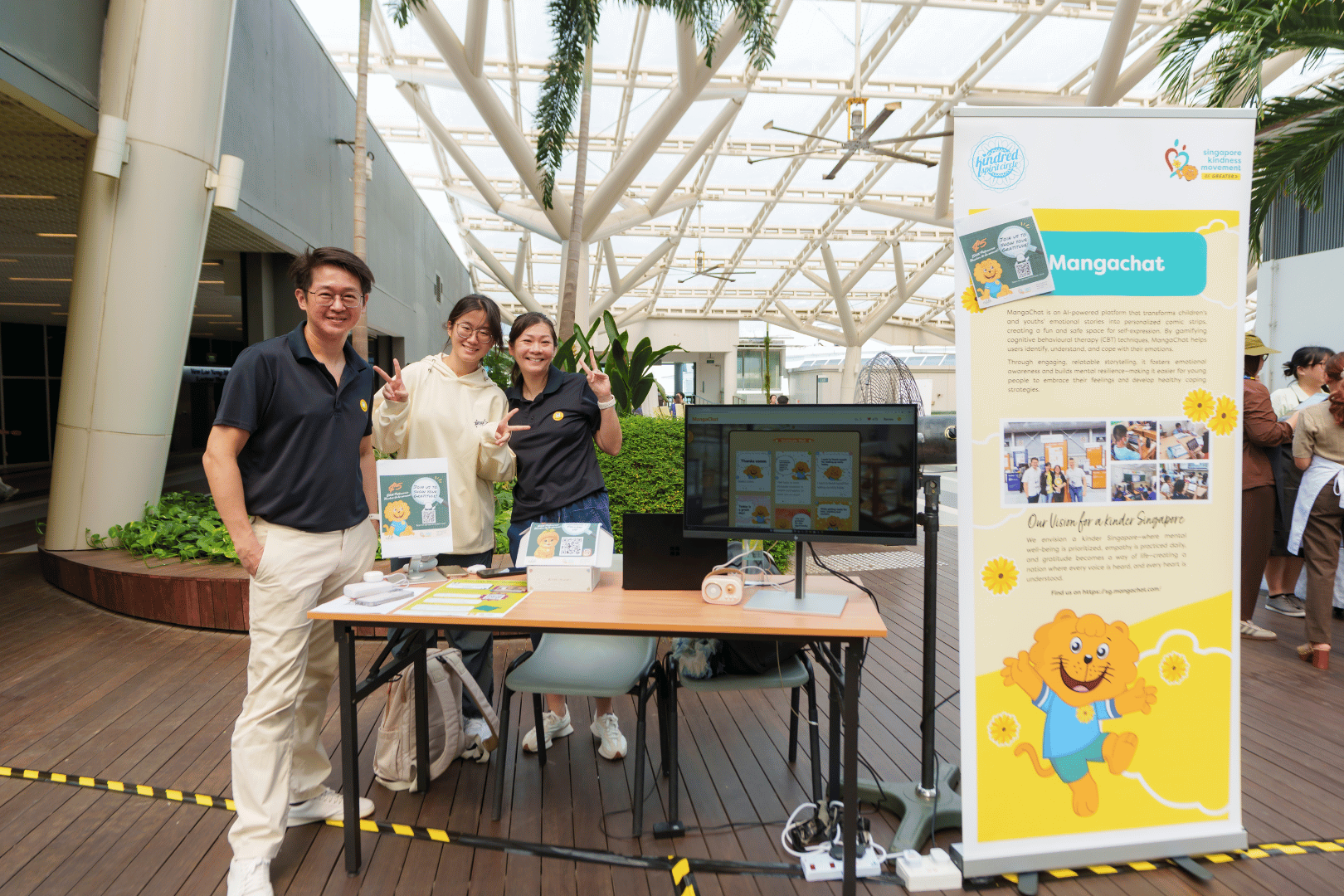
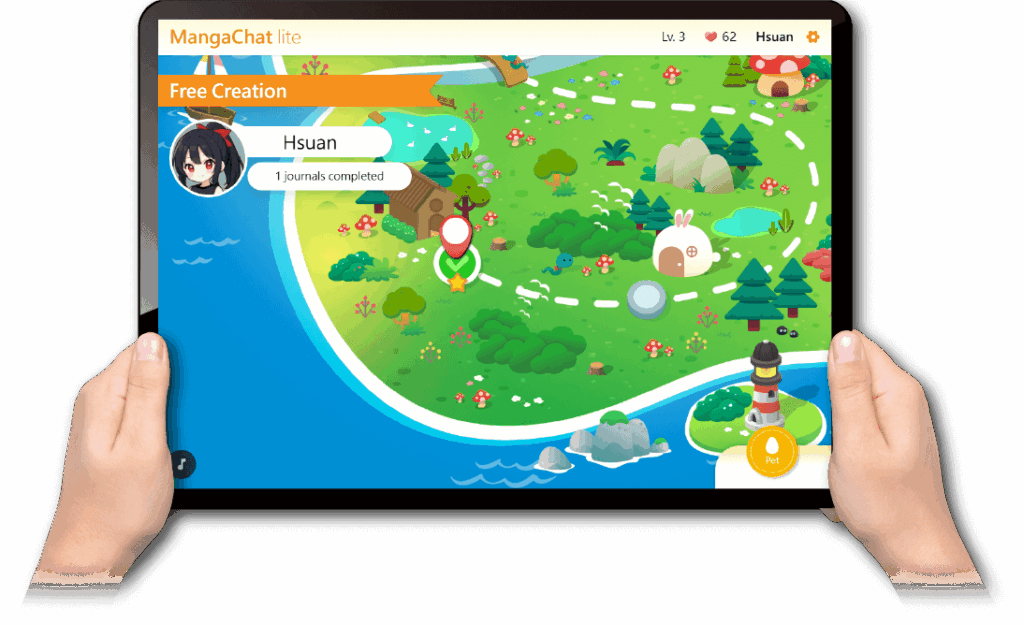
That conviction drove her to co-found MangaChat in 2023, an AI-powered platform that helps young people recognise and express their emotions using storytelling and guided reflection.

Source: MangaChat

A PROBLEM OF SCALING CARE

“It is almost impossible to touch every single soul,” she says. “Teachers need deliberate time to build trust with students before they can open up.”

But a teacher may be responsible for more than a hundred students. School counsellors are often stretched. Too often, support systems kick in only after serious warning signs emerge.

That gap troubled her, especially as young people were navigating pressures that adults did not always fully understand.

“It’s easy to label young people as ‘strawberries’,” she says, referencing a term used to describe those perceived as delicate or overly sensitive to criticism or pressure. But she cautions the critique overlooks the realities of today. “This generation faces a different world. Cyberbullying can spread through a school in minutes.”

The question, she felt, was how to reach students earlier.

DISCOVERING A DIFFERENT APPROACH

In 2023, Ms Chong left her 17-year career in education to tackle the problem from outside the system.

She found her answer in Taiwan.

At a gathering of educators, she met Associate Professor Joe Huang from Tzu Chi University, who had developed MangaChat as a digital gamified journalling platform grounded in cognitive behavioural therapy principles. Launched during the COVID-19 pandemic, it had been deployed by the Taiwanese government in 150 schools.

What caught her attention was its structure. MangaChat gave emotional reflection a clear pathway: identify the feeling, recognise the trigger, make sense of the experience.

“I’ve always believed in journalling as a teacher, but the exercises I set for my students were always open-ended,” she says. “MangaChat guides students to journal in a very structured manner. They learn to articulate emotions very intentionally. The manga-style narratives and characters also make it more accessible for them to approach difficult feelings.”

For Ms Chong, MangaChat also answered a practical challenge: scale. The AI-powered platform helps students build emotional awareness consistently, while giving adults a better chance of noticing concerning patterns before they escalate.

Recognising its potential, Ms Chong brought MangaChat to Singapore and founded its local arm as a social enterprise in late 2023.

EARNING TRUST IN A SENSITIVE SPACE

Bringing MangaChat to Singapore took more than launching an existing platform in a new market.

Ms Chong had to learn quickly: deepening her understanding of mental wellbeing through courses and reading, while picking up realities of entrepreneurship, from pitching and fundraising to building trust with cautious stakeholders such as schools and social service agencies.

In 2024, the startup was selected for the inaugural Technology for Sustainable Social Impact accelerator by NUS Enterprise and raiSE, gaining funding, mentorship and access to networks. A year later, it joined the NUS Medicine Digital Advanced Technology Accelerator, which helped the team strengthen credibility with healthcare and community partners.

Still, traction was hard-won.

“The journey is really about integrating AI technology with mental health care,” Ms Chong says. “But using AI in this space is very foreign in Singapore. I need to ask: how can I build trust with stakeholders and convince them that AI usage here can be responsible?”

To address those concerns, MangaChat put its AI chatbot through third-party validation under the global AI assurance sandbox by IMDA and AI Verify. This helped the team test the chatbot more rigorously and identify blind spots in its design.

There was also the challenge of sustainability. Unlike charities, which may tap funding to offer programmes at low or no cost, social enterprises must generate enough revenue to keep going.

The personal cost has been steep.

“I left my five-figure income to do this, and my co-founder, Bernard Soo, left an even more lucrative career in banking,” she shares. “There was no income for almost two years. I sold my house. As a single parent, I had to support my two daughters and four cats.”

WITNESSING IMPACT

But the impact she sees keeps her going.

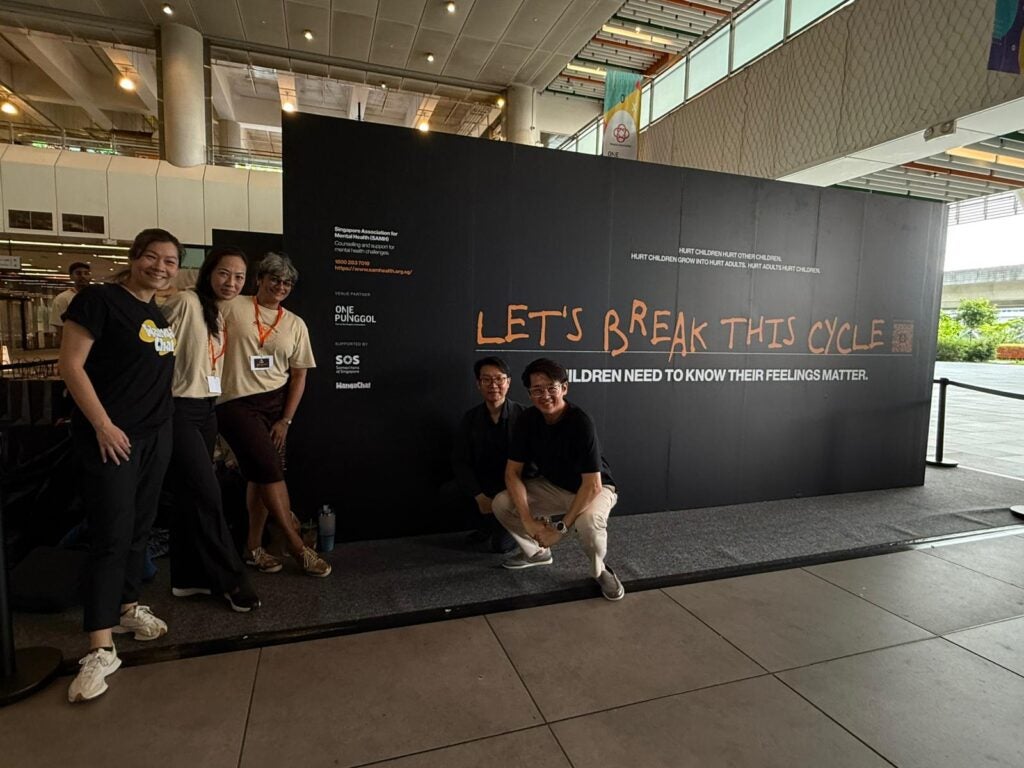
One early example came through the Singapore Association for Mental Health. A young user had begun journalling on MangaChat partly to unlock new avatars. But after about 20 entries, she opened up to her counsellor about the emotional distress she had been carrying.

“In counselling, young clients may only see their counsellors once every few months,” she says. “In between sessions, MangaChat journalling helps them work through their emotions and experiences. If very negative emotions surface, the counsellor receives a notification. That gives counsellors more to work with than what surfaces during an appointment.”

The work also changed Ms Chong as a parent.

For years, she had assumed that her experience as an educator helped her understand young people.

“When my daughters were young and came to me saying, ‘Mommy, my friend doesn’t want to friend me anymore,’ I would say, ‘It’s okay, go and find another friend. What’s the big deal?’” she recalls. Working on MangaChat made her realise she had been trying to solve the problem before validating the feelings.

That lesson became personal when her younger daughter, then 18, struggled with social anxiety after feeling ostracised by friends in school. Instead of rushing to offer solutions, Ms Chong learnt to listen first.

“When I just sat with her in the emotional journey, I saw the change in our bond,” she says. “She could communicate openly with me and we became closer.”

DRIVEN BY MISSION

Since arriving in Singapore, MangaChat has continued to evolve. It now includes emotional literacy content developed with partners, as well as interactive social stories for younger children. The aim is to make emotional awareness more accessible across different ages, settings and levels of need.

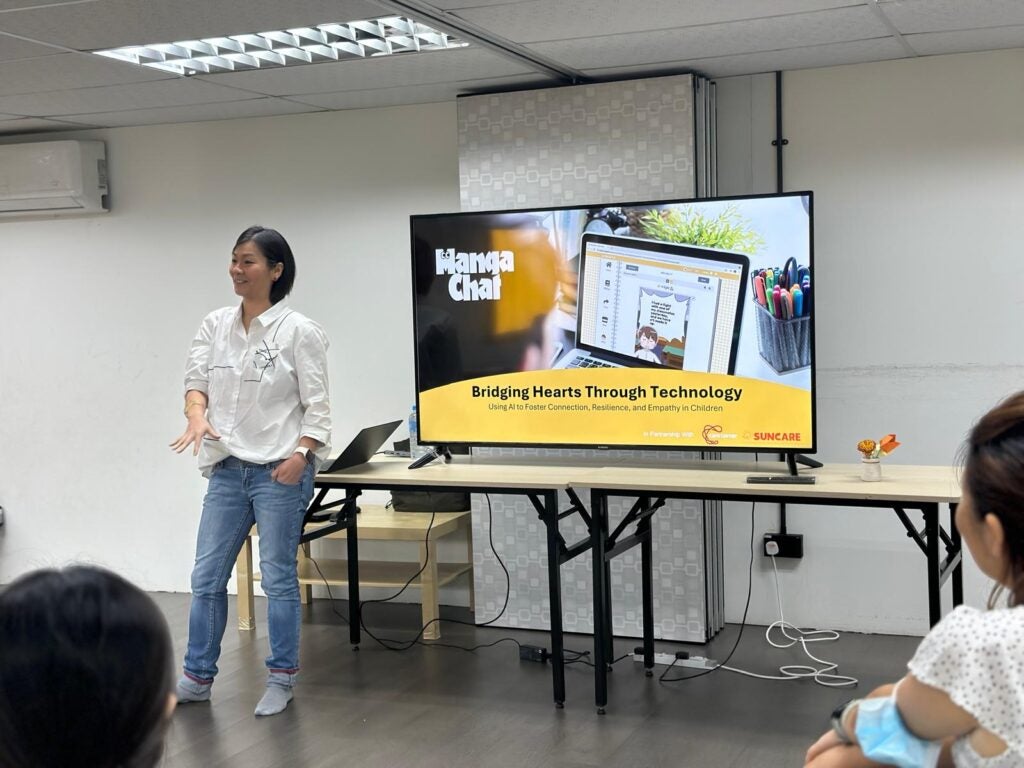
Ms Chong and her co-founder continue to run the enterprise leanly, relying on grants while pushing for wider adoption. Momentum is building: MangaChat is now in talks with partners in Vietnam and has signed with one of Japan’s largest education distributors.

For Ms Chong, the mission remains deeply personal.

“Looking back, I think about my students who self-harmed, and my own daughters not opening up to me,” she says. “I did not have the mental health literacy to understand what was happening beneath the surface then. That is why I’m in this with all my heart now. I’m fully committed.”

Photos courtesy of Renee Chong