AlumNUS

The Other Bean in Your Chocolate

Volatile cocoa prices have sparked a race to find substitutes. Academic turned entrepreneur Dr Anli Geng (Engineering PhD ’03) is betting that an overlooked soy by-product could be the answer.

“My career is technological research, but my personal interest is food,” says entrepreneur Dr Anli Geng. “Mycosortia combines both my profession and my personal interest.”

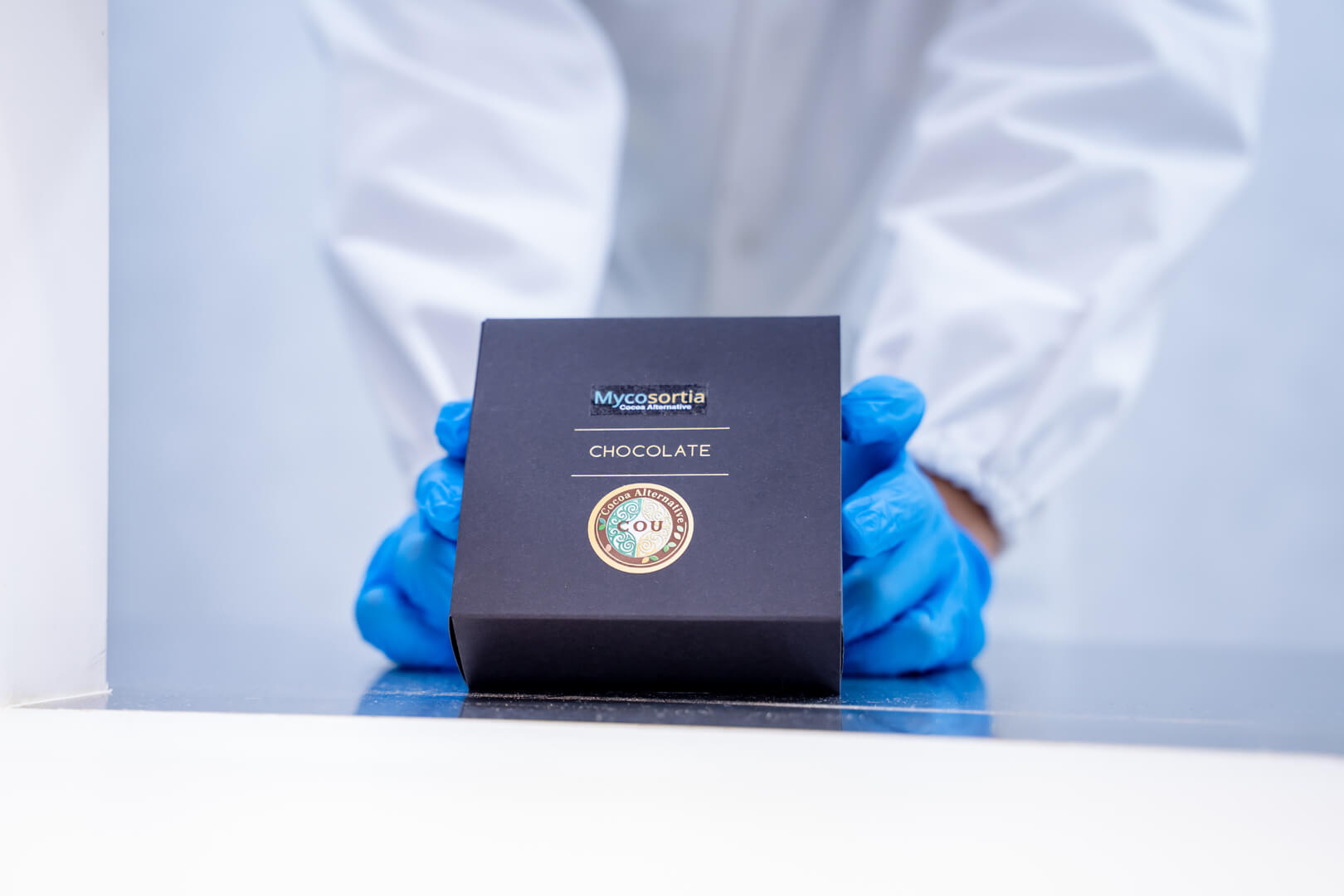
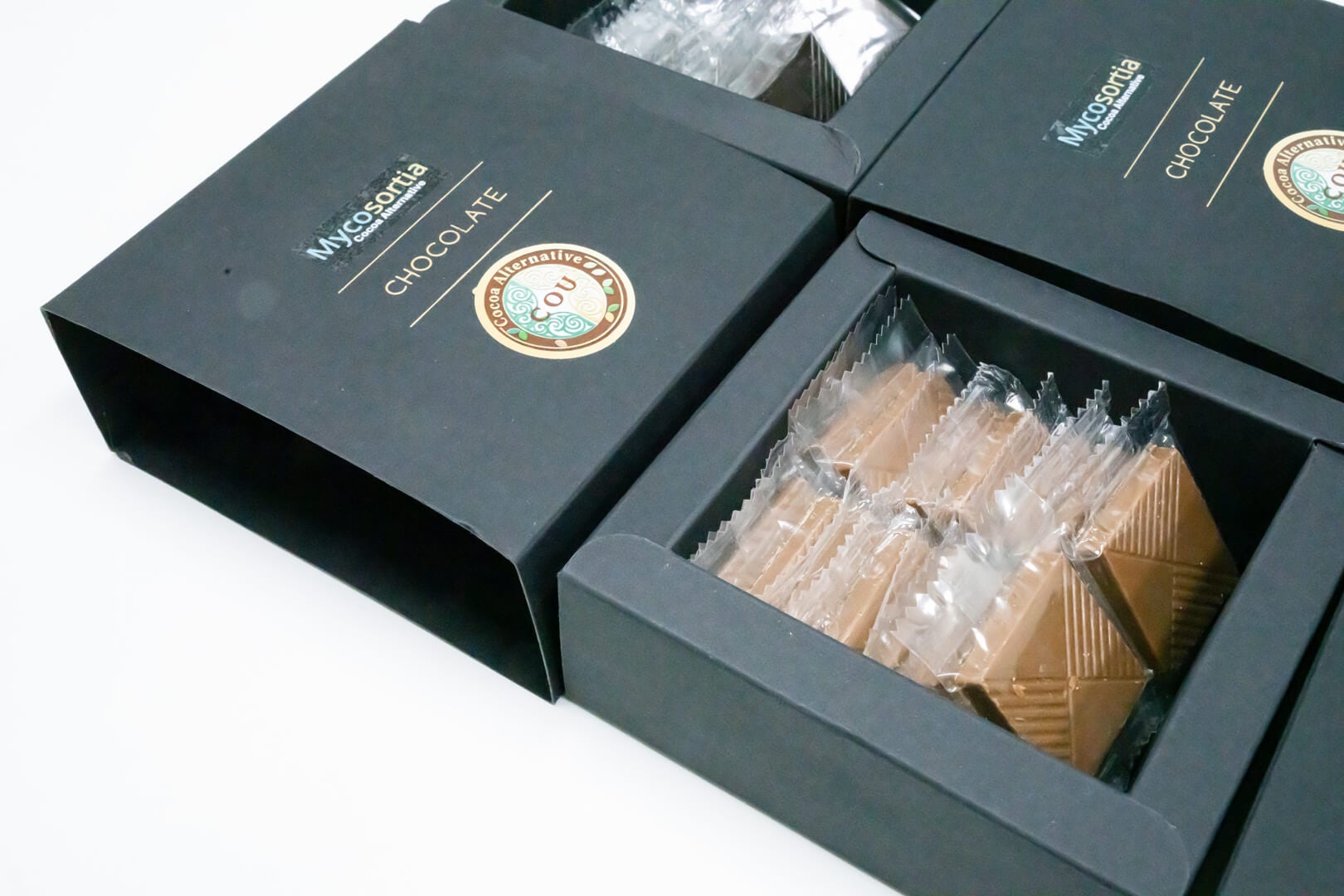
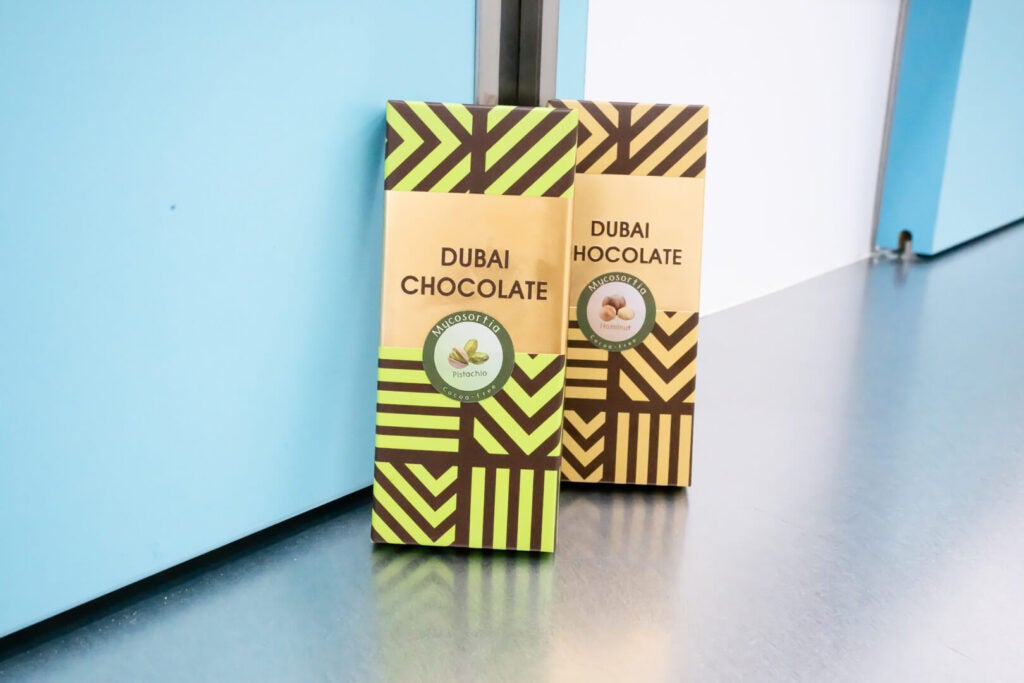
That intersection between science and flavour takes form in the startup’s unique creation, COU Dubai Bites. The product has seen high demand, riding on the viral popularity of Dubai Chocolate, a decadent chocolate bar filled with pistachio-tahini and pastry bits.

But what is remarkable is that Dubai Bites replicates the famous bar’s flavour with not one whit of cocoa. And for good reason.

Cocoa prices have been prone to dramatic swings. In the 1970s, they surged from around US$500 to nearly US$6,000 a tonne. In 2024, they again reached record highs, briefly exceeding US$12,000 a tonne before slumping. The causes vary, from poor weather and crop disease to ageing trees in West Africa, where most of the world’s cocoa is grown, but the pattern is familiar: periods of stability punctuated by sharp disruptions.

Dr Geng believes climate change could make such disruptions more frequent, leading to increasingly unreliable supply and price volatility. “Cocoa is produced in a very narrow region in Africa,” says the chemical engineer, “which makes this ingredient very climate-sensitive.”

This vulnerability has motivated researchers and entrepreneurs around the world to search for cocoa alternatives. Scientists, including those from NUS, have experimented with carob. Startups are investigating cell-cultured cocoa, and others are exploring ingredients ranging from grains to seeds.

Dr Geng’s solution begins much closer to home: with okara, the soybean pulp left behind after soymilk production. It is an ingredient most people never think about. In Singapore, however, it is produced in abundance by tofu and soy beverage manufacturers. For Dr Geng, it represented an overlooked opportunity.

FROM WASTE TO CHOCOLATE

Mycosortia was founded in 2022 with the goal of finding higher-value uses for okara. The “COU” in the name of its chocolates, in fact, stands for Creative Okara Usage.

Developing chocolate alternatives was not part of the original plan. Initially, the team experimented with plant-based meat and cheese. Then cocoa prices began their dramatic climb. “We pivoted to chocolate because at that time the cocoa price had soared to US$10,000 per tonne,” says Dr Geng.

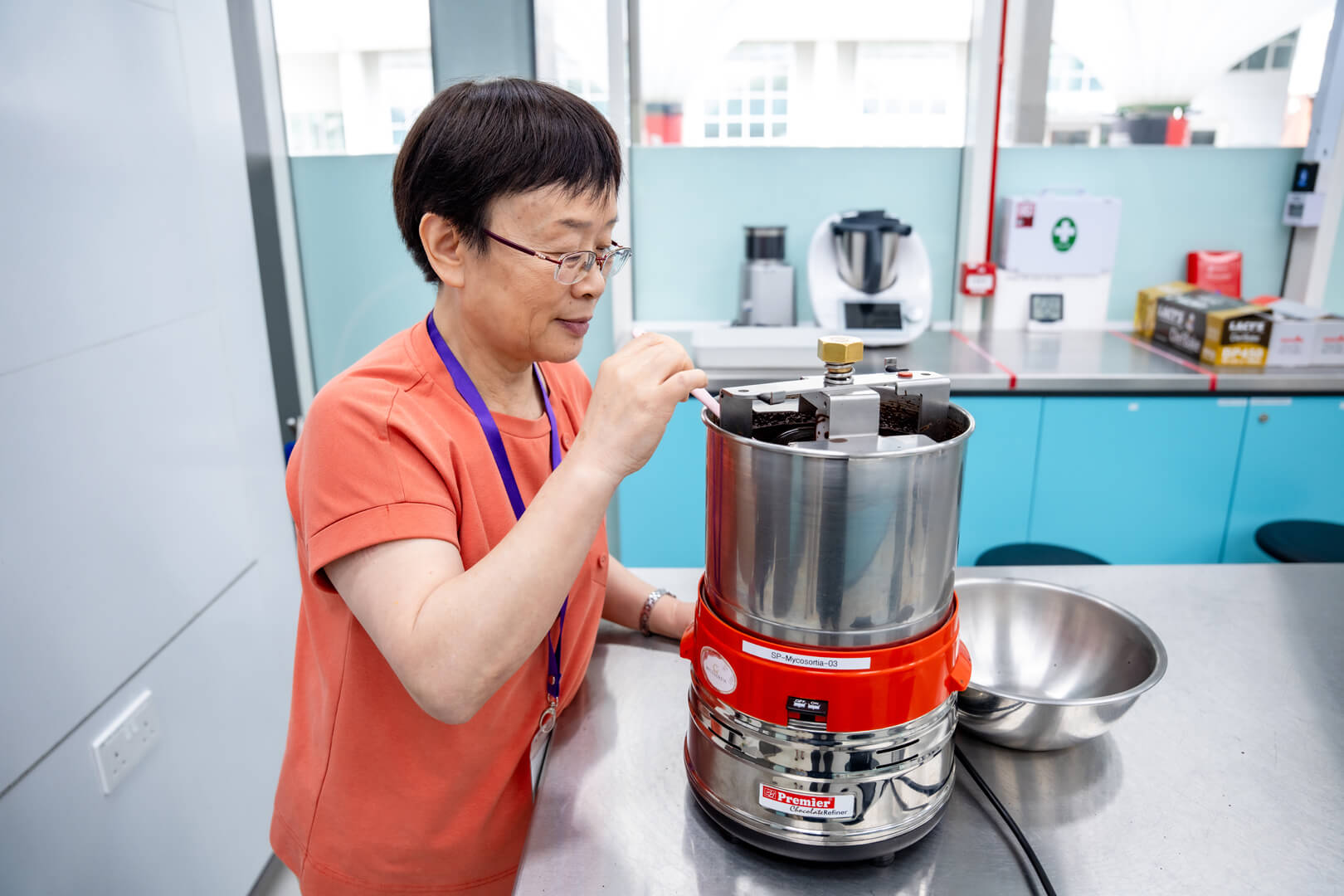
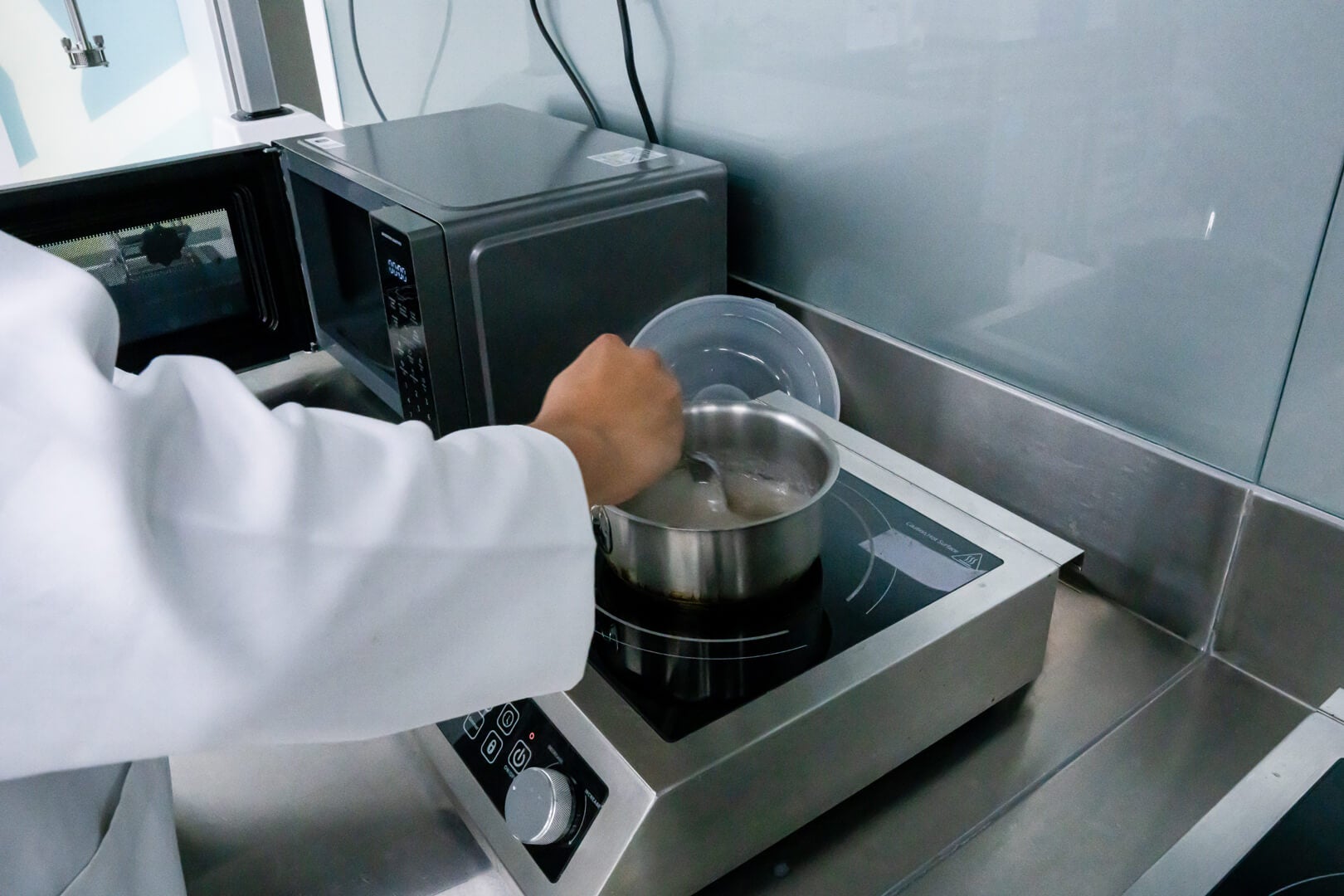
The process relies on fermentation, where microorganisms are introduced to the okara, transforming its texture. The material is then dried, roasted and milled into a powder. The “chocolate flavour” is generated due to the synergy between okara and natural ingredients such as grains and beans.  

The greatest hurdle was getting the flavour right. Real chocolate derives its complexity from hundreds of flavour compounds. Mycosortia combined traditional food science with machine learning, tasting and evaluating hundreds of formulations to identify the combinations that worked best. According to the team, the use of artificial intelligence halved a process that might otherwise have taken more than six months.

The results, introduced in 2024, were surprisingly convincing — with the added benefit of higher protein and fibre than traditional chocolate. In an informal tasting, the COU Milk Chocolate came remarkably close to conventional milk chocolate. The dark chocolate, made with 63 per cent cocoa replacement, was particularly impressive, delivering depth and bitterness without the harsh astringency sometimes associated with high-cocoa dark chocolate. The mushroom chocolate, with 56 per cent cocoa replacement, offered a more complex, earthy profile.

The confections are available through Mycosortia’s website and at VNTR Kitchen at JTC Launchpad@one-north, which showcases Singapore’s food innovators. To Dr Geng, they represent proof of concept, one that she hopes will convince food manufacturers to adopt the company’s cocoa substitute. She is realistic about the challenges ahead and is currently on the lookout for business partners to scale up her enterprise. What keeps her motivated in the meantime is her personal passion for the science that drives her work. 

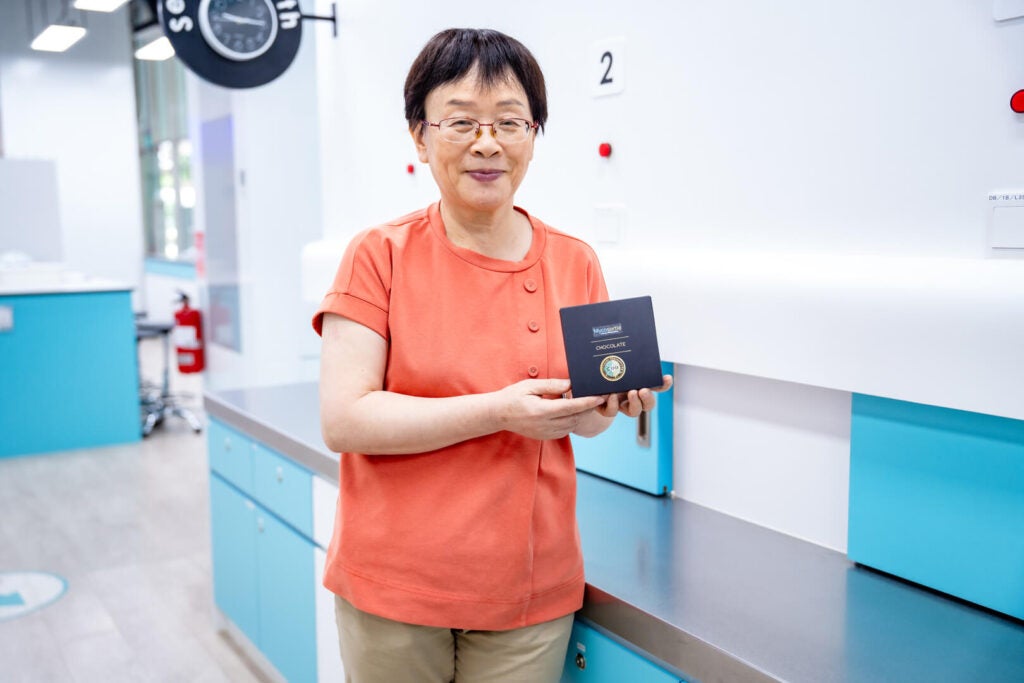
Dr Geng, pictured at the Future Food Lab at Singapore Polytechnic

THE FERMENTATION ENTHUSIAST

Dr Geng’s Instagram reveals that fermentation is as much a personal passion as a professional pursuit. The account teems with photographs of sprouting mushrooms in shades of pink and gold; close-up shots of furry rice, soybean and tofu; trays of koji and tempeh; and countless jars of pickled vegetables ranging from Chinese cabbage to achar and kimchi. A vessel of orange liquid documents her attempt to make mango wine.

During the COVID-19 pandemic, she taught university students in China how to ferment food remotely. At the same time, she conducted many of the experiments herself at home. One of her proudest achievements was mastering fermented tofu, a traditional Chinese condiment she still makes regularly.

Another was learning how to cultivate mushrooms. Like fermentation, the process relies on fungi transforming one material into another — in this case, converting agricultural waste into edible food. When she successfully grew her first batch in 2019, with spores isolated from supermarket mushrooms no less, she was ecstatic. The harvests eventually became so plentiful that she began giving them away to colleagues.

She speaks about her fermentation projects not as a technical process but as a form of discovery. Each batch, each culture and each ingredient offer an opportunity to learn something new. “It’s a learning journey,” she says. Because of this personal passion, she is even more determined for her startup to succeed. “I don’t give up. I am persistent because I am really interested in making food.”

AN ACADEMIC IN THE REAL WORLD

Dr Geng has experienced the commercial realities of entrepreneurship before. In 2015, she co-founded Sunvisiae Biotech to convert agricultural waste into bioethanol. The technology showed promise, but a sudden drop in oil prices ultimately prevented commercialisation. The experience nevertheless exposed her to investors, manufacturers and business leaders, teaching her that the successful commercialisation of an innovation depends on far more than scientific merit. Timing, economic viability and government support also play a role.

One encounter while planning for Mycosortia was especially instructive. Convinced that she could help soy manufacturers solve an okara waste problem, she approached a company with a proposal to upcycle the by-product. The response caught her off guard. The company was already giving the material away at no cost and did not regard it as a problem in the first place.

“What you think is a problem may not be a problem for them,” she says. The encounter has shaped how she evaluates both research projects and business opportunities. Instead of asking what could be done, she began asking what needed to be done.

Dr Geng traces part of that mindset to her years at NUS, where she earned a doctorate in chemical engineering. Unlike the more structured academic environment she had experienced previously in China, NUS encouraged students to define their own research questions and chart their own paths.

“NUS basically made me an independent researcher,” she says.

That independence gave her the confidence to move across disciplines — from chemical engineering to food science, fermentation and artificial intelligence — without waiting to become an expert before getting started. That confidence also proved useful beyond academia: while working as a polytechnic lecturer, she co-founded two startups.

Too often, she believes, researchers spend years solving problems that exist only on paper. Startups offer a far sterner test. “When you’re an entrepreneur, you need to solve a real-world problem or you cannot get money,” she says. “I think every academic should try being an entrepreneur.”
Photos by Zhiwei Chen. Main photo: Dr Geng with Darren Lim, a Year 4 Life Sciences student at NUS who is interning at Mycosortia.