
AlumNUS

Turning Waste into Wonder: The Couple Behind Brambe’s Sustainable Design Studio

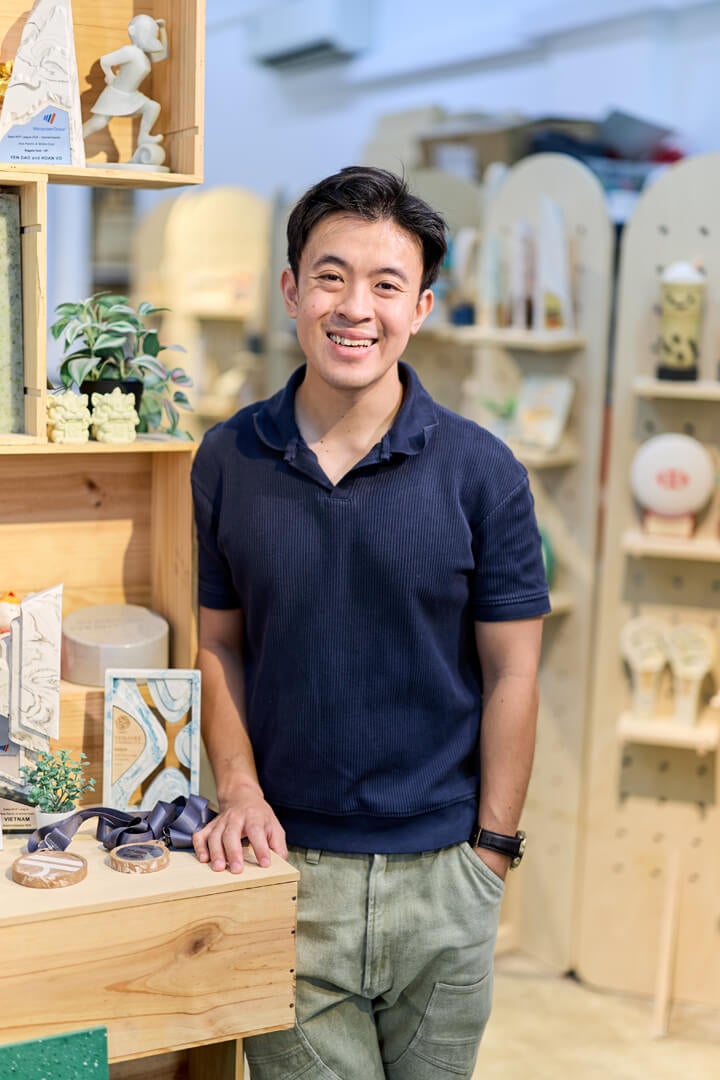
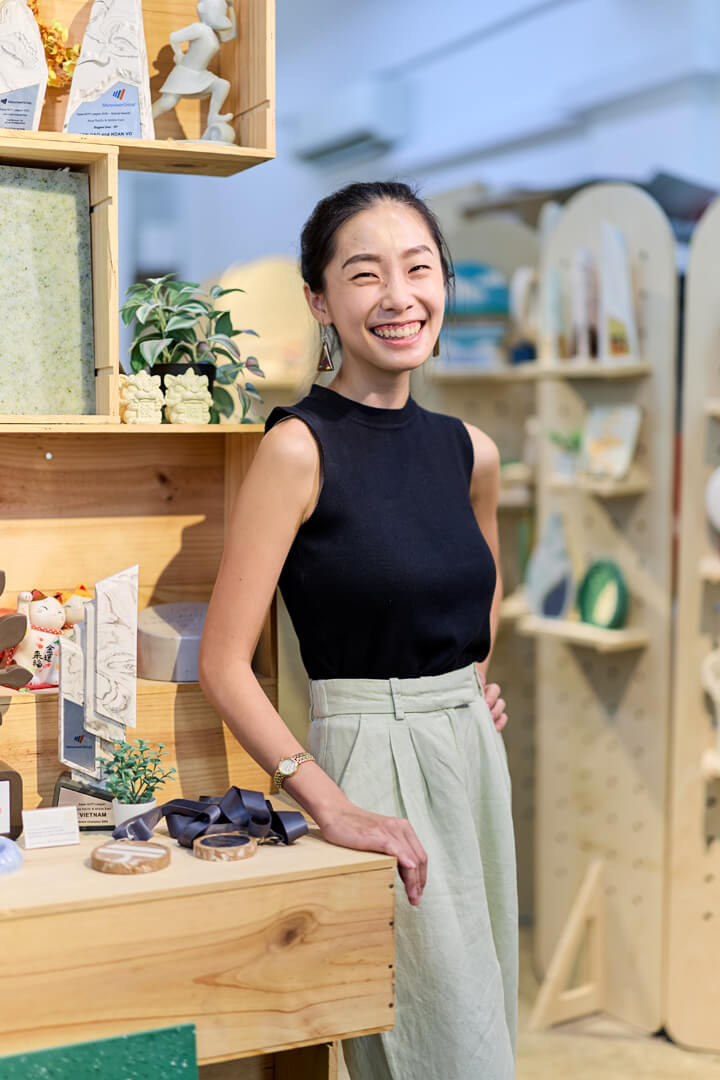
NUS alumni Mr Bernie Ang (Design and Environment ’21, MArch ’21) and Ms Amanda Tay (Science ’21) are transforming discarded materials into beautiful design objects through their studio, Brambe. What began as a small passion project at home has grown into a thriving creative business—built on shared values, complementary strengths and a willingness to take bold leaps together.
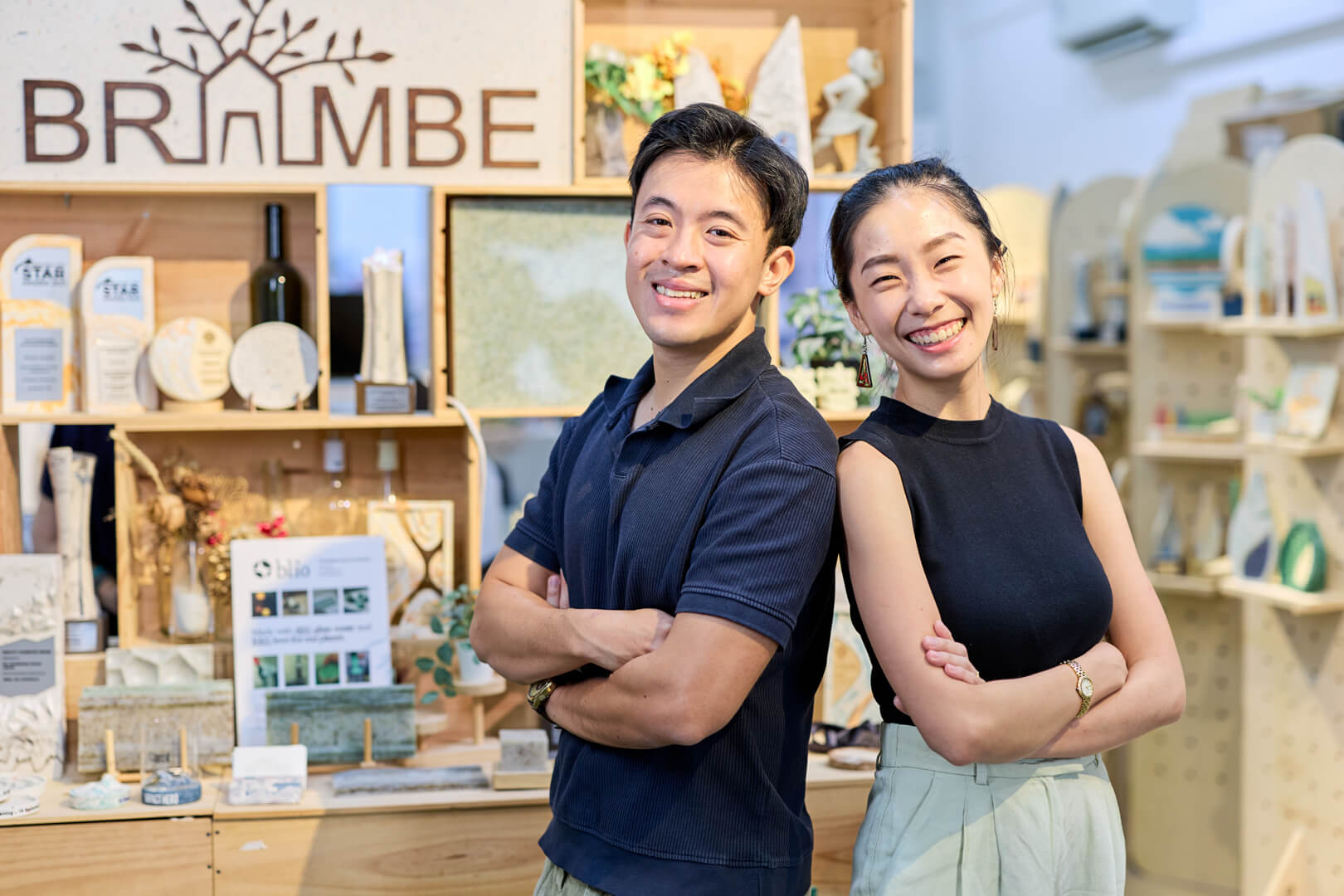
For Mr Bernie Ang and Ms Amanda Tay, the story of their design studio Brambe began at the National University of Singapore (NUS), where the couple met while in their final year. At the time, Mr Ang was studying architecture while Ms Tay was pursuing environmental studies.

Their academic backgrounds turned out to be a perfect match. Mr Ang brought design thinking and spatial creativity, while Ms Tay was drawn to sustainability and environmental impact. Over time, their shared interests evolved into something bigger: the idea of building a business together.

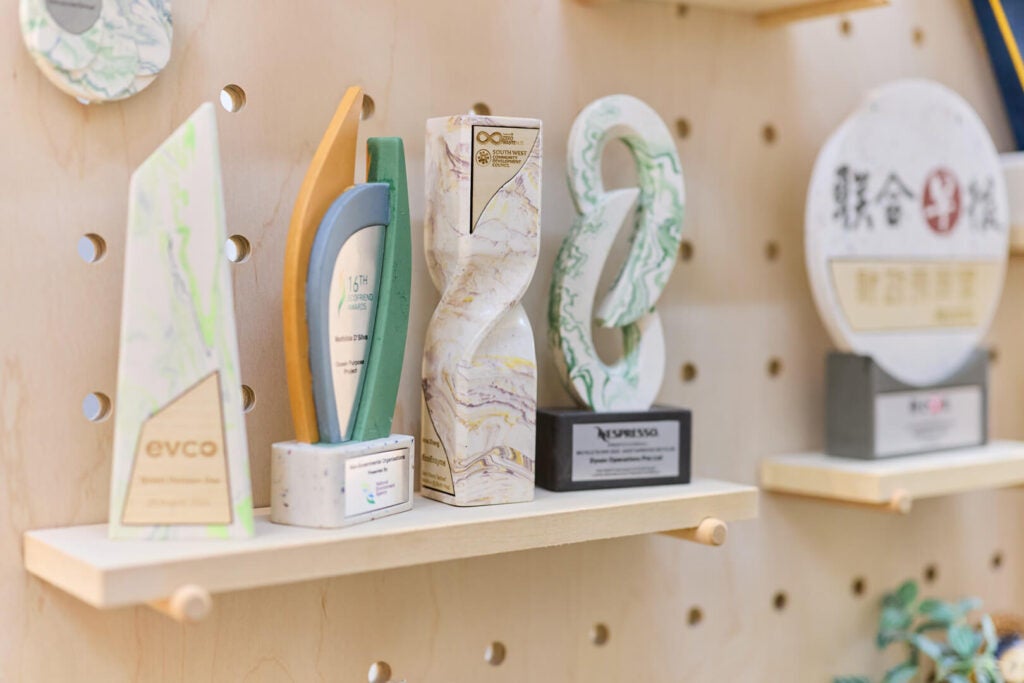
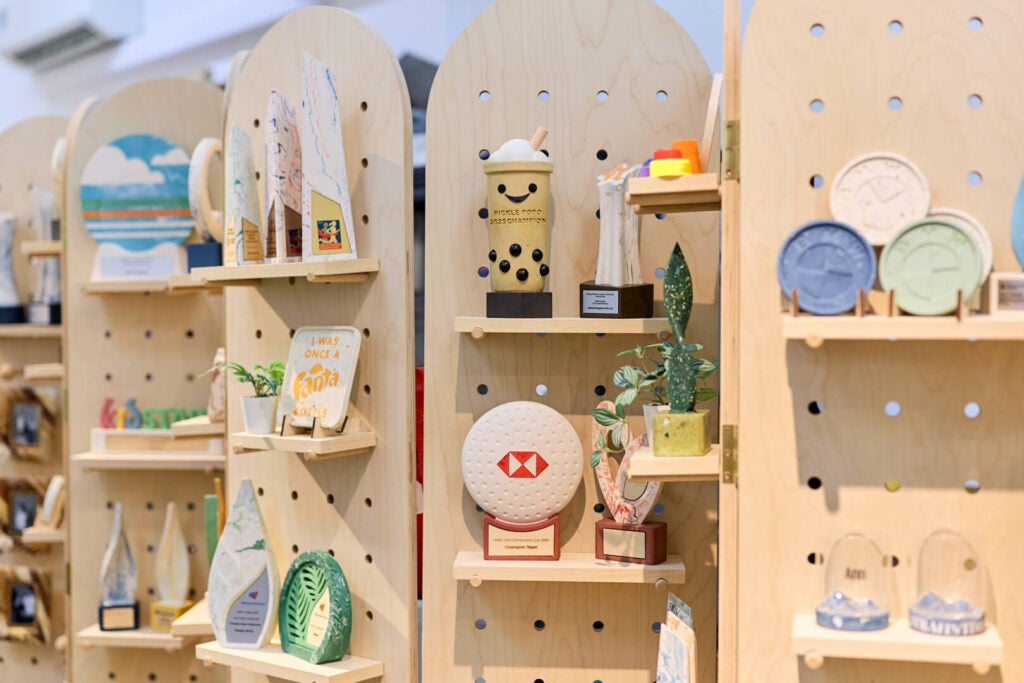
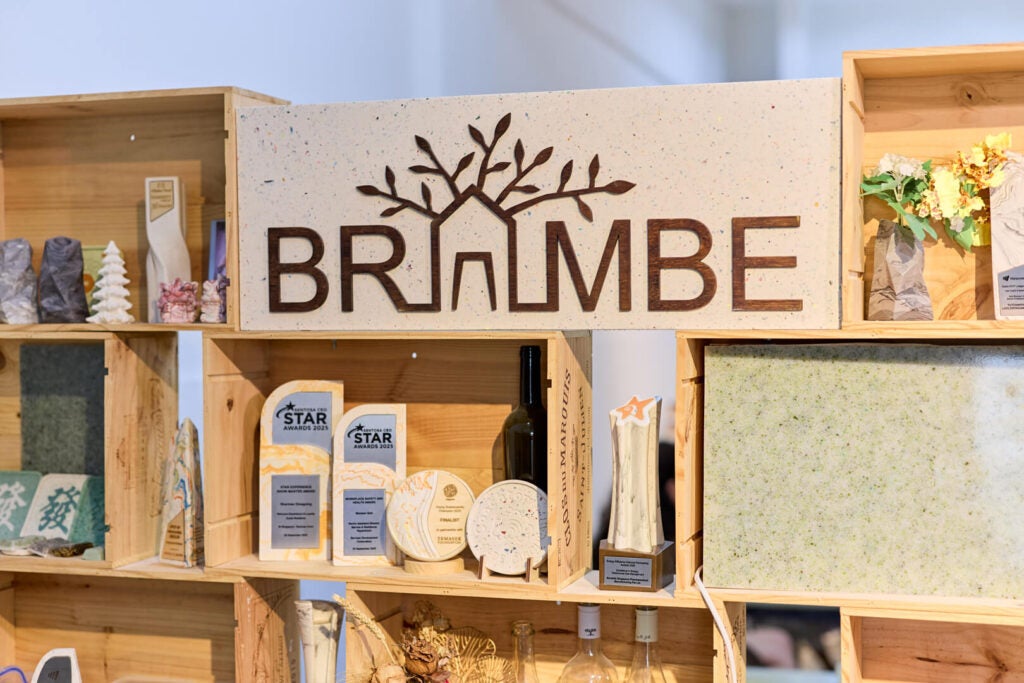
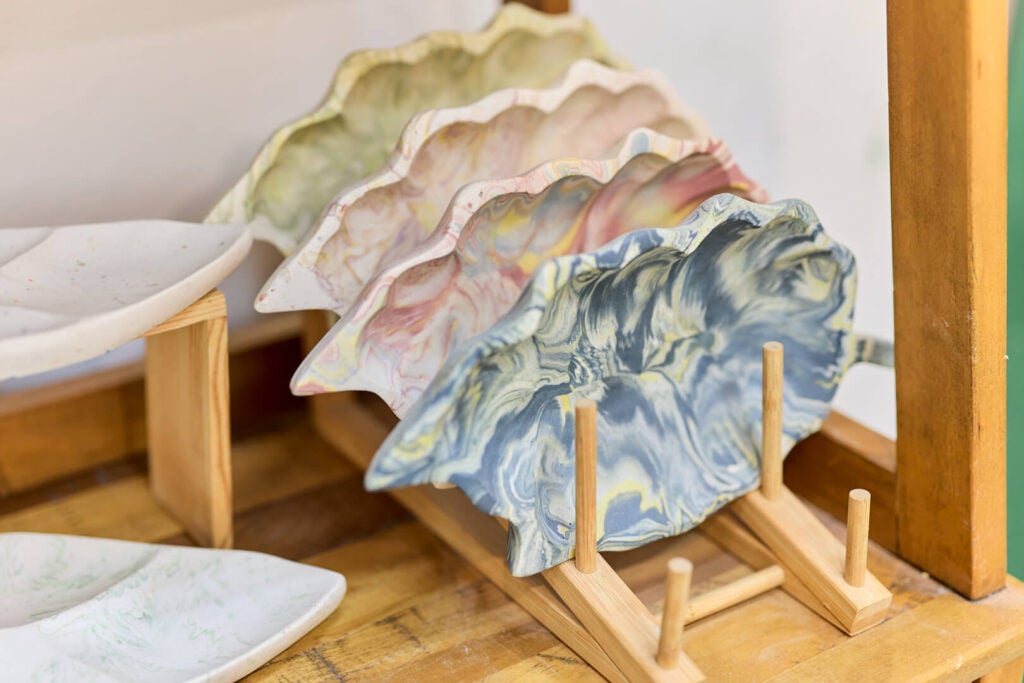
Today, the married couple run Brambe, which started in 2021 as a Singapore-based design and craft studio that transforms waste materials—such as glass, plastic, metal and even coffee grounds—into customised interior objects and design pieces.

“We wanted to create items that are sustainably made using recycled waste materials,” Mr Ang explained. “At the same time, we wanted customers to be able to customise their products, so they have more personal meaning.”

A BUSINESS THAT BEGAN AT HOME

Like many startups, Brambe began in a modest setting: their own home.

After graduating from NUS, both Mr Ang and Ms Tay took on full-time corporate jobs—Mr Ang worked in an architecture firm while Ms Tay’s job was related to sustainability reporting. But their evenings and weekends quickly became consumed by experiments with recycled materials.

Their living room gradually turned into a makeshift workshop.

“We would go to work during the day, then come back and continue making things at night,” Mr Ang recalled.

At first, they experimented with small items like coasters while testing different waste materials—from tea leaves to aluminium cans and crushed glass.

But as orders started coming in and their projects became more ambitious, their home studio quickly became impractical.

Between late-night crafting sessions that stretched past midnight and the growing mess of materials and equipment, the couple realised they needed to make a decision.

Eventually, they took what Ms Tay described as a “daring step”: leaving their corporate jobs to pursue the business full-time and moving into a dedicated studio space in Geylang East Industrial Estate.

DIFFERENT STRENGTHS, ONE SHARED VISION

Apart from making a “leap of faith”, working as both business partners and life partners naturally comes with challenges.

Mr Ang describes himself as someone who focuses on the “big picture”, while Ms Tay is more detail-oriented—a combination that sometimes leads to disagreements.

But rather than seeing those differences as obstacles, the couple have learned to treat them as opportunities for growth.

Their contrasting perspectives, Ms Tay shared, have helped strengthen both their business and their relationship.

When disagreements arise, they try to approach them constructively—viewing each discussion as a way to improve how they work together.

Today, their studio team has grown to four people. Mr Ang focuses mainly on design and product development, while Ms Tay oversees marketing, business operations and finance.

MILESTONES AND MEMORABLE PROJECTS

To hear Mr Ang tell it, one of Brambe’s earliest breakthroughs came through the NUS ecosystem.

A mentor from the University’s Zero Waste Test Bed Initiative connected the young founders with an opportunity to design a trophy for a South West CDC sustainability event.

The result was a striking three-dimensional leaf-shaped award made from upcycled plastic.

At the time, it was unlike typical corporate trophies.

“Usually, awards are bought off the shelf,” Mr Ang said. “But we wanted to create something that could be customised from the shape to the material and colours.”

The project for South West CDC proved to be a turning point, opening doors to new clients and collaborations.

Since then, Brambe has worked with organisations and brands including Alibaba, Spotify and Coachtopia, producing everything from bespoke trophies to hands-on workshops and large-scale installations.

Some of their most memorable work includes a collaborative wall installation at Enabling Village, where workshop participants created individual modules that were later assembled into a larger artwork.

THE UNGLAMOROUS SIDE OF CRAFT 

Behind the polished final products lies a surprisingly gritty process.

In the early days, the founders often had to process waste materials manually—crushing glass bottles with simple tools and sorting through discarded materials themselves.

“It’s not glamorous,” Ms Tay admitted. “We have to clean the waste, process it, test it and experiment a lot.”

Yet it is precisely this hands-on experimentation that allows them to develop new materials and push the boundaries of sustainable design.

A NEW PERSPECTIVE ON WORK AND LIFE

Today, Brambe is growing—but the biggest change in Mr Ang and Ms Tay’s lives came eight months ago with the arrival of their daughter.

Becoming parents has reshaped how they approach both work and business.

In the past, the couple often worked every day of the week, pushing themselves relentlessly to build the company.

Burnout was common, and the only time they truly switched off was during travel.

Now, they are more deliberate about setting boundaries.

“We’ve learned that you have to press the stop button yourself,” Mr Ang said.

Their daughter has also brought new perspective—and new responsibilities.

With a young family to support, the stakes feel higher, but the experience has also helped them become more focused and balanced.

Evenings are now reserved for family time rather than studio work.

DESIGNING THE FUTURE

Looking ahead, the couple hopes to scale Brambe beyond bespoke pieces and smaller items.

One key focus is refining their material palette so their recycled materials can be applied to larger products and interiors.

Their next chapter may include furniture and everyday objects such as shelves, lamps, side tables and coffee tables.

They are also keen to collaborate with more designers, brands and architecture firms.

For Mr Ang and Ms Tay, the goal remains the same: to show that sustainable materials can be both beautiful and meaningful.

From a home-based experiment to a growing design studio, their journey reflects the power of creativity, partnership and a shared commitment to rethinking waste.

And as their daughter grows up alongside the business, the founders hope the world she inherits will be just a little more sustainable.