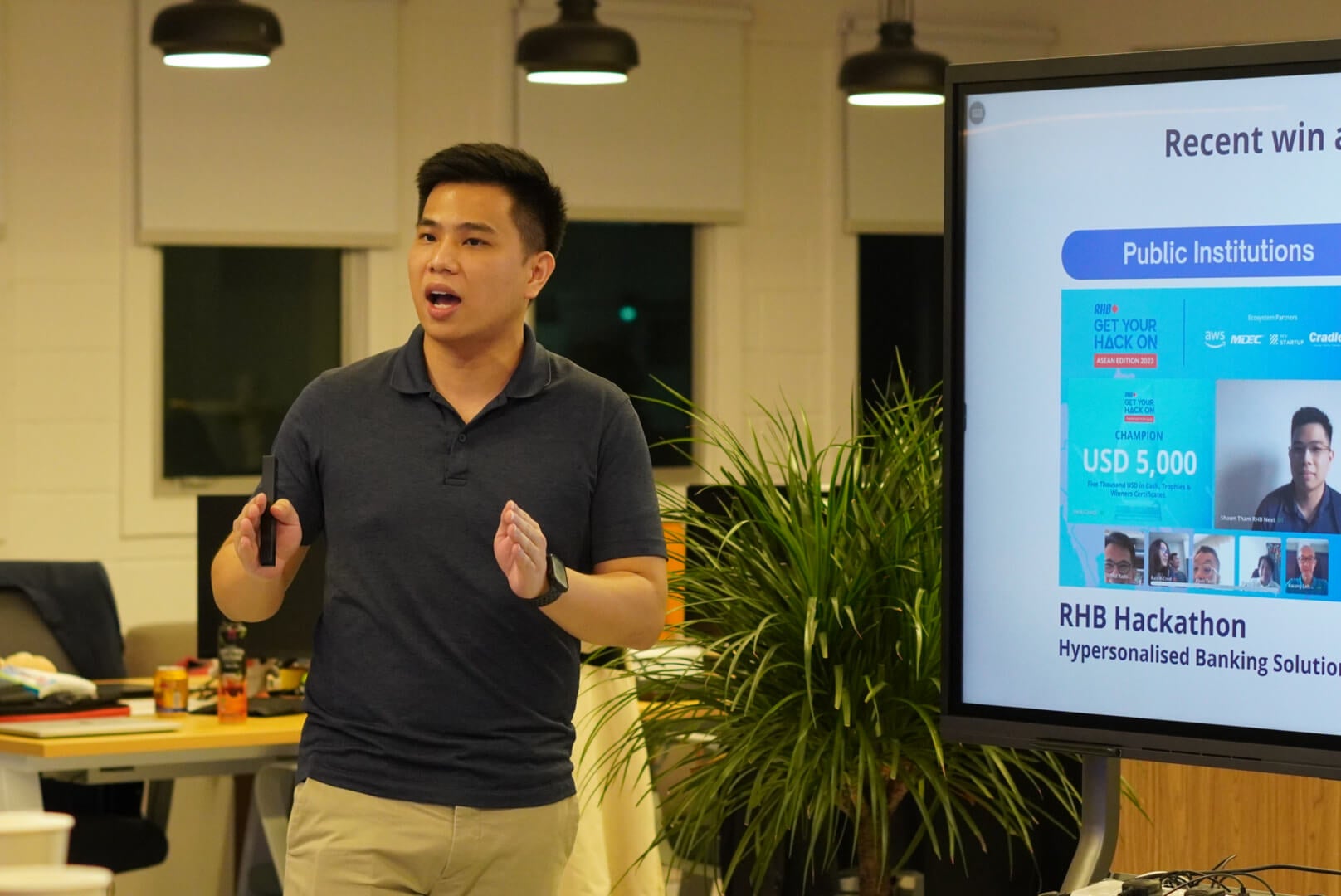
How NUS alumnus Mr Shawn Tham (MSc Venture Creation ’24) turned a simple social media experiment into UniLah, a Gen Z-powered marketing agency in Malaysia.
In early 2023, Mr Shawn Tham (MSc Venture Creation ’24) launched an Instagram (IG) page with the modest goal of helping students find events and competitions beyond their own campuses. “The problem is that you may be aware of what is going on in your own university, but don’t know what’s happening in others,” he said. As an undergraduate at Universiti Malaya, Mr Tham had taken part in numerous finance competitions and realised that his peers had much to gain from exposure to external events. “When I first started the IG page, the purpose was very simple. I’d get information about campus events, which I would then post and share online,” he said.
Today, UniLah helps brands connect with university students through student deals and campus events.
The account began to draw student followers, many of them keen to join hackathons and competitions they would not otherwise have discovered. Encouraged by the growing interest in the IG page, he explored ways to build a more tangible offering for students, eventually deciding to develop a discount app to encourage regular engagement. By mid-2023, he had registered UniLah as a private limited company in Malaysia, pitched to investors, and secured S$160,000 in seed funding from a Singapore-based backer.
PIVOTING WITH PURPOSE
While the discount app had initially been the company’s core focus, the idea was soon tested against the realities of the market. UniLah had invested heavily in in-house development, but market testing revealed a cultural barrier: students in Malaysia were not in the habit of seeking out small discounts, and the download numbers did not justify the model.
Mr Tham’s move to Singapore in 2023 for the NUS Master of Science in Venture Creation programme proved to be a key turning point in his entrepreneurial journey. “During my time at NUS, I learned a very important lesson, which is to always ask: what is the job to be done?” he said. “We realised we were creating a new habit in a market that wasn’t ready for it, but we had built up a database of over 13,000 contacts, so we pivoted to helping brands access this student audience instead.”
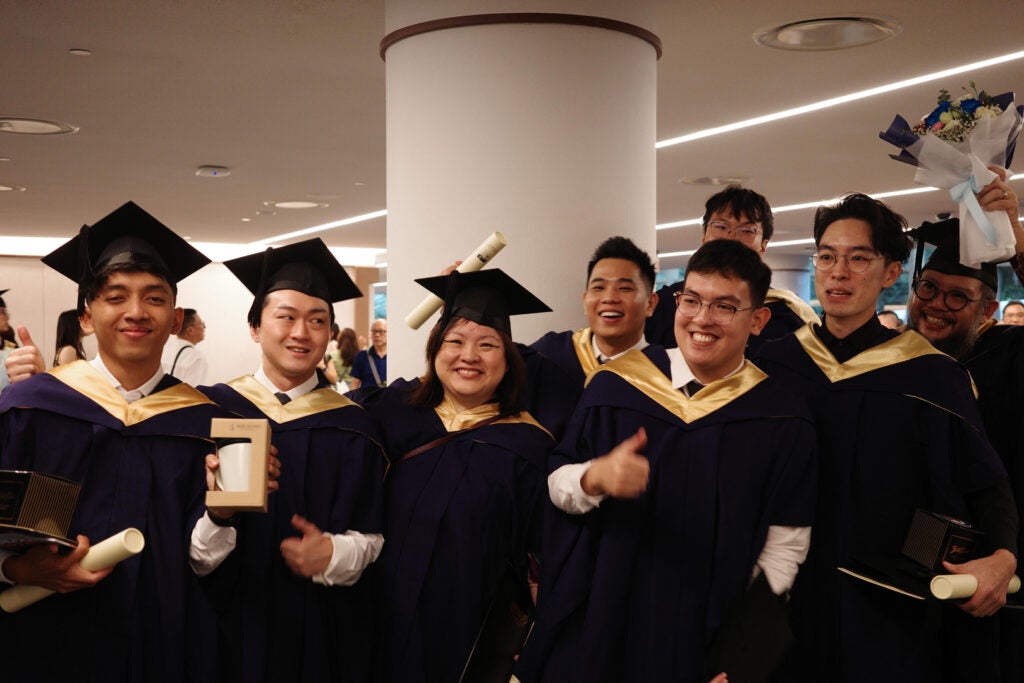
Mr Tham (fourth from left), with his MSc Venture Creation classmates at their graduation.
Today, UniLah operates as a tech-enabled marketing agency for Gen Z-focused brands that leverage its sizeable student database. It organises university tours and produces campus content for clients that have included KyoChon and Montigo, among other lifestyle and F&B brands. UniLah also works with a growing network of 1,000+ Gen Z creators who help brands reach young audiences through authentic content and peer influence.
Currently based in Kuala Lumpur, the company remains “built by students, powered by students”, with interns, ambassadors and part-time staff drawn from universities—including Mr Tham’s alma maters, NUS and Universiti Malaya. “We are a company with quite a few ambassadors of students, interns or part-timers who are aged around 18 or 24. It’s part of why we can tell brands we really understand the student segment,” explained Mr Tham.
COMING FULL CIRCLE WITH NOC
Beyond just a place to study, NUS has become a talent pipeline for Mr Tham’s business. His startup now takes in interns from the NUS Overseas Colleges (NOC) programme, including participants from the Kuala Lumpur and Singapore tracks. “When I came back to KL, NUS asked whether I could take some of the NOC students. I immediately said yes,” he said. “This is the second year we’ve taken a batch, and they’ve played a key role in strengthening UniLah’s projects and campaigns.”
As a graduate of NUS, Mr Tham is now paying it forward by now taking in students from the NUS Overseas Colleges programme to intern with UniLah.
This cross-border dynamic between Malaysia and Singapore runs both ways. One content series, “same same but different”, explored the cultural differences between Malaysian and Singaporean students, from communication preferences to career expectations. The findings fed back into UniLah’s approach for each market.
Mr Tham acknowledges that Singapore’s market offers unique advantages. While the market is more mature and demands greater structure in service delivery, Mr Tham sees clear advantages in proximity, network strength and his own familiarity with the ecosystem. “Our investor came from Singapore, we have better penetration here, and I was based in Singapore for quite some time,” he says.
CONNECTING BRANDS WITH GEN Z
Looking ahead, Shawn is focused on strengthening UniLah’s role as the bridge between brands and Gen Z—starting with university students—by helping brands engage authentically while giving young people greater access to opportunities.
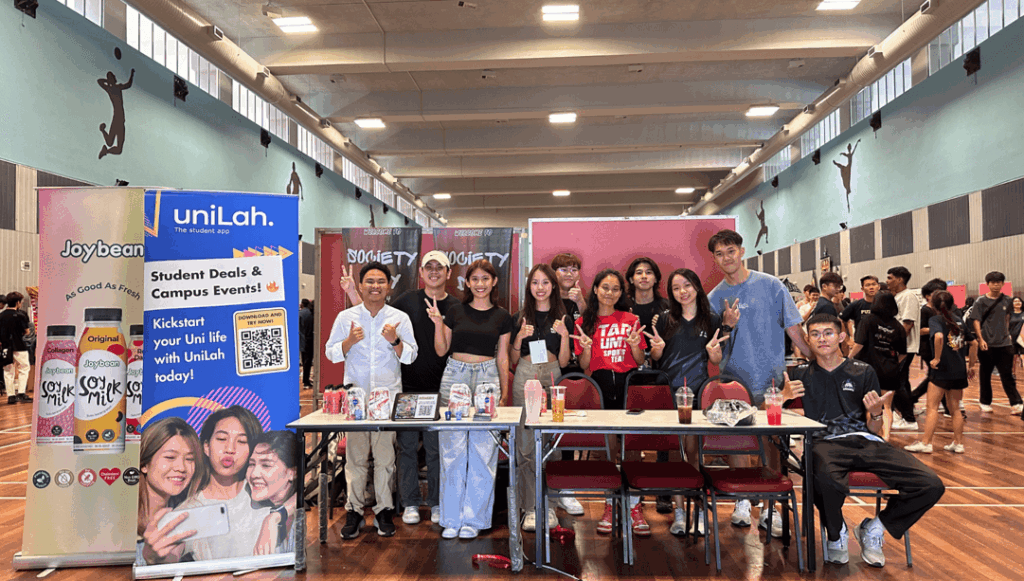
UniLah is now exploring new markets around the region. Here the company is pictured in Jakarta in 2024.
His advice for aspiring student entrepreneurs is direct: “The best time is your time at university. You’re expected to make mistakes, you have resources around you, and your classmates could be your first customers,” he shared. “Always iterate quickly, get feedback and improve.” He added that university is also the ideal place to find co-founders. “If you want to test the person out, work with them on an assignment. You get to see how they react to deadlines and challenges. These small things build up as criteria for your co-founder.”
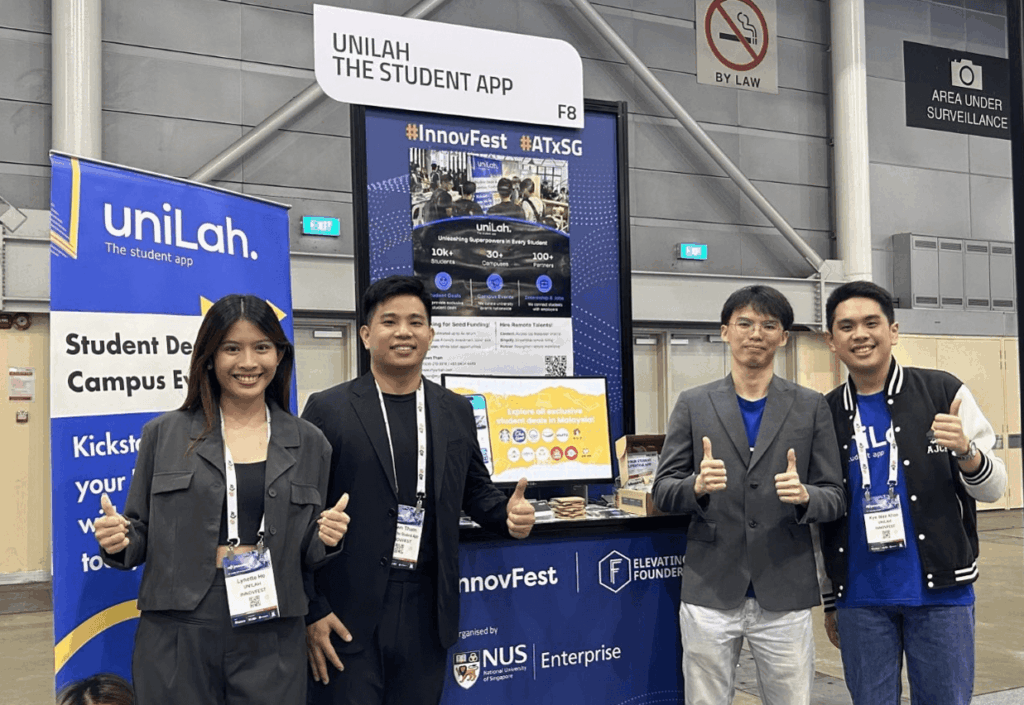
UniLah, pictured in 2024 at InnovFest, NUS Enterprise’s flagship event.
For Mr Tham, the journey from a simple IG feed to a Gen Z-powered business reflects the value of testing ideas early, adapting fast and building strong networks — lessons he first put into practice as a student, and continues to apply as an entrepreneur.