Who They Are: the moonbeam co. is a Singapore-based startup that partners with schools and workplaces to drive sustainable change. They offer wellness workshops, sustainable food supply (using by-products and avoiding single-use plastics), enrichment programmes tied to school syllabi and sustainability consulting.
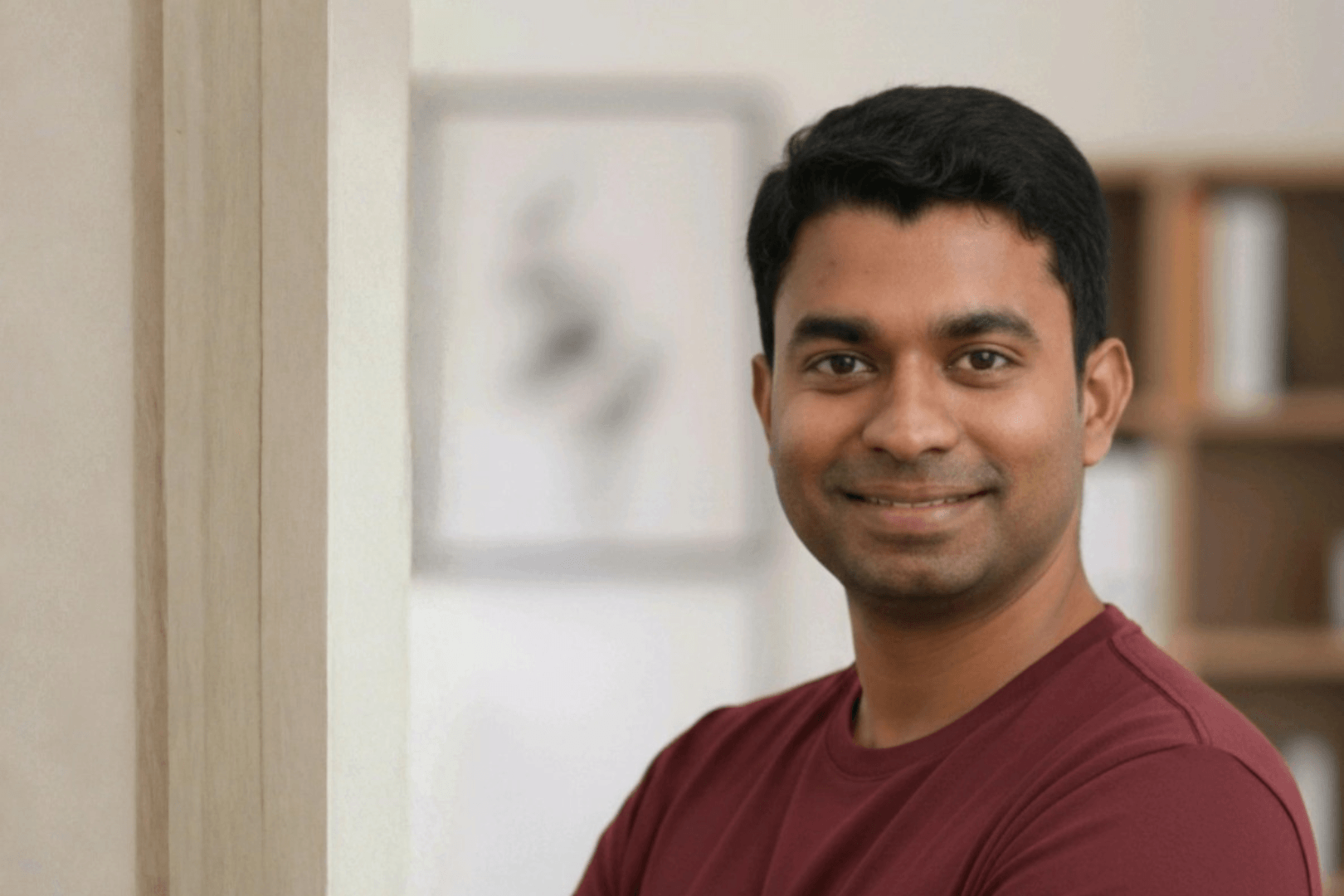
Mr Kong Qi Herng (Science ’22) states categorically that he is in the sustainability business, not F&B. After all, his company has redirected 1.55 tonnes of waste from food manufacturing companies and prevented the equivalent of 1,872 kg of carbon dioxide (CO2-eq) in greenhouse gas emissions to date. However, the 28-year-old co-founder of the moonbeam co. (subsequently, Moonbeam)—a local startup that processes food waste into alternative ingredients—is also a firm believer in the proof of the pudding.
“We used red dates for their natural sweetness, and added goji berries, apricot kernels, almonds, and cocoa nibs,” he enthused while urging us to try a slice of a baked mooncake in the shape of a leaping bunny. Encased within a fine-crumbed pastry is a smooth filling accented by the crunch of nuts and cocoa nibs, its honeyed flavours suitably moreish. “We are taste-forward in our approach,” Mr Kong said, pleased that Moonbeam’s rendition of the Mid-Autumn treat has won us over. It is only then that he shares that the mooncake skin is made with a flour milled from spent barley—the by-product that remains after the malting grains are mashed with hot water.
“Sustainable foods are often perceived as bourgeois, while repurposed ingredients are seen as less-premium substitutes,” observed Mr Kong. Given such consumer biases, it becomes necessary to appeal first by taste, then by mission. To this end, all of Moonbeam’s products—which span from fibre-enriched cookies and energy balls stocked in the pantries of the biggest tech companies, to sourdough boules and seasonal items such as the Cosmic Bunny mooncakes—are put through internal taste tests and external samplings. There’s also a very practical concern: “We need consumers to accept our products so that they don’t get wasted!” quipped Mr Kong.
ANOTHER COMPANY’S WASTE – THEIR GOLD
Indeed, as Mr Kong stressed, the company was established with the primary goal of reducing food waste. He and his co-founders Mr Lim Jia Wei (Design and Engineering ’22) and Mr Varden Toh (Science ’23) met by chance during the 2021 NUS Overseas Colleges (NOC) programme. Mr Kong had already conducted an upcycling project at Ridge View Residential College (RVRC), and the trio found common ground in their interest in addressing the sustainability issue of food waste.
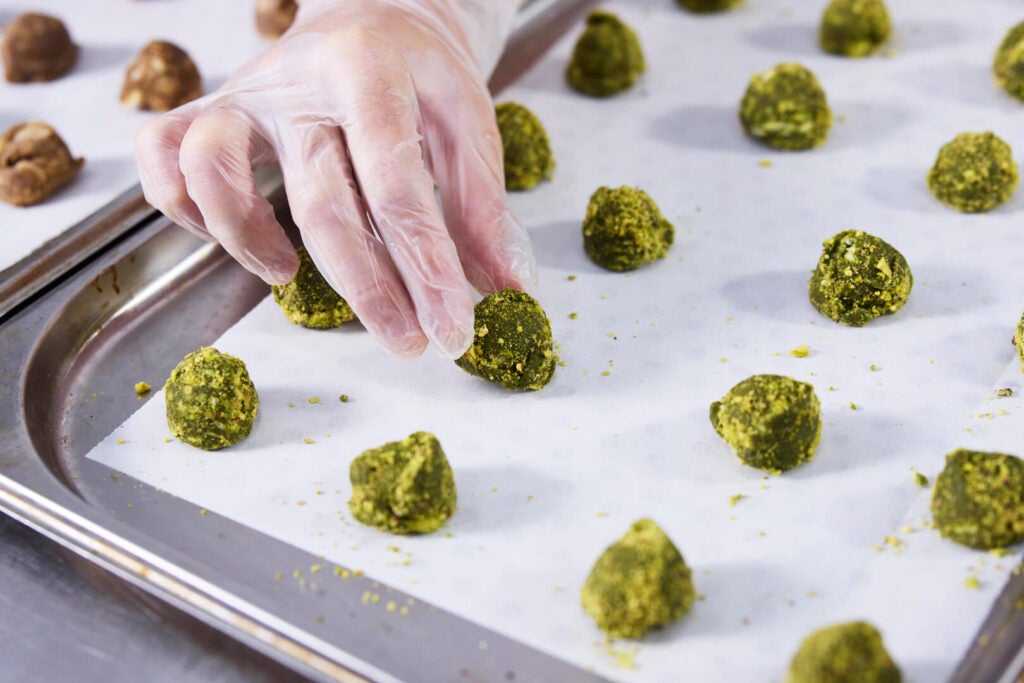
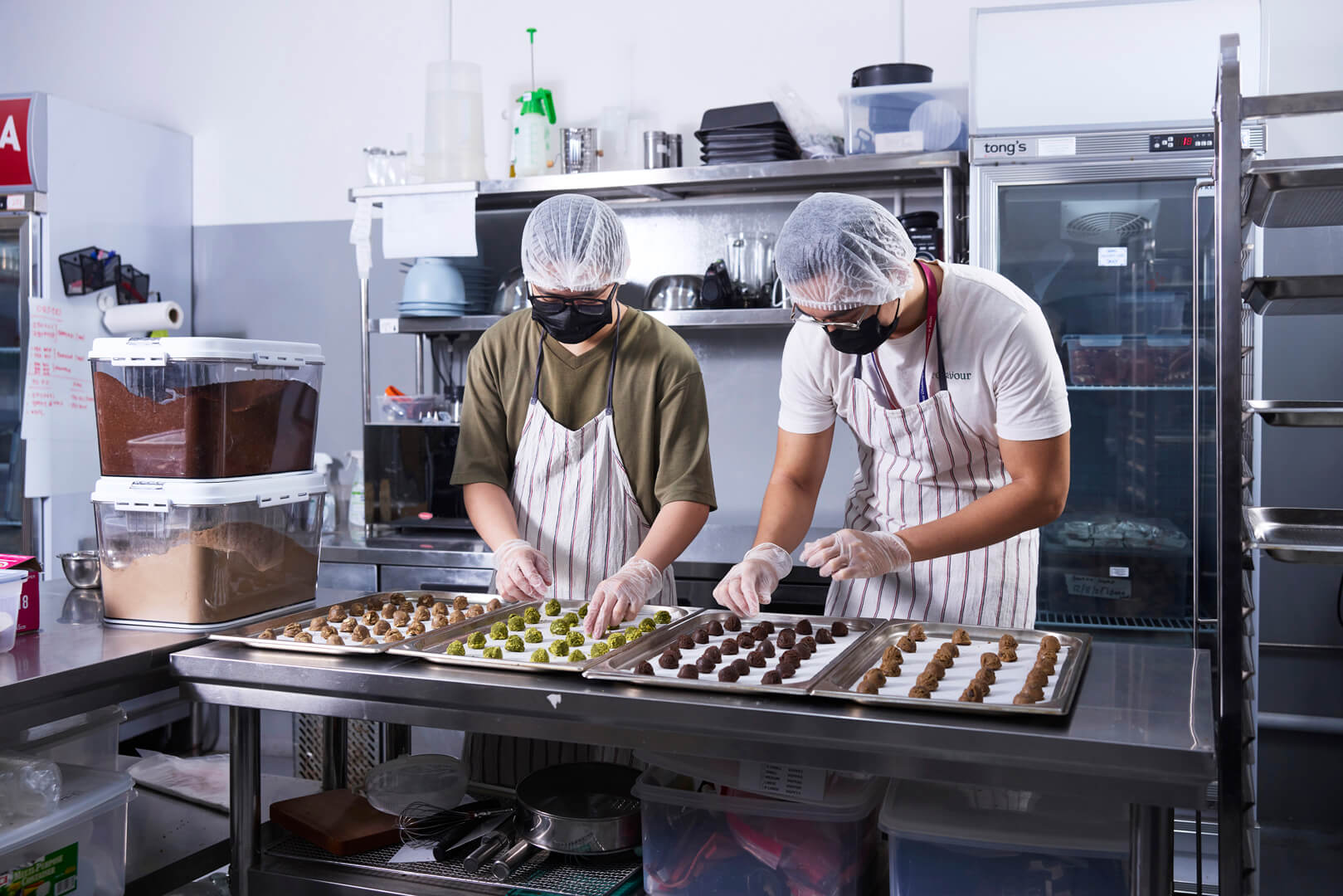
They began by brewing beer from unserved, cooked rice for their Innovation & Design Programme (IDP) capstone project. The production yielded high-protein, high-fibre spent grain residue, which they went on to make into granola in keeping with a zero-waste production cycle. The food became more popular than the beer, and the rest was history. “Food waste could certainly be processed into other things, such as construction materials,” reflected Mr Kong. “However, food is a big part of local culture.” Furthermore, the best way to deal with food waste without creating more by-products is to consume it. As such, making food was a natural solution. The bland taste profiles of the upcycled ingredients make them perfect for incorporating into baked goods. That, combined with Mr Lim’s innate passion for baking, became the equation for Moonbeam’s business model: the processing of salvaged food waste into baking ingredients, and the creation of appealing food products to promote their use.
A startup that literally started in the laboratories of NUS, Moonbeam went on to grow through funding from the NUS College of Design and Engineering’s Entrepreneur Fellowship. “We would not have survived the early years without the funding and the school’s network, such as the NOC alumni,” Mr Kong shared. By 2023, Moonbeam had won the inaugural DBS Foundation X NEA Hungry for Change Challenge. They now produce an average of 2,400 kg of cookies a year—which translates to a tonne of food waste saved from just that one product.
And while it counts some formidable multinational companies among its clients, Moonbeam is now transitioning into a new business model. “We are moving to a B2C model now—or rather, a B2C2B model,” says Mr Kong. The concept hinges on the influence of the individual: that converted users will become Moonbeam’s biggest advocates and, in turn, drive its B2B business. However, with more than 90% of their business currently coming from B2B sales, this is still a bold move for Moonbeam.
“The need for ESG [environmental, social, and governance] reporting has driven the sustainability movement within the corporate world,” Mr Kong noted. “For example, a lot of the big tech companies have a mandatory declaration of how much of what they use is local, from raw materials down to pantry snacks.”
However, the Moonbeam team wants to stir the sustainability movement from the ground up. Through its retail arm resavour, Moonbeam is now selling its wares directly to consumers. Also offered on resavour’s website are a host of learning experiences, spanning pickling vegetable scraps to crafting sustainable granola bowls. “Corporations won’t be able to sustain the movement if the consumer is not interested—the end-users have to be part of the decision making,” opined Mr Kong.
With plans for a Malaysia site to scale production, Moonbeam is poised for exciting developments. Yet if you were to ask Mr Kong about the company’s biggest milestones, the first thing he would proudly share is that they have expanded their impact model, becoming a registered social enterprise with the Singapore Centre for Social Enterprise (raiSE) and partnering with Bettr Coffee—Southeast Asia’s first B-Corp*—to hire staff from underprivileged backgrounds and individuals who have undergone occupational therapy. “We realised that work can be very empowering, especially when it is meaningful work,” Mr Kong said, noting this is now “an integral part of the organisation.”
Moonbeam’s story is not one of dramatic strokes of genius. It is a quieter narrative of systemic support. One of how a university’s laboratories, fellowship programmes, residential colleges and entrepreneurial networks can act in concert to transform a group of students’ passion into a viable business—and how that business gives back to society. Every Moonbeam cookie represents a closed loop, a job created, and a lesson on how big social messages can come in small packages.
*A for-profit company that is verified by the non-profit organisation B Lab to meet high standards of social and environmental performance, accountability and transparency

Photos by Kelvin Chia
-
From One Family to Many: The Living Legacy of the LausEvery legacy gift has a life story to tell, and precious values to pass on. For ... -
Brewing InnovationHow three NUS alumni are disrupting the world of coffee... -
Answering a Higher CallingSingapore’s inaugural ASEAN-Chevening Scholarship recipient Mr Danial Hakim (L...