How Mr Fu Yong Hong (Business ’14) transformed a canteen stall into the multi-million Greendot Group, beginning with testing classroom theories in the fiery heat of a wok.
WHO HE IS: Once a staunch meat lover, Mr Fu Yong Hong is now the 36-year-old CEO of Greendot Group — Singapore’s largest plant-based restaurant chain. Starting from a humble canteen stall as an NUS student, he transformed theory into practice, growing Greendot into a S$21 million empire with 14 outlets.
He was once the guy who removed lettuce from burgers and bean sprouts from noodles. Yet today, Mr Fu Yong Hong (Business ’14) is the CEO of the S$21 million empire that is Greendot Group, Singapore’s biggest plant-based restaurant chain.
For the staunch meat lover, starting a vegetarian stall with his friend in his second year as a National University of Singapore (NUS) Business student stemmed not from passion for plants—or food for that matter—but out of practicality. “Running the business while studying was the best way to apply the theories that were taught, and to gain a better understanding of how things work in real life,” he said plainly of his early motivations. Mr Justin Chou, a close secondary school friend of Mr Fu and lifelong vegetarian, was the one who came up with the idea of offering accessibly priced vegetarian options in schools. Mr Chou’s family ran the established Lotus Vegetarian Restaurant and owned a food manufacturing facility in Johor. Seeing the opportunity to test his academic knowledge in real time, the diligent student in Mr Fu thought he would “skip the fun part of university life and instead try to make something of the business venture.” He agreed on one condition: that the business also targeted non-vegetarians like him.
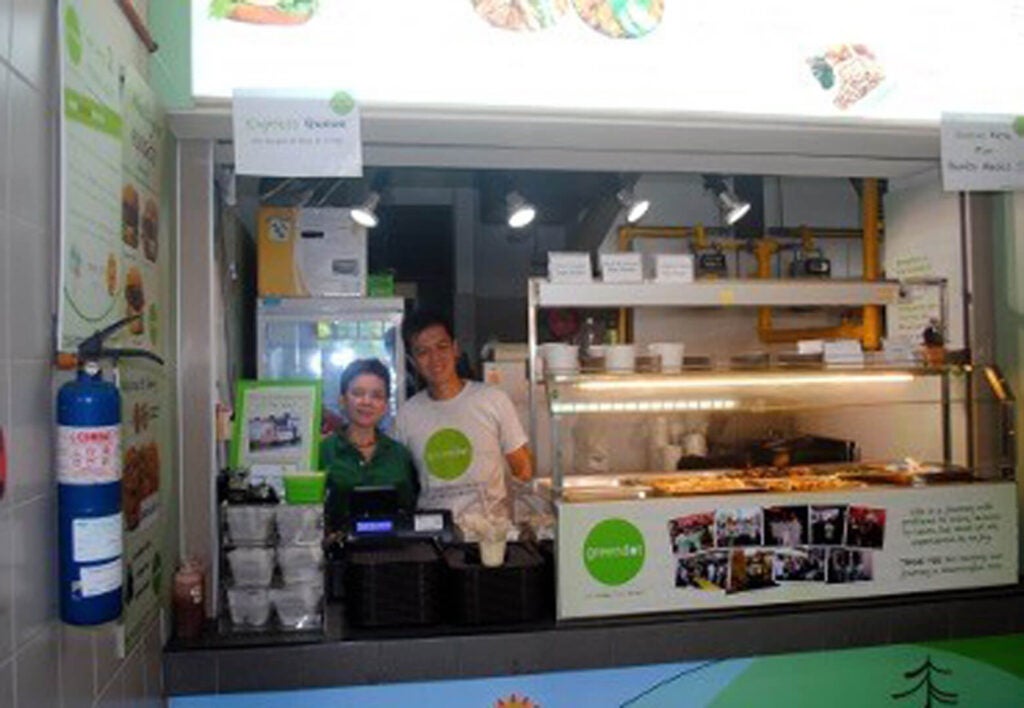
In its early days, Greendot ran stalls at school canteens, including at Tanjong Katong Girls’ School (pictured). While a student at NUS, Mr Fu spent his non-study days cooking at the stall.
What followed was a hands-on journey that would define his entire NUS experience. To learn the ropes and win parental support, the duo worked part-time for a year at Lotus restaurant, starting with the basics such as food preparation and packing, before going on to run live stations. It was here that the bridge between academia and enterprise began to form. “Sometimes life is the best experience,” reflected Mr Fu, now 36.
This synergy became the bedrock of his entrepreneurial education. He strategically tailored his university life to fuel his business ambitions. “I would go to school on Thursdays and Fridays, pegging my modules not based on interest, but on what I could have the time for.” He even extended his degree course by half a year, taking a lighter course load to manage the immense pressure. Crucially, he leveraged NUS’ resources directly for Greendot, using the business as his project work, and applying the feedback from his professors and coursemates to develop Greendot from a startup to a commercial brand.
NUS Enterprise provided further scaffolding, incubating the young company and providing essential services such as secretarial and accounting support. For Mr Fu, though, the accessibility of the NUS community was most valuable of all. “Even while I was a student entrepreneur, a lot of professors would spend time listening to me and offering me free mentorship. The whole community was very encouraging,” he recalled.
GOOD THINGS OUT OF GOOD PEOPLE
However, good advice—and even good vibes—were not enough to bolster Mr Fu’s spirit through the gruelling early days. From the embarrassment of throwing out inedible food that he had cooked, to the fatigue of 17-hour workdays seven days a week that left no allowance for a social life, Mr Fu had much to weather through – and little gains for his pains. For the first two years, Greendot ran losses. Even after graduation, he drew a meager S$1,200 a month in order to keep business afloat, while his peers earned double or more. The circumstances made him doubt his abilities and choices, and he thought of quitting – every single day. Yet he trudged on, mainly for the people who had been through thick and thin with him in building the business: “My staff kept me going, and I didn’t want to disappoint them,” he revealed.
Steeled by a commitment to those who believed in him, he slowly found Greendot’s niche. It pivoted from Western-inspired burgers to local rice sets and noodle dishes that resonated with a broader audience. Today, the company also taps into new technology to gather deeper consumer insights, which go on to guide Greendot’s product R&D. The evolution was a direct application of his NUS education. “NUS prepared us in terms of understanding customer segmentation to position the business,” shared Mr Fu. The decision to expand into malls was also a calculated risk born from classroom theory and canteen reality. In fact, Mr Fu used this very transition as a project at NUS, passing with flying colours.
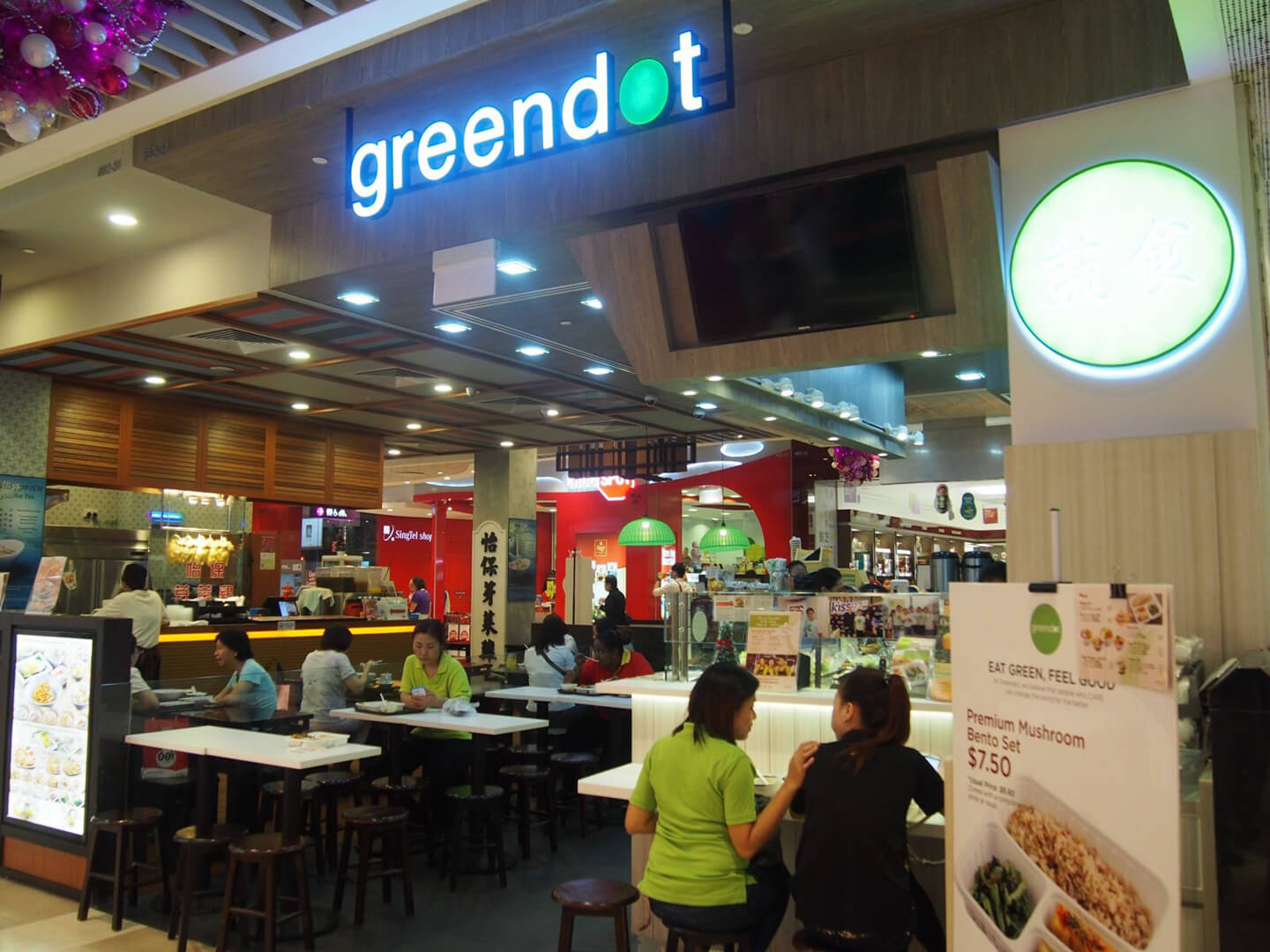
Greendot’s first kiosk outlet opened at Bedok Mall in 2013. Today, the chain has 14 locations.
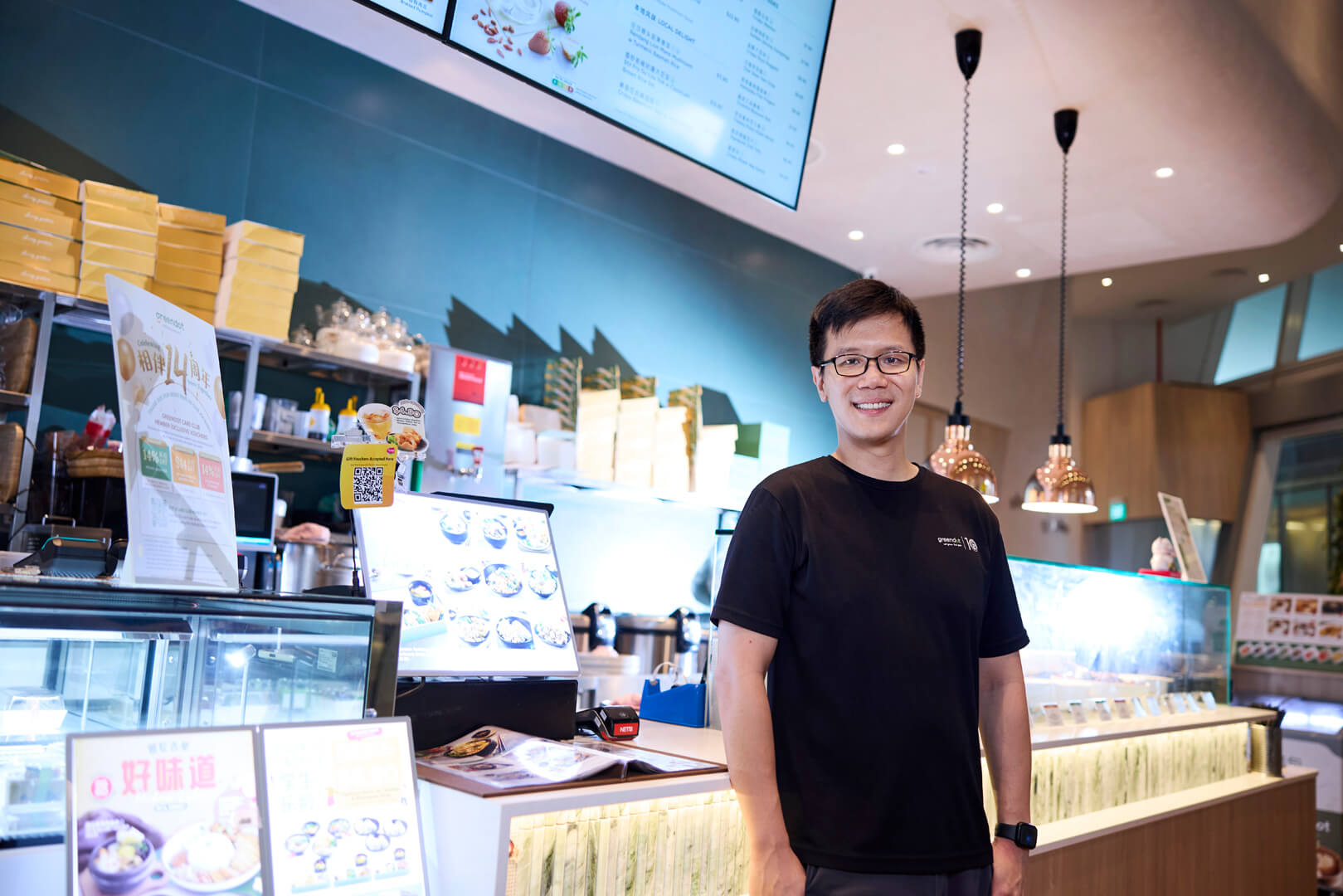
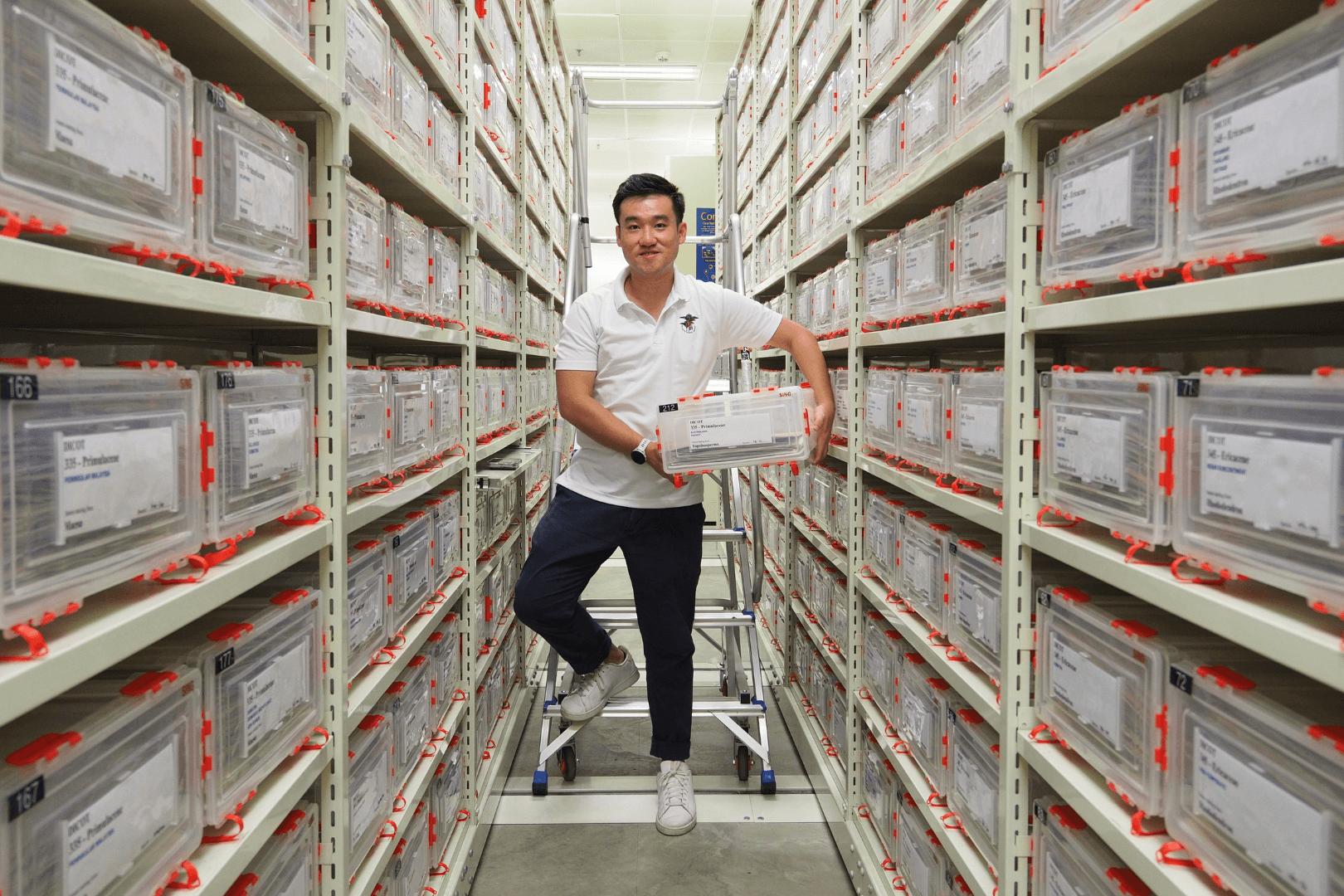
Mr Fu, pictured at Greendot’s newest location in Star Vista.
In the 14 years since its inception, Greendot has not only grown dramatically in scale—with a total of 14 outlets today—but has also evolved significantly. Apart from moving out of school canteens and into major malls in 2013, the company transitioned from owner-operated stalls to a franchise model during its expansion phase, later reverting to being fully company-owned for better management. The company portfolio has similarly expanded, now including the Lotus restaurant brand, a patisserie specialising in vegan cakes, and a retail line of ready-to-eat dim sum products named after his daughter, Xiaoman.
Mr Fu’s role has also evolved. In 14 years, he went from being a hands-on co-founder who handled every aspect of operations – from managing staff to changing lightbulbs—to the chief executive setting the vision and direction for the company. And for Mr Fu, who became vegetarian in 2019, the business goals of Greendot are not tied to sales targets, but to his now personal mission of sharing goodness through vegetarian fare.
In 2022, Greendot expanded its offerings by launching Greendot Patisserie, introducing a range of vegan cakes—another milestone in its ongoing evolution.
Despite the dramatic changes, putting people at the core of what he does continues to be a guiding philosophy for Mr Fu. “To succeed in a business, you have to avoid doing what is easy, with low barriers to entry,” he explained. “Instead, you have to do something difficult but find a way to make it easy—and among the many factors that make this possible, most important of all is the team,” he explains. Team-building is a key focus for him. He starts by setting the right culture and values, so that the right people—those who align with the company’s goals and motivations—are attracted and retained.
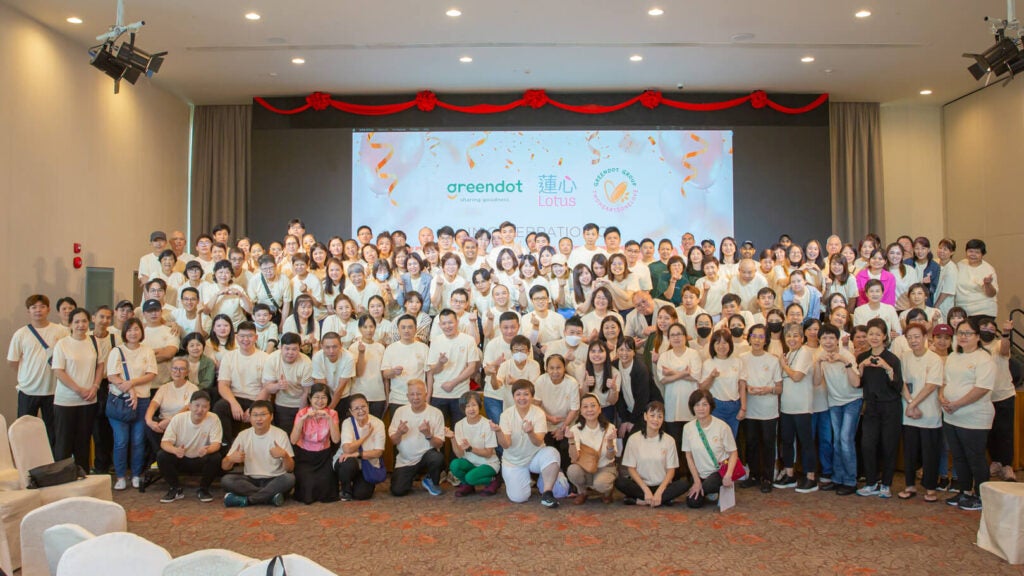
The team behind Greendot Group.
“A lot of bosses put a lot of effort into understanding their customer, but not so much the staff they want to attract. But through the years I have come to realise that people are truly the heart of the business,” said Mr Fu, expressing a wisdom beyond his years.” There are management gurus who say people are hard to change, and that business owners should spend time building and changing systems, rather than people. I find that to be short-sighted. Putting people at the core of what we do is what will allow us to travel far. Greendot is what it is today because of the people behind it.” His advice for aspiring NUS entrepreneurs is rooted in this hard-won patience and farsightedness. “Compared to my peers, I am a very average person. But I had more patience. In this line, that is critical,” he said.
Mr Fu’s story is a testament to a new model of entrepreneurship, one where the university campus is not just a preparatory ground but an active, integrated launchpad. It’s a story where the most important lessons weren’t just learned, but lived, simultaneously, in the classroom and the canteen. “NUS equipped me with the basic knowledge to run a business,” he stated. But it was the relentless, daily application of that knowledge – the combination of theory and practice – that turned a reluctant vegetarian into a plant-based pioneer.