For Mr Dhanenthiran Mohanadas (MAUD ’11), a sweet potato is never just a sweet potato. Through food, the NUS alumnus helps Singaporeans see the connections between nature and the modern city.
Among the many stories Mr Dhanenthiran Mohanadas (MAUD ’11) shares during his guided tour of Edible Garden City (EGC) in May, the most memorable come from what he calls the wartime garden.
Here, he points to a tapioca shrub, its leaves outstretched like a hand, and asks participants if they drink bubble tea. The chewy tapioca pearls they enjoy, he explains, come from the swollen roots beneath their feet. During the Japanese Occupation of Malaya and Singapore in the 1940s, those same roots sustained families when rice was scarce.
Nearby are banana plants, which provide continuous fruit, and sweet potatoes, easy-to-grow crops that are resistant to pests. “These, along with the tapioca, are the three plants you need to survive,” he says, passing on knowledge that once helped communities endure difficult times.
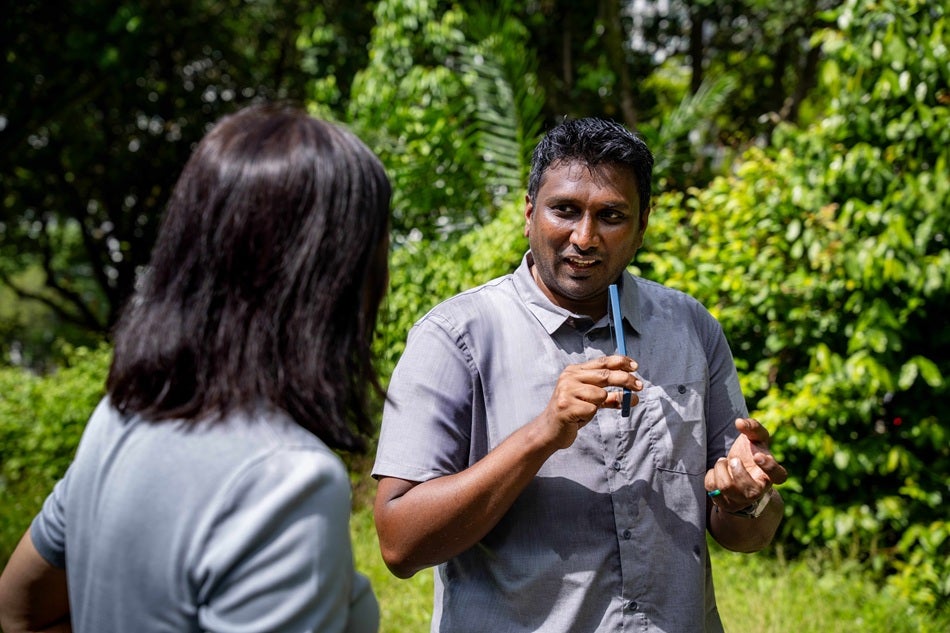
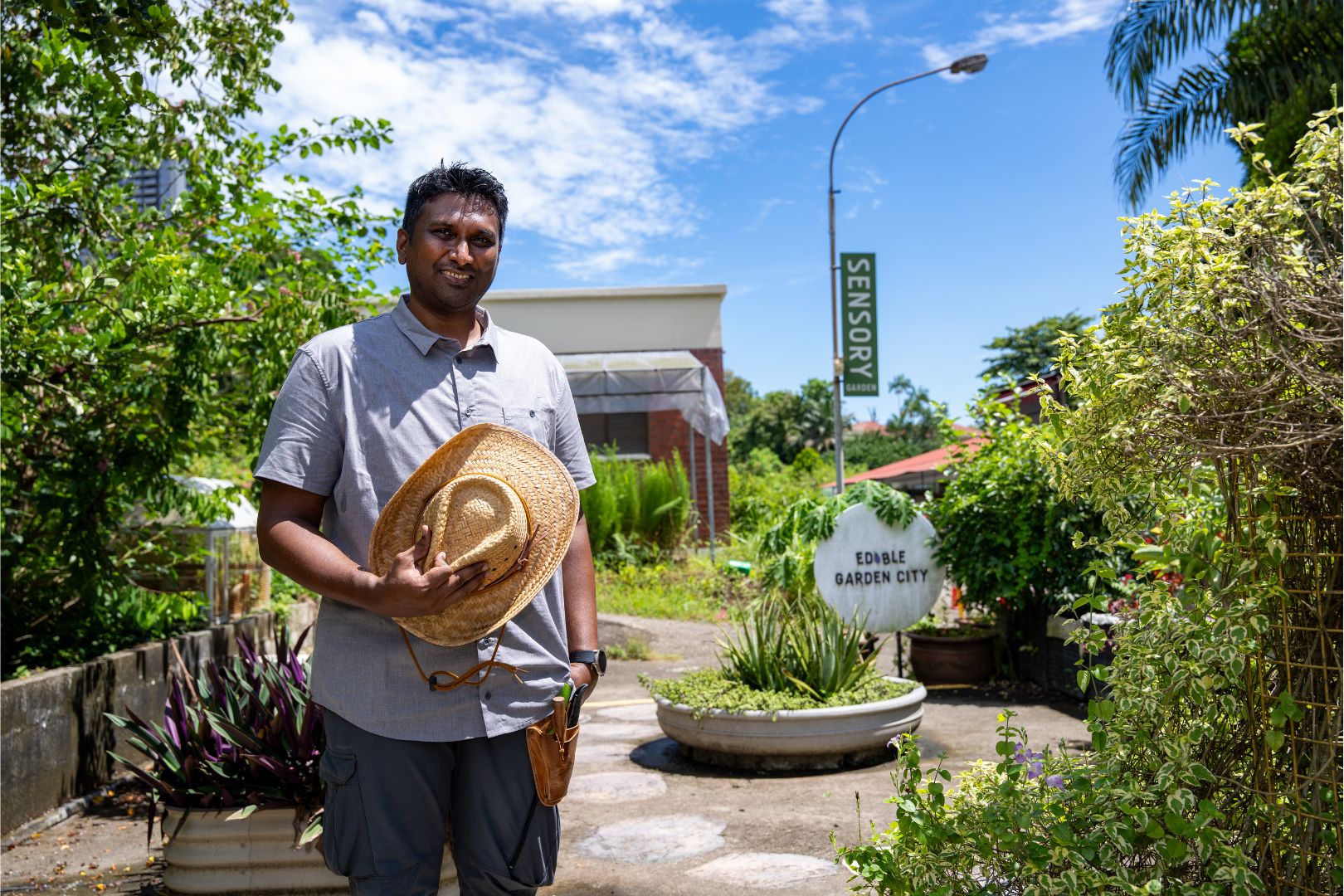
Mr Dhanenthiran sharing stories about the plants and the ecosystem in a digestible manner during the tour.
For Mr Dhanenthiran, an educator and trainer at EGC, a Singapore social enterprise that operates urban farms and runs education programmes, growing food is about more than sustenance or income. It is a way of understanding biodiversity, culture and history.
“Everyone can relate to food,” notes the instructor who meets everyone from people of all ages. Prior to EGC, he worked as a landscape designer while teaching environmental education and design thinking to post-secondary students. He became an educator after noticing how far many urban communities had drifted from nature and the origins of the food on their plates.
SEEING THE CITY DIFFERENTLY
The seeds of Mr Dhanenthiran’ perspective were planted long before he arrived in Singapore.
Raised in Kuala Lumpur, he comes from a family with agricultural ties extending from Tamil Nadu’s Cauvery Delta to the paddy fields of Bagan Serai, Perak. School holidays spent in villages gave him an early appreciation for seasonality and the connection between communities and the land. His late mother reinforced those values through her own edible garden, believing that even city dwellers should maintain a close relationship with nature.
At the National University of Singapore, Mr Dhanenthiran pursued a Master of Arts in Urban Design. There, he learned to view cities as more than just collections of roads and buildings, but also as living systems in which mobility, ecology, food and people are interconnected.
“What stayed with me most was the importance of human-centred and ecological thinking,” he says. “A city is not successful simply because it is efficient or dense. It also needs to support wellbeing, social resilience and meaningful relationships between people and their environment.”
The habit of looking for connections has remained.
He compares the isolated planting beds with monocultures of thought. In healthy ecosystems, roots and fungi form underground networks that exchange nutrients and information. Communities, he believes, flourish in much the same way through connection rather than isolation.
STORIES IN THE GARDEN
Through Mr Dhanenthiran’ storytelling, the lush grounds of Edible Garden City is transformed into a sensory classroom.
A heart-shaped sweet potato leaf becomes a whimsical Valentine’s Day gift for teenagers without pocket money. Ladybirds, often mistaken for pests, are among the garden’s allies thanks to their appetite for plant-destroying insects. The plum-like buah long long is commonly used in drinks, but its young leaves — sourish and fibrous — can also be eaten in salads. And the husked berry growing from the pavement like a weed? That’s the vitamin-rich ground cherry.
The effect is cumulative. Visitors begin seeing ordinary plants differently.
Mr Dhanenthiran is especially drawn to therapeutic horticulture. At a patch devoted to medicinal herbs, he invites participants to smell, touch and taste the plants, believing that, in addition to their medicinal properties, slowing down and engaging the senses can itself be restorative.
A sign above the bed reads, “Feel free to talk to this plant, they understand.” This is not the traditional advice to help greens grow, but an encouragement to confide in the greenery. “I would tell the plants the good and bad things that have happened to me,” says Mr Dhanenthiran, laughing, of his approach to therapy.
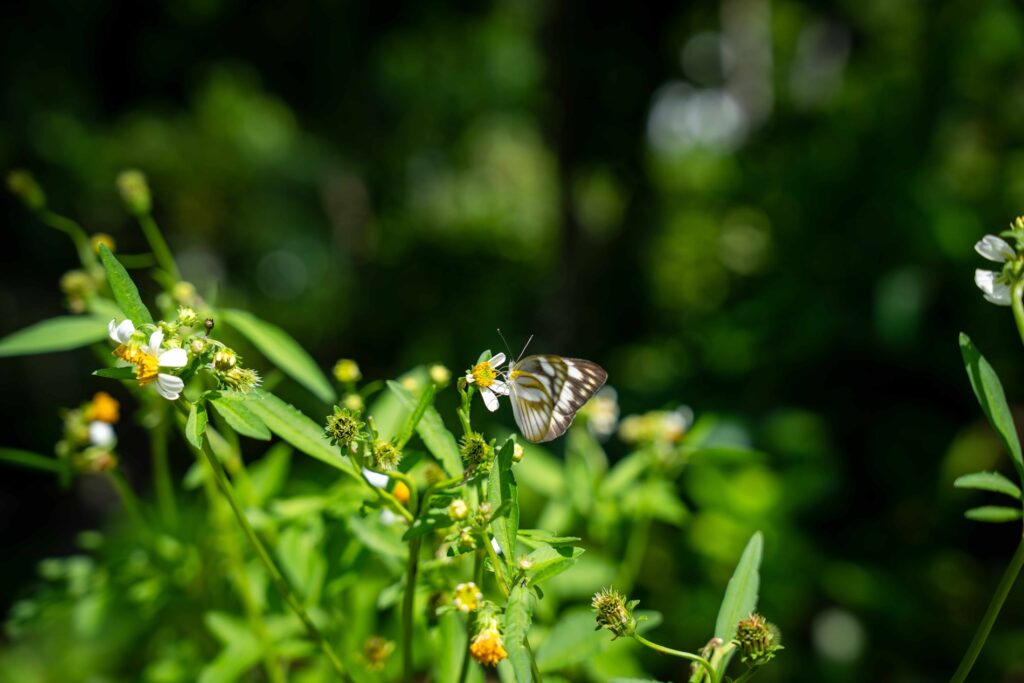
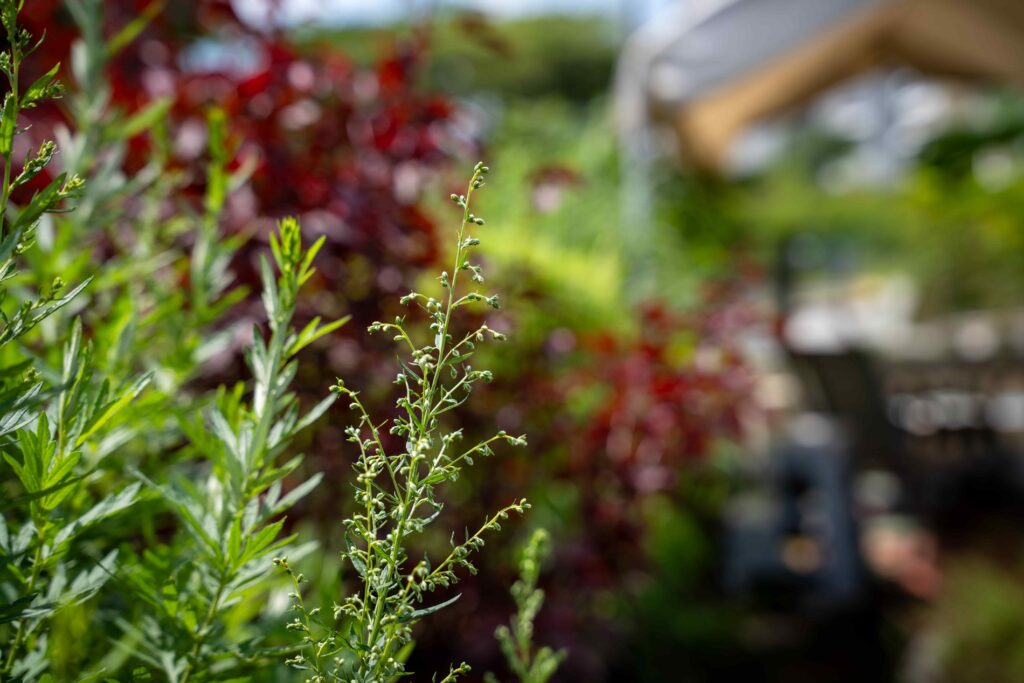
The Edible Garden City is filled with edible flowers and various plants.
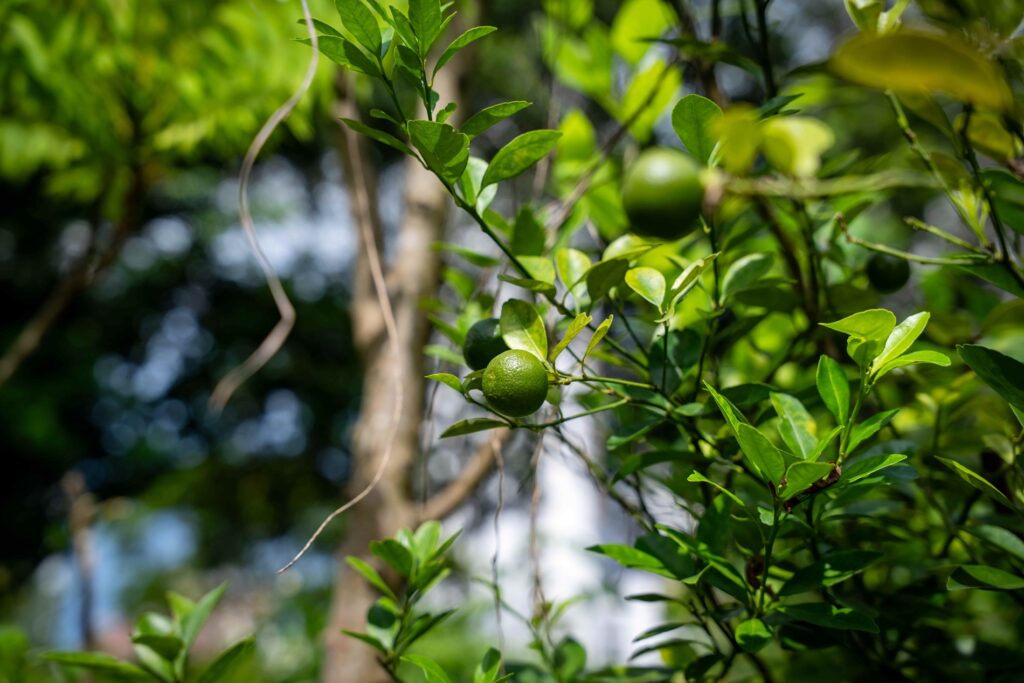
The Edible Garden City is filled with edible flowers and various plants.
The Edible Garden City is filled with edible flowers and various plants.
Around the garden, butterflies flit among edible flowers while birds build nests undisturbed overhead. To Mr Dhanenthiran, these are signs of a thriving ecosystem. The use of natural pest control instead of chemical pesticides encourages insects and pollinators, which in turn support larger wildlife. The result is a space that feels noticeably different from the neat landscapes often associated with urban environments.
“Nature is not manicured,” notes Mr Dhanenthiran. As Singapore evolves from a “City in a Garden” to a “City in Nature”, accepting a measure of ecological messiness may become part of living alongside biodiversity.
GROWING AWARENESS
After an hour walking the grounds, Mr Dhanenthiran is drenched in perspiration – this is tropical Singapore after all – but he does not seem to tire. The end of this tour is especially poignant.
After a decade in Queenstown, the social enterprise has to move out of its Jalan Penjara site. Operations have been decentralised across several locations, including the Enabling Village at Redhill as one of the main locations where EGC continues its education programmes, alongside the rooftops of Funan, home to its main production farm, and CapitaSpring in the heart of the central business district.
Some fruit trees were carefully uprooted and moved to other farms, donated, or relocated to Enabling Village as part of EGC’s new garden space. For Mr Dhanenthiran, the loss of those left behind shows that growing food takes time and some harvests cannot be rushed, regardless of technological advances.
The COVID-19 pandemic and subsequent supply-chain disruptions prompted many Singaporeans to think more deeply about where their food comes from. Interest in urban farming grew, even as the sector continued to grapple with constraints ranging from land scarcity to operating costs.
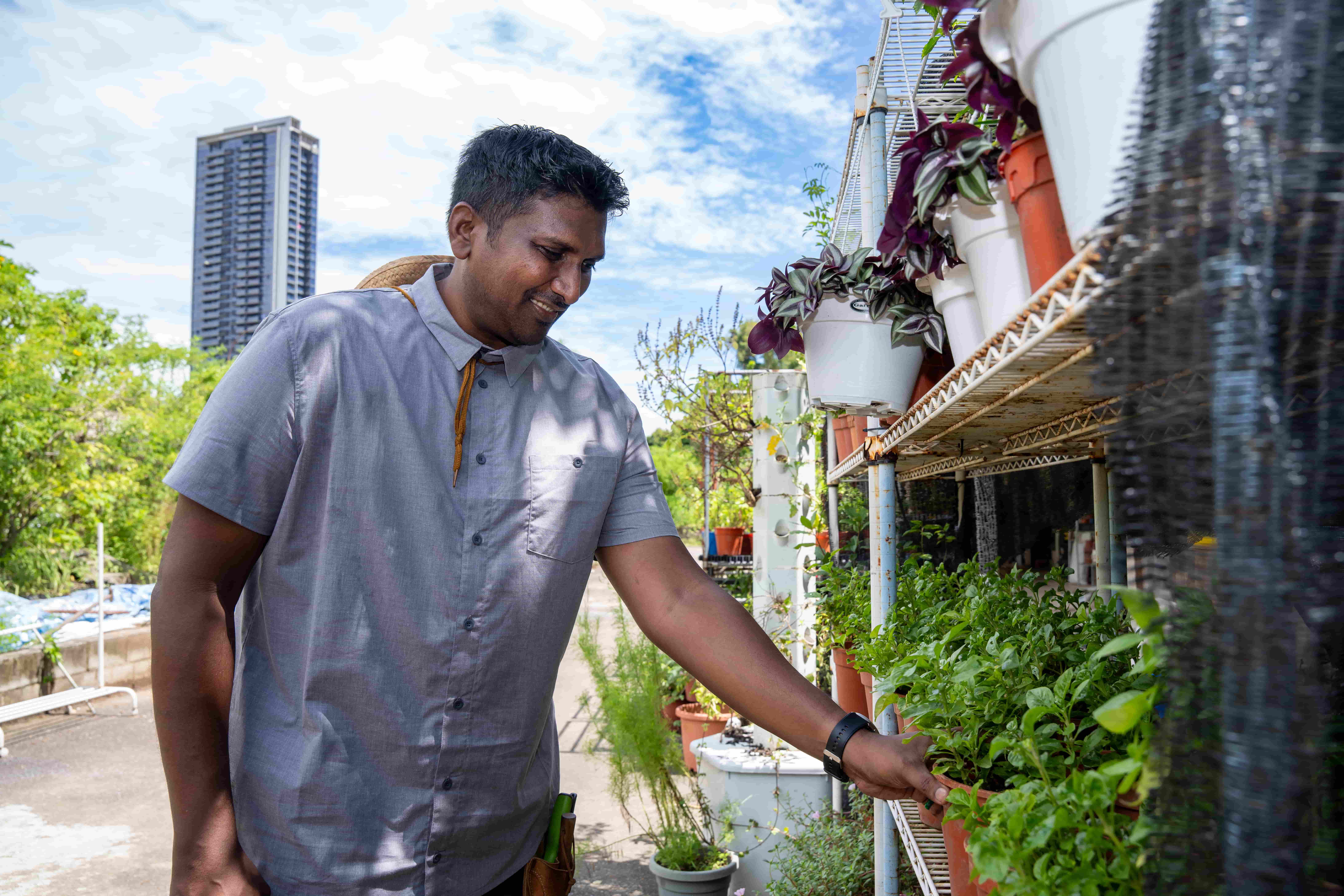
Edible Garden City supplies fresh herbs, edible flowers, and vegetables such as microgreens to food and beverage outlets, as well as to families through their Citizen Box programme.
Edible Garden City also design, build and maintain food gardens in Singapore
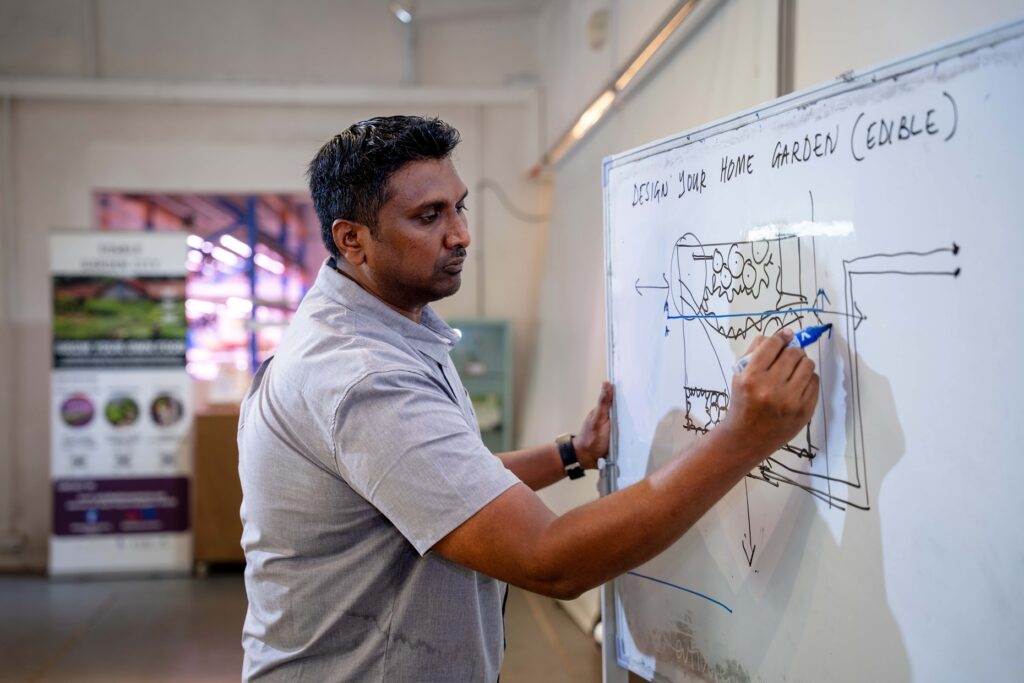
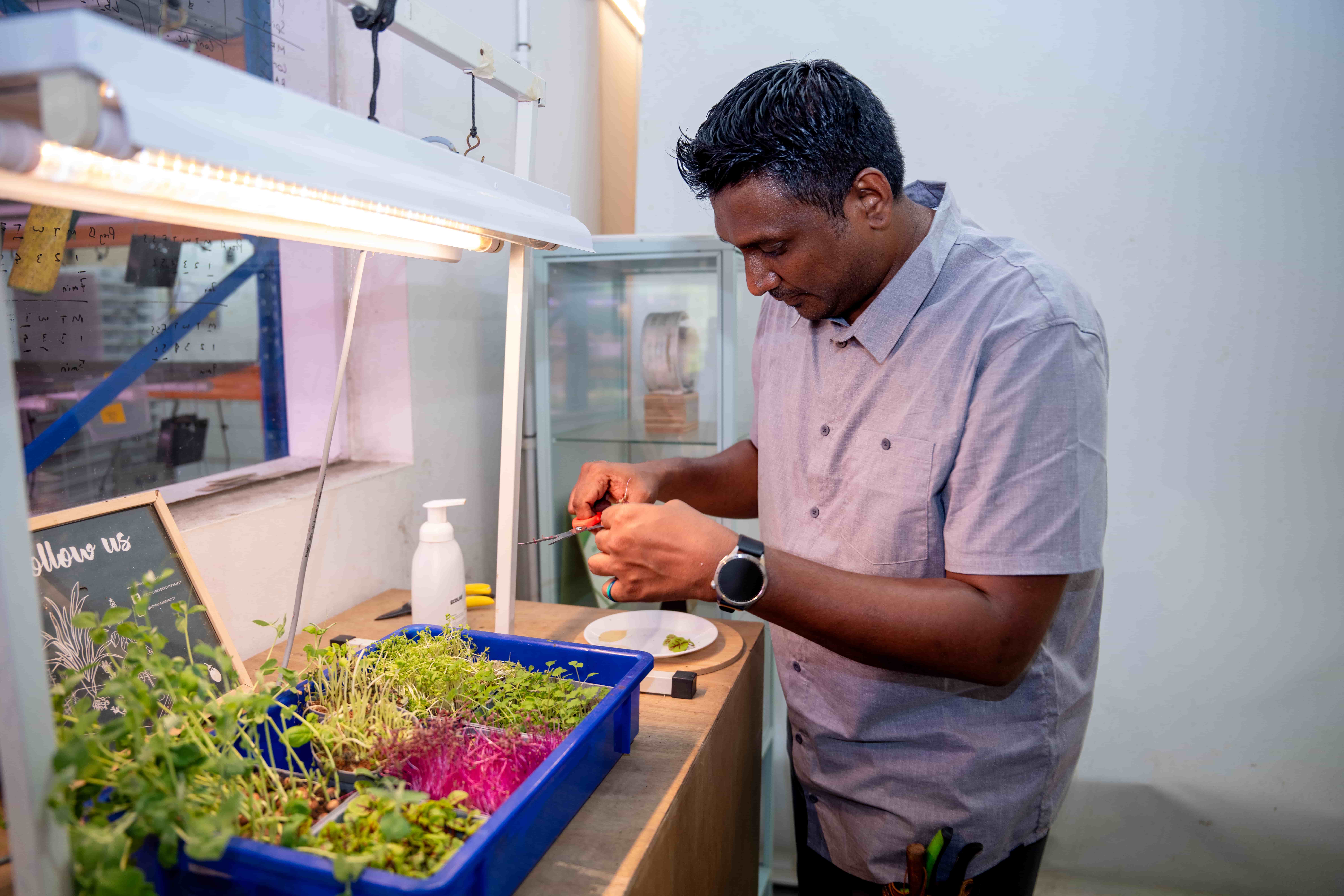
Understanding the effort, resources and relationships involved in producing food can change the way people think about what they eat. Mr Dhanenthiran, who also teaches classes on home gardening for EGC, is encouraging. Even a pot of microgreens grown under lights in a small apartment can shift mindsets.
“Sometimes the impact is not that they become farmers,” he says, “but that they become more conscious consumers and citizens.” In a city where few people grow their own food, that awareness may be one of urban agriculture’s most enduring contributions.