A surgeon, educator and president of the Medical Alumni Association, Dato’ Prof Dr Abdul Hamid Abdul Kadir (Medicine ’66) reflects on a life shaped by resilience and service.
At 85, Dato’ Prof Dr Abdul Hamid Abdul Kadir (Medicine ’66) has led a full life, rich in experiences and shaped by purpose. He remains a practising orthopaedic surgeon and a visiting specialist at Assunta Hospital and MAHSA Specialist Hospital in Petaling Jaya, Selangor, while making time to teach, indulge in his love for travel and writing, and keep his energy up through a fitness routine.
Yet, his legacy could have been different if not for the help of benefactors along the way. Dr Abdul Hamid’s formative years were spent in Merlimau, Malacca, where he was born amid challenging circumstances to parents who owned a sundry shop. He recalled, “I was born in February 1941, the year Pearl Harbour was bombed. I grew up during the Japanese Occupation, listening to the wail of air-raid sirens and the drone of planes flying overhead.”
Tapioca was the family’s staple diet, and they also reared chickens in their backyard. “I vividly remember how, following the end of World War II in 1945, the British convoy drove into town,” he added. “Children, including myself, lined the roads to cheer and wave as the soldiers threw us packets of cheese and biscuits, and cans of jam.”
Dr Abdul Hamid excelled at Methodist English School (1951) and Bandar Hilir English School (1952-1954) before completing his secondary and Form 6 education at Malacca High School in 1960. He applied to the University of Malaya in Singapore (UMSG), as there was no medical course at the University of Malaya in Kuala Lumpur at that time. Upon acceptance, his elder brother financed his first year of studies before a Malacca state scholarship made it possible for him to complete the rest of his education.
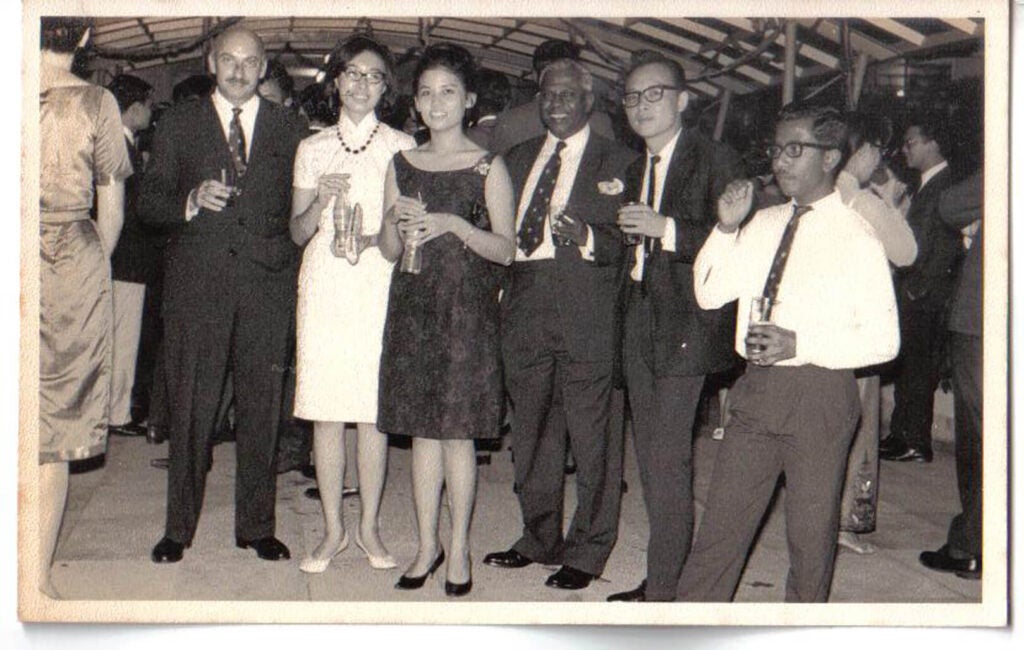
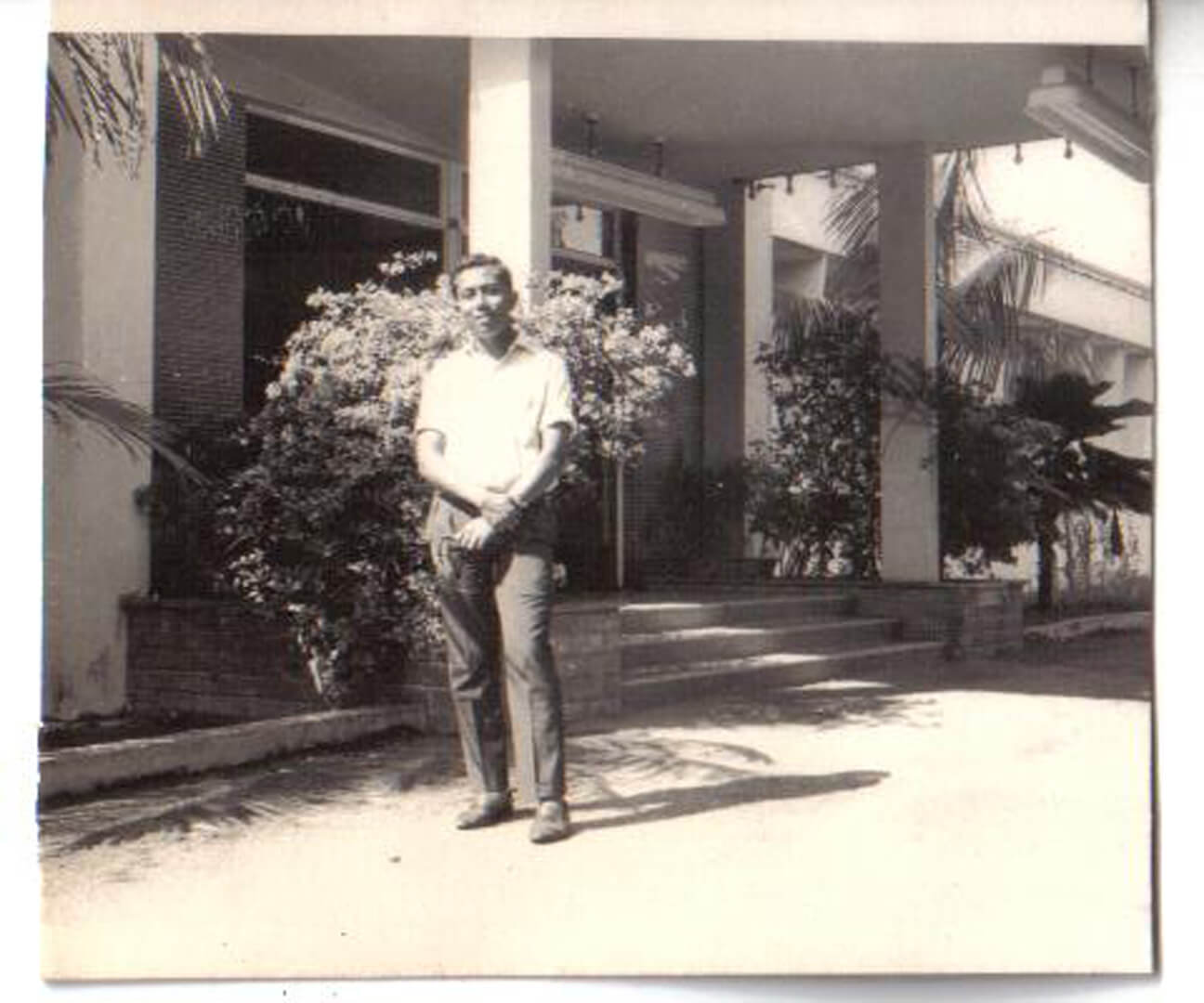
Dr Abdul Hamid (right), attending a King Edward VII Hall party
LIFE IN LECTURE THEATRES, AND BEYOND
By the time he graduated in 1966, UMSG had been renamed the University of Singapore. He has fond memories of his university days, citing paediatric physician Prof Wong Hock Boon and KE Hall master Prof Lim Kok Ann as some of the lecturers who inspired him. Other highlights include a 1965 charity screening of the James Bond movie Goldfinger, with donations made to beneficiaries in Singapore, and the staging of The Waiting, a one-act play he wrote and staged at the former Drama Centre at Canning Rise in the presence of the late Dr Goh Poh Seng, doctor and writer. Those days, he says, were demanding but nothing like what today’s undergraduates experience.
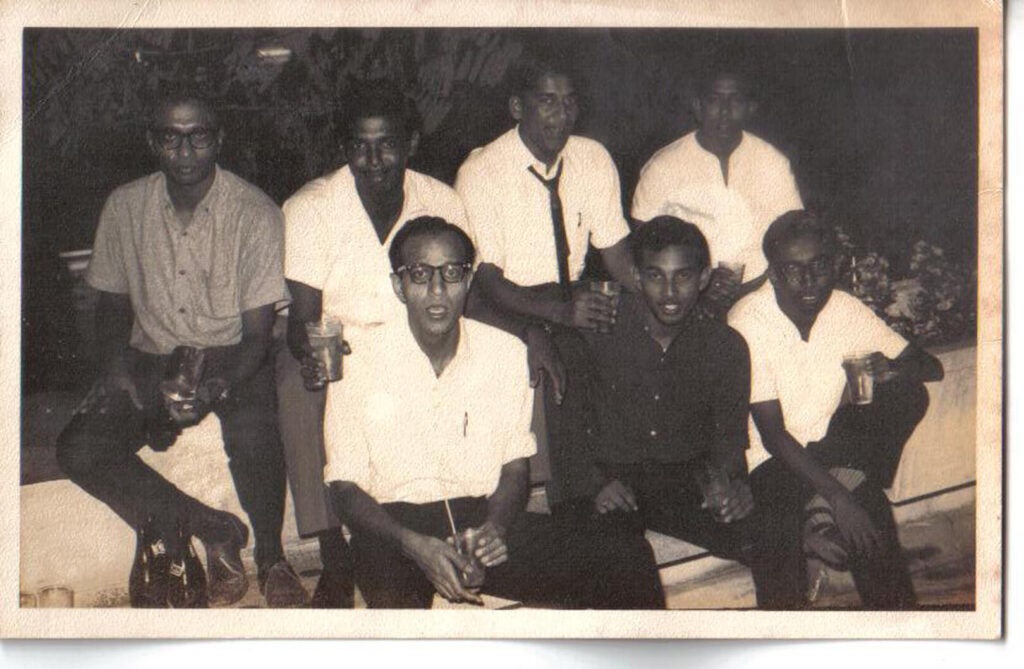
“As a student in the 1960s, my friends and I had a lot of freedom. There was also more camaraderie and friendship, and a lot of it was long-lasting,” he said. “In our time, we were naturally committed to our education, but had a more ‘relaxed’ life, enjoying social outings with friends, hostel activities such as billiards and mahjong, and occasional harmless pranks.”
Dr Abdul Hamid (centre, bottom row), with friends at King Edward VII Hall in 1965.
Today, medical education has become more inclusive, with the rapid formulation of newer pharmaceuticals and advances in diagnoses and equipment. Integrated clinical programmes and such have all been influenced by the digital age, with Artificial Intelligence (AI) looming with emphatic ascendancy into all aspects of life. “We can’t run from AI; it is a part of our lives,” he noted. “In the medical profession, it is of some concern that AI can influence diagnosis and management options.” For instance, Dr Abdul Hamid highlighted that a femoral fracture, for example, can be diagnosed using AI, including recommendations on management and implant selection. However, when it comes to legal implications such as negligence, the doctor is solely answerable.
“Some say AI takes the fun out of medical practice. I believe it should be used strictly as a guide — a tool for information, but not decision-making. In medical practice, the impact of technological advancement is inevitable, but the human factor remains essential,” he affirmed.
Dr Abdul Hamid obtained his Fellowship of the Royal College of Surgeons (FRCS) of Edinburgh in 1972 and a master’s degree in orthopaedic surgery from the University of Liverpool in 1979. He served as general surgeon and orthopaedic surgeon in the Malaysian Armed Forces medical services from 1971 to 1982, including as Commanding Officer of the Terendak Armed Forces Hospital, as a full colonel.
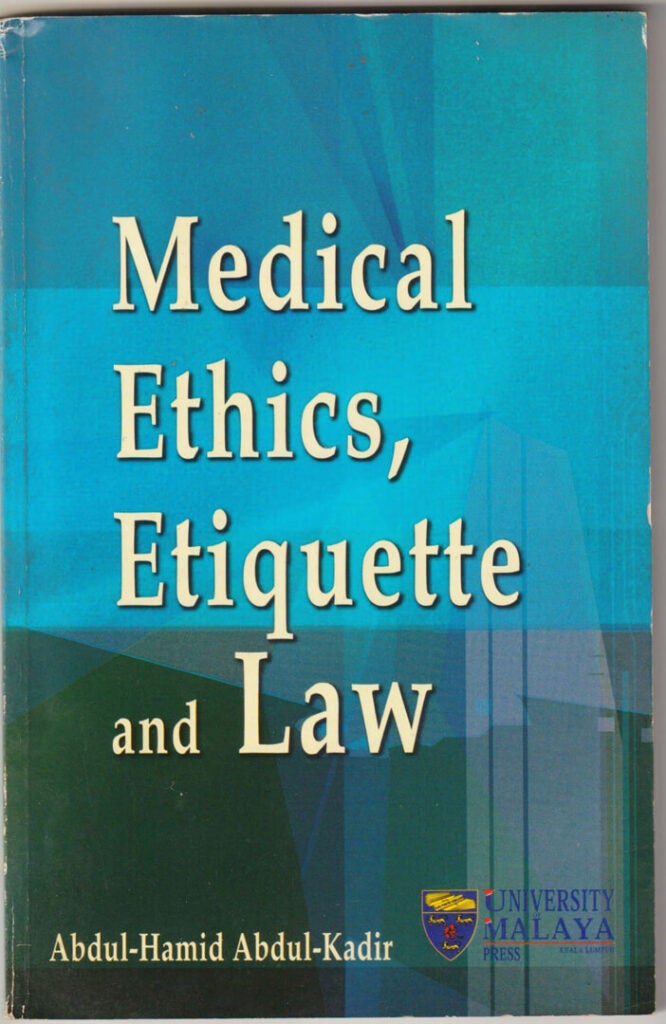
Dr Abdul Hamid has written extensively on the relationship between medical ethics, etiquette and law.
His chosen specialty, orthopaedics, was a result of his fascination with the human body’s mechanical capabilities and the motivation to restore form, function and mobility. He also appreciated how most orthopaedic diseases could be treated with predictable and definitive outcomes ― something he has witnessed over decades of practice in both public and private hospitals, such as in Armed Forces Hospitals, Malacca General Hospital, Hospital Kuala Lumpur, Assunta Hospital and MAHSA Specialist Hospital.
After leaving the Armed Forces, he went on to become Head of Orthopaedics at Universiti Kebangsaan Malaysia, before leading the department at MAHSA University, where he still serves as an Adjunct Professor, teaching fourth- and final-year undergraduates today. He has also lectured widely on medical ethics across Malaysian universities, most recently at Cyberjaya Medical University.
A MAN OF LETTERS
The eminent octogenarian chose medicine as a career, despite his love for the written word. A school prefect, Dr Abdul Hamid was also editor of the Form 6 newsletter The Observer and a member of the editorial board of his high school’s annual magazine, The Optimist, for two years. It was then that his love for the literary arts grew. And his choice of reading material, as it turned out, would shape his career path.
“I have always loved the medical profession since my secondary school days, when I was reading books by [Scottish physician and novelist] AJ Cronin, [British playwright and physician] Somerset Maugham and [British novelist and anaesthetist] Richard Gordon,” he shared. “Because of them, I wanted to learn about medical practice generally and live the life of a doctor.”
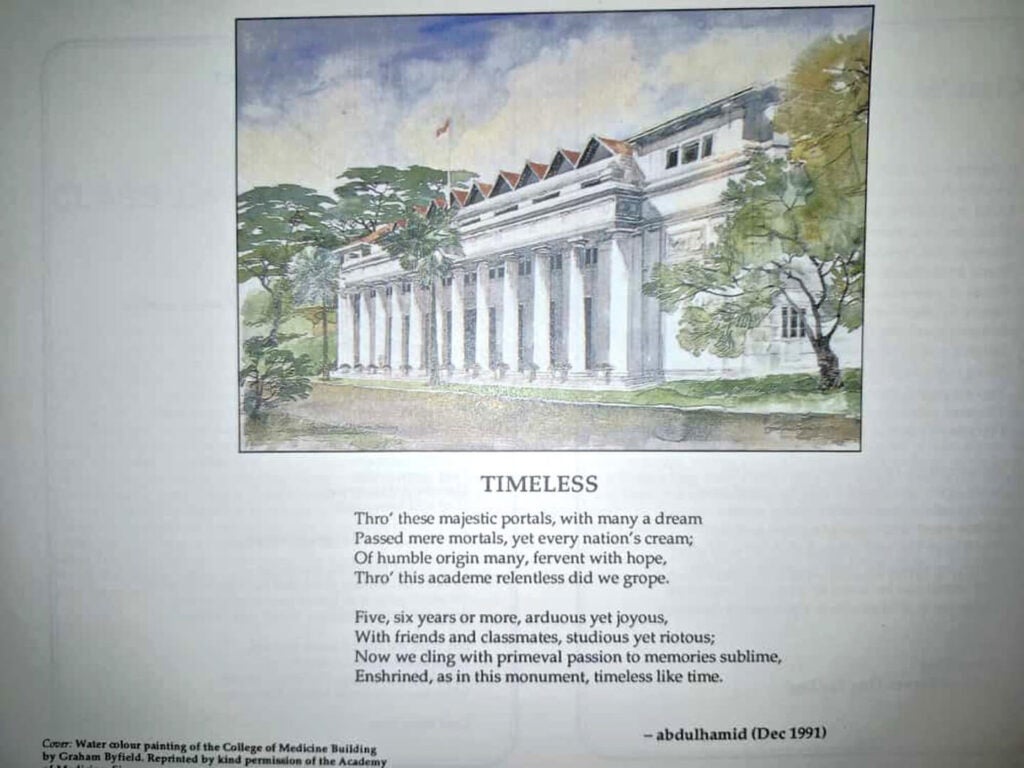
Like Cronin, Maugham and Gordon, Dr Abdul Hamid is also a published writer who loves poetry. During the COVID-19 pandemic, he wrote a trilogy of poems on the impact of the virus, published in the Malaysian Medical Association newsletter Berita. His poetry has also been published in a souvenir magazine in Selangor, commemorating the 25th anniversary of the University of Singapore graduating class of 1966.
Courtesy of Dr Abdul Hamid
Upon graduation, he strengthened his academic life and professional commitment through teaching, which became a natural extension of his long service on the Malaysian Medical Council (MMC), where he contributed for more than three decades in the areas of medical legislation and ethical standards. He has also served as President of the Malaysian Medical Association and the Malaysian Orthopaedic Association.
GIVING BACK TO HIS ALMA MATER
Dr Abdul Hamid’s commitment to the alumni community reflects the same sense of stewardship. As the newly-minted president of the Medical Alumni Association (MMA), he looks forward to strengthening the Association via initiatives such as improving membership through social networking and sponsoring University of Malaya medical, dental and pharmacy undergraduates to attend MMA functions.
He also hopes to grow and foster a stronger sense of belonging within the alumni community, based on the firm belief that his role is not only to remember the past, but to strengthen the present through inclusive programmes, relevant discourse, and wider engagement with students across medicine, dentistry and pharmacy.
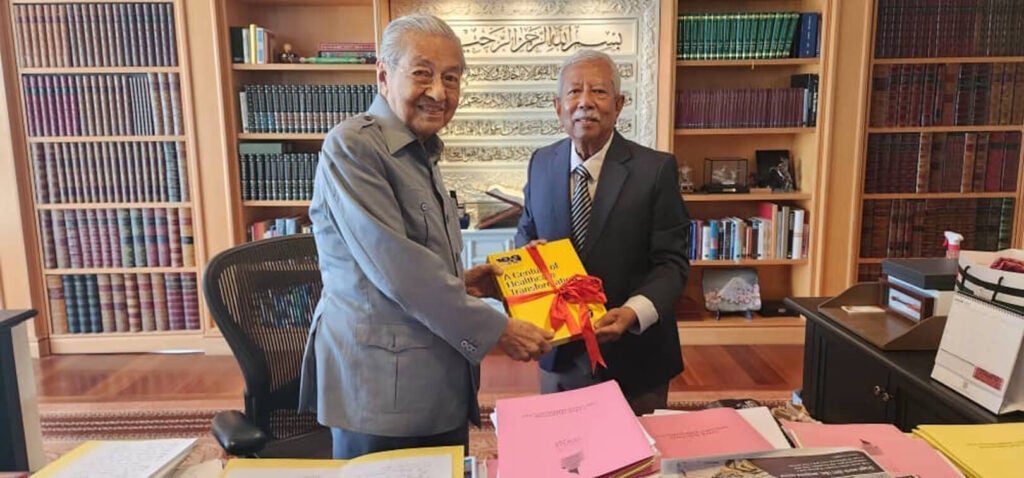
YAB Tun Dr Mahathir Mohamad (Medicine '53, HonLLD '18) and Dr Abdul Hamid
Universities, he believes, thrive when their graduates remain connected and invested, giving of their time and experience. “I’m in a position to advise,” he added. “I wish to bring in Sabah and Sarawak members, which we the Alumni Association currently lacks.” He also hopes to reach out to graduates to strengthen membership. “We should have more lectures that appeal to a wider spectrum of healthcare professionals beyond doctors, pharmacists and dentists.”
Outside of work commitments and his role as an active member of the Disciplinary Panel of the Malaysian Medical Council (MMC) and the MMC Ethics Committee, he spends time with his daughters, travels widely, reads and writes ethical notes and poetry, and watches sporting events and movies.
He also catches up with friends and colleagues over lunch, to “share many stories, past and present, about our lives and the country”. Keeping fit is also high on his list of priorities; walking three or four times a week at a recreation area near his home, complementing these efforts with strengthening and stretching exercises.
Dr Abdul Hamid’s inspiring journey reflects a life of dedicated service and is a reminder that a university education does not end at graduation. It lives on in the careers built, the values upheld, and the responsibility to give back to the profession at large—through teaching future doctors and, where possible, serving the community.