
AlumNUS

How NUS is Redesigning Undergraduate Education in the Age of AI

As generative AI transforms how we learn, work and think, NUS is taking a bold approach to revamp its curriculum to help students use AI effectively, while doubling down on what machines can’t replace: human qualities such as critical thinking, communication, resilience and teamwork.
When generative AI can write, code, design and even compose music, what does a university education need to look like to stay relevant?

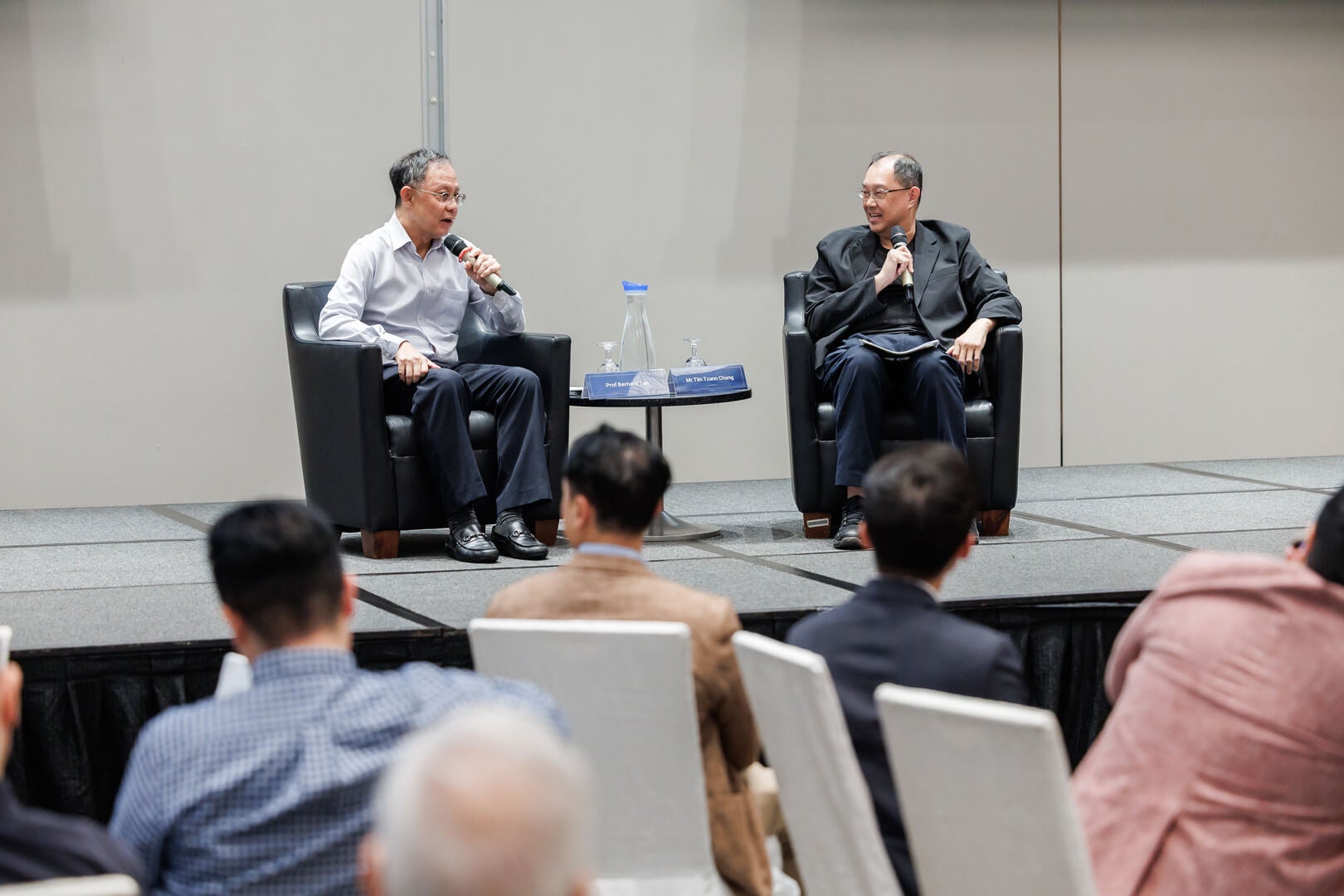
This was the central question at the “Future of Learning in the Age of AI”, an event jointly organised by NUS Society (NUSS) and NUS Alumni Relations, held on 13 January 2026 at NUSS Kent Ridge Guild House. Professor Bernard Tan (Computing ’89, Science MSc ’91, Science PhD ’95), Senior Vice Provost (Undergraduate Education), National University of Singapore (NUS), shared how the University is redesigning undergraduate education for an AI-driven world during his presentation and fireside chat with moderator Mr Tan Tzann Chang (Computing ’87, Business GradDip ’92), the Facilitator, Educator, and Advisory Member of the NUSS Communications & Technology and Intellectual Pursuit Sub-Committees.

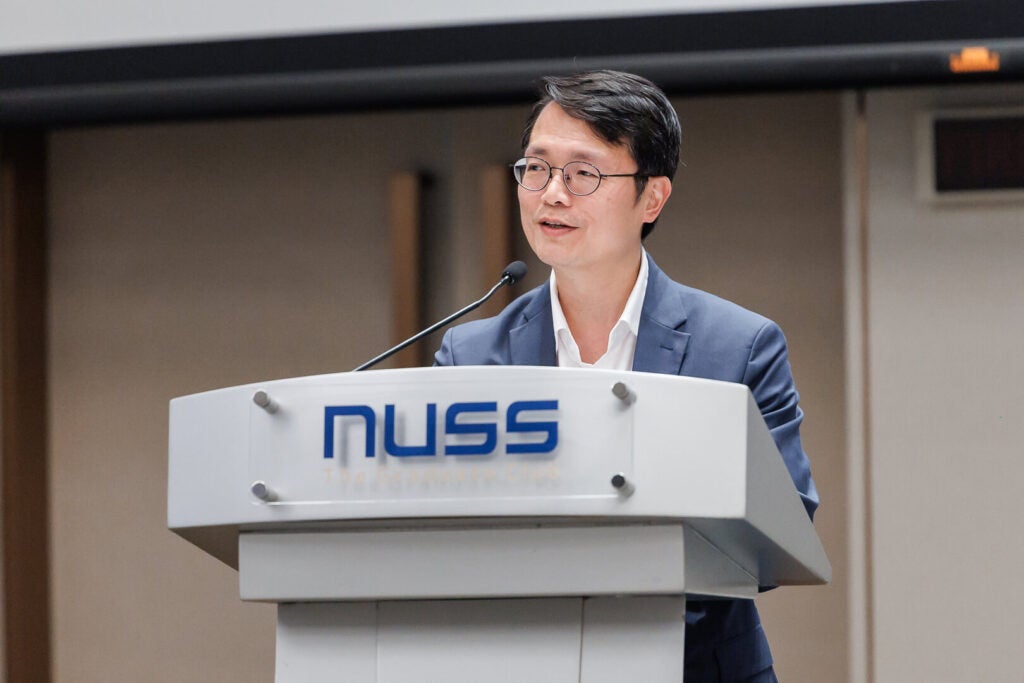
Mr Tong Hsien-Hui (Engineering ’98), President of NUSS

In his opening address, Mr Tong Hsien-Hui (Engineering ’98), President of NUSS, set the tone by emphasising that even as AI becomes more powerful, human thinking remains essential and education must evolve to ensure people do not lose their ability to think, question and make sound judgments.

A CURRICULUM BUILT FOR CHANGE

Professor Tan began by outlining the university’s major curriculum reform journey from 2018 to 2024, which he described as a necessary response to the risk of graduates becoming obsolete in a fast-changing workplace.

“If we do nothing at all, then we are definitely wrong. So which do you prefer? Definitely wrong or maybe right? And we concluded that maybe right is a better option,” he said, explaining why NUS chose to act decisively in reforming its curriculum even without perfect certainty.

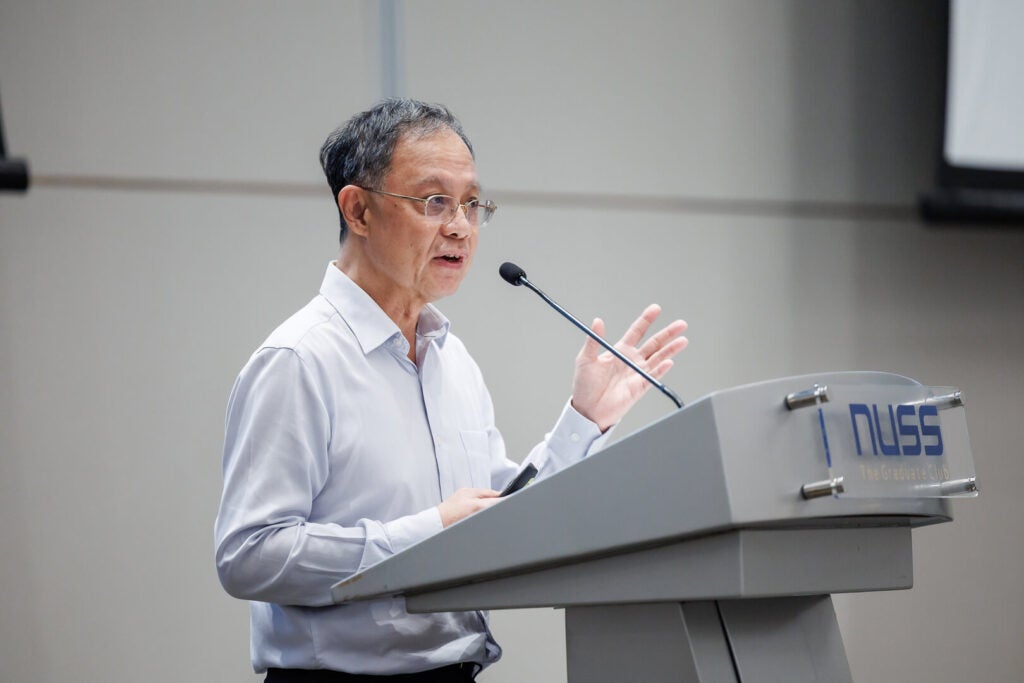
Professor Bernard Tan, NUS Senior Vice Provost (Undergraduate Education)

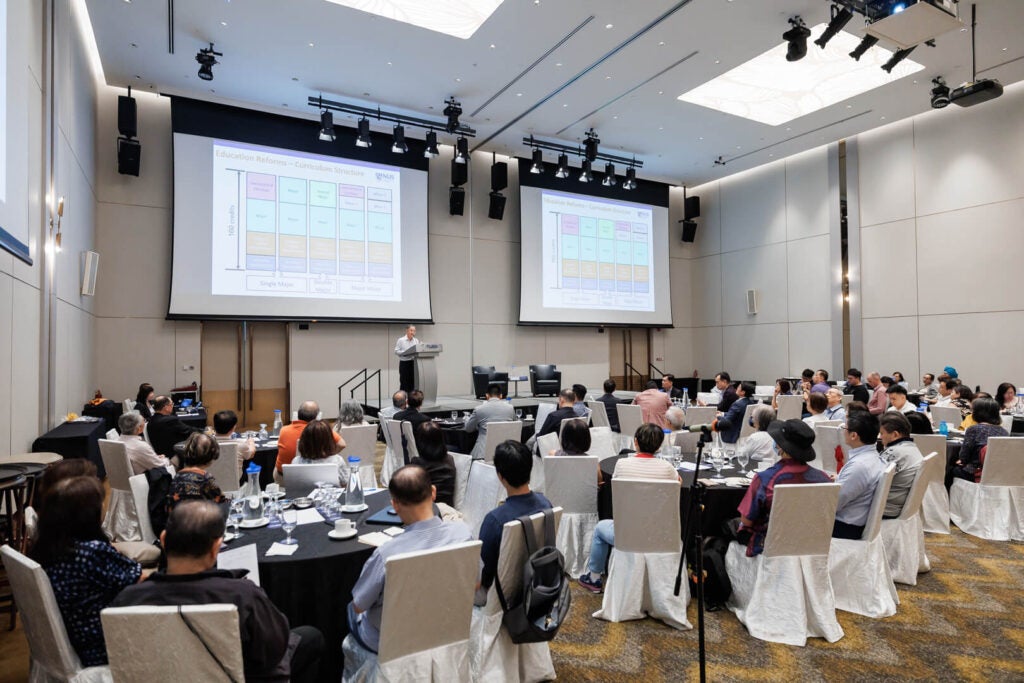
At the heart of NUS’ reforms is a four-layer curriculum structure, designed to give students both strong foundations and flexibility to build the following skills:

  • Data and digital literacy as well as communication skills
  • Interdisciplinary learning to solve real-world problems using diverse thinking and skillsets
  • A condensed major and unrestricted electives, giving students room to explore interests and adapt their knowledge

One key driver behind these changes, Professor Tan shared, was employer feedback. “The employers told us that while NUS graduates were technically strong, employers wanted them to be more globally aware and better communicators,” said Professor Tan.

AI IS CHANGING EVERY DISCIPLINE—INCLUDING HOW NUS TEACHES THEM

Professor Tan pointed out that AI is reshaping not just one industry, but nearly every profession—making curriculum reform a university-wide responsibility.

He shared a personal reflection: as an NUS Computer Science graduate, he once had to learn programming “at different levels”. Today, with generative AI, students can increasingly build systems simply by describing what they want.

This shift forces universities to rethink how they train students across fields—from computing and engineering to law and medicine.

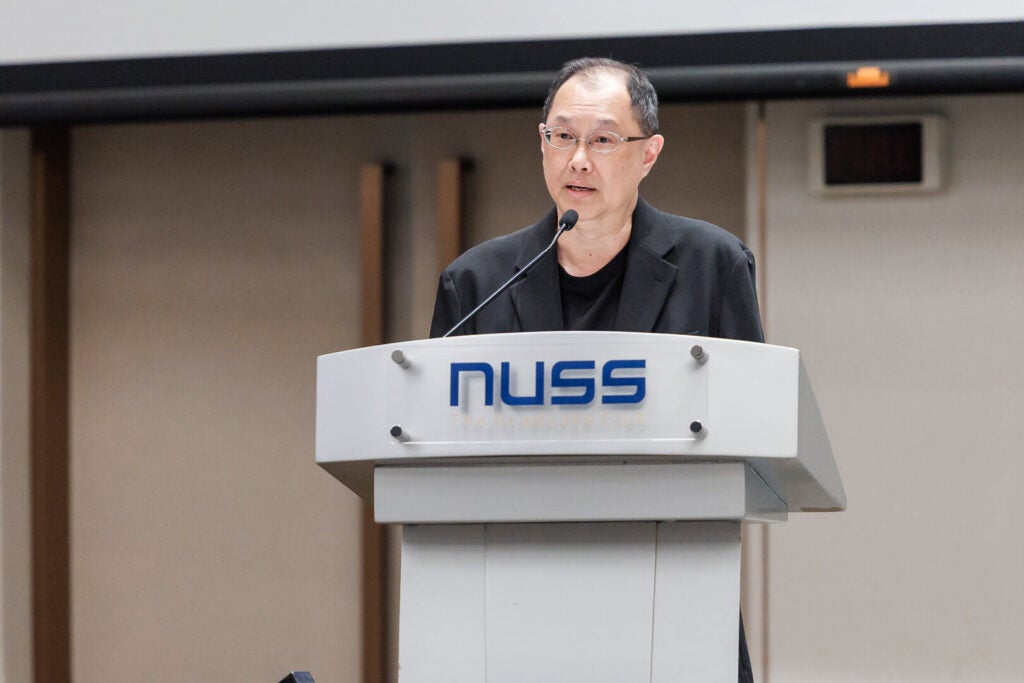
Mr Tan Tzann Chang, Facilitator, Educator, and Advisory Member of the NUSS Communications & Technology and Intellectual Pursuit Sub-Committees

BEYOND LECTURES: HELPING PROFESSORS TEACH THROUGH MULTIMEDIA

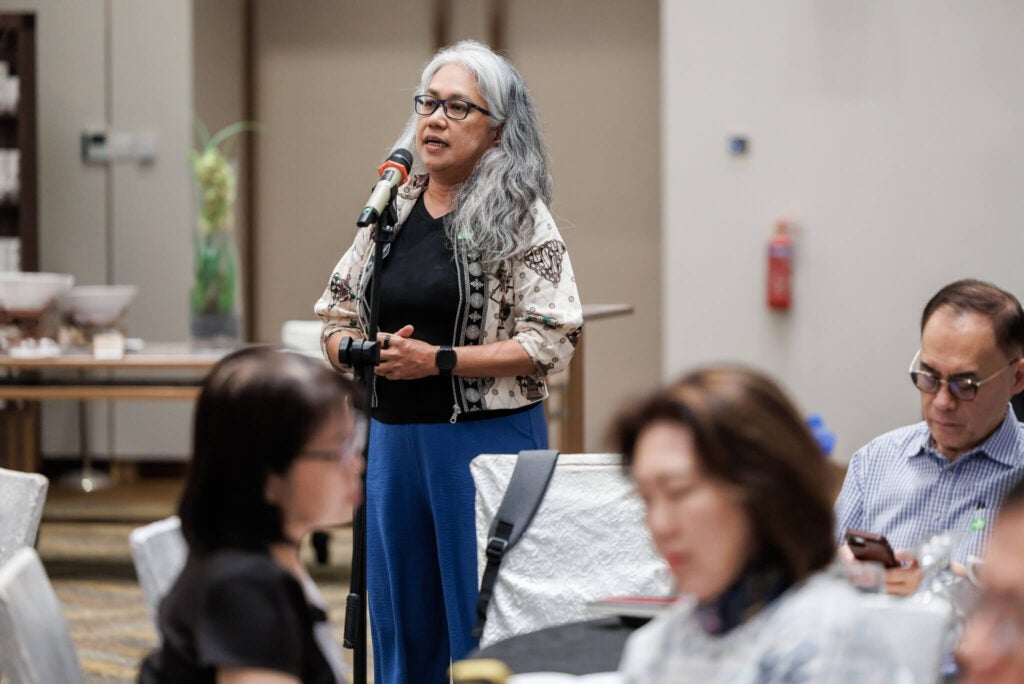
A key highlight of the Q&A session came when an NUS professor asked a question many educators are now grappling with: How can professors remain useful in the age of AI, when students can access information instantly?

Professor Tan’s response was clear: teaching cannot remain centred on information delivery.

“With technology able to convey knowledge like this, it becomes quite meaningless for us to put people in front of a class just to disseminate knowledge,” he explained, describing how blended learning has already enabled NUS to use videos, cartoons and animations to make complex concepts easier to understand.

To support this shift, he shared that the Provost’s Office has a dedicated team that works with professors—starting with those teaching the largest classes—to transform teaching materials into multimedia formats that students can access “anytime, anywhere” and replay as needed.

This redesign also frees up classroom time for deeper learning—where students can discuss, debate, solve problems and build understanding beyond the basics.

The Q&A session discussed the evolving role of universities in the age of artificial intelligence.

REDESIGNING ASSESSMENTS SO STUDENTS LEARN TO WORK WITH AI—NOT OUTSOURCE TO IT

Another major concern raised during the Q&A was academic integrity: if students can ask AI to generate an essay or assignment, how should universities respond?

Professor Tan explained that banning AI outright would be unrealistic—because students will enter workplaces where AI is everywhere. Instead, NUS is redesigning assessments so that students can’t succeed by outsourcing everything.

“If we create assessments where students can totally outsource to AI and get away with it, then the assessments are already [wrong],” he said.

He described NUS’ direction clearly:

  • If students use AI only, outcomes would not be strong
  • If students work without AI, outcomes can be good but effort is heavy
  • If students work with AI intelligently, outcomes can be excellent with reasonable effort

NUS also requires students to acknowledge which AI tools they used and follow ethical guidelines on responsible usage.

The session drew a large audience, signalling widespread interest in the topic of AI.

REAL-WORLD AI APPLICATIONS: PERSONAS FOR HEALTHCARE, LAW AND JOB INTERVIEWS 

Beyond high-level academic policy, Professor Tan shared concrete examples of how NUS is already deploying AI tools to support learning in practical, human-centred ways.

1) AI personas for medical and nursing students

One example involved preparing students for challenging community interactions—especially with elderly clients.

Professor Tan shared that AI can now help medical and nursing students develop AI personas, allowing them to practise difficult conversations before they meet real seniors at active ageing centres.

In the past, some students might unintentionally say something insensitive and upset the elderly. With AI personas, they can learn what to avoid, build empathy, and better understand real-life challenges so they can develop more thoughtful healthcare solutions.

2) AI personas for job interview preparation

A finance student in the audience asked how graduating students can stand out when many executive search firms use AI to screen CVs, and whether highlighting “human qualities” is even useful if algorithms filter candidates first.

Professor Tan acknowledged the reality: AI is already deeply embedded in HR processes.

He shared that students could improve their CVs to a baseline standard. Career advisors from NUS’ Career Centre can then focus on the deeper work to help students identify their strengths beyond grades, including student life and leadership experiences, for potential employers.

NUS is also experimenting with AI interview personas tailored to specific industries.

“If you want to go into the logistics industry or you are targeting a multinational, we can configure those kind of personas and then you practise a simulated job interview before you go out and face real hiring managers,” he said.

PREPARING GRADUATES FOR AN AI FUTURE—WITHOUT LOSING WHAT MAKES THEM HUMAN

As the session drew to a close, Professor Tan reinforced the idea that education is no longer a one-time phase, but a lifelong journey.

In a world where AI will continue evolving, NUS’ goal is not to compete with machines on what they do best—but to nurture graduates who can think clearly, communicate persuasively, lead with resilience, and work with AI responsibly.

Because in the age of AI, the most valuable graduates won’t be the ones who can produce the fastest answers. They’ll be the ones who can ask better questions and remain unmistakably human while doing so.

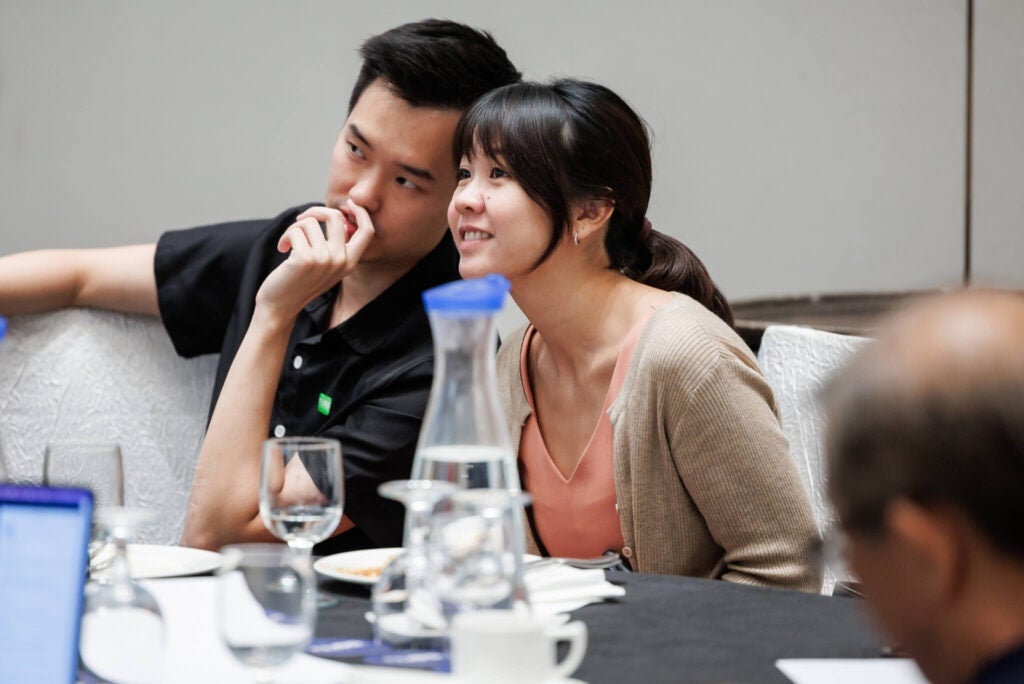
Audience members listen to the discussion.
Photos courtesy of NUSS