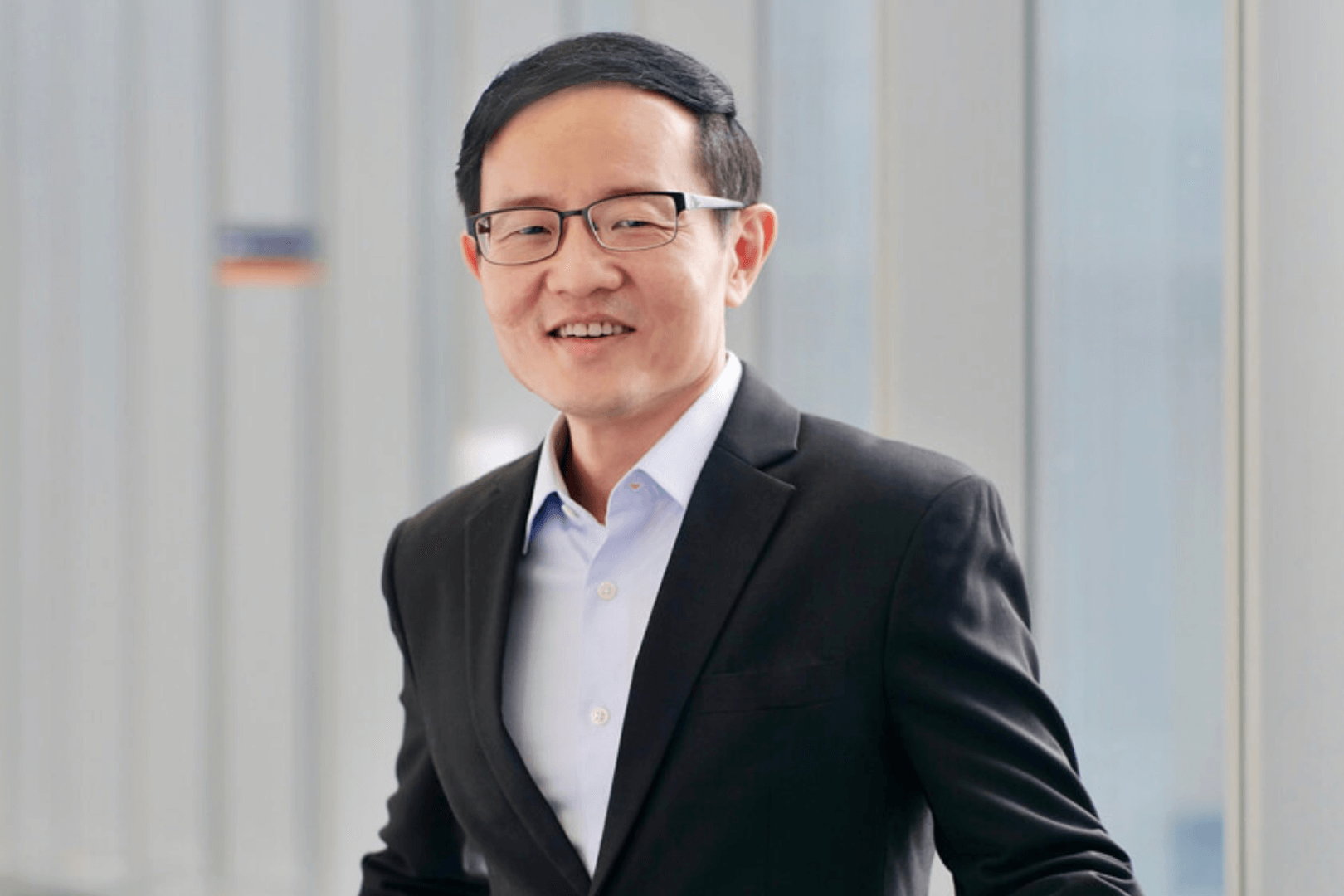
WHO HE IS:Scientist, innovator, mentor — Prof Lim Chwee Teck (Engineering ’90) exemplifies excellence in discovery and its application. His breakthroughs and leadership continue to shape science and improve lives.
It’s fitting that Professor Lim Chwee Teck (Engineering ’90), NUSS Chair Professor in Biomedical Engineering, holds the rare distinction of having received both the President’s Science Award (2025) and the President’s Technology Award (2011) — Singapore’s top honours for scientists and engineers. Few embody the spirit of both awards as completely as Prof Lim, who is committed to both pushing the boundaries of scientific knowledge and translating those discoveries into real-world solutions.
That problem-solving ethos can be traced back to his childhood, when he saw how science could be used to improve people’s lives. Though now associated with advanced technologies, Prof Lim’s early fascination lay with simple household appliances such as washing machines. Their ability to ease daily life sparked a conviction that continues to drive his research, even as it has taken an interdisciplinary turn.
One pivotal moment came over a casual coffee with a fellow scientist researching malaria. “He was describing a challenge he faced, and I realised that mechanics might offer a solution,” recalled Prof Lim.
In malaria, infected red blood cells become stiffer and stickier, but clinicians previously lacked a way to measure these changes quantitatively. To tackle this, Prof Lim used advanced mechanical tools, such as laser tweezers and microfluidic devices, to gauge how they changed. This biomechanical profiling not only deepened understanding of malaria but also marked Prof Lim’s entry into mechanobiology, showing how mechanics could illuminate medicine. It would underpin his later innovations, such as liquid biopsy technology, which enables the detection and analysis of cancer cells through a simple blood test.
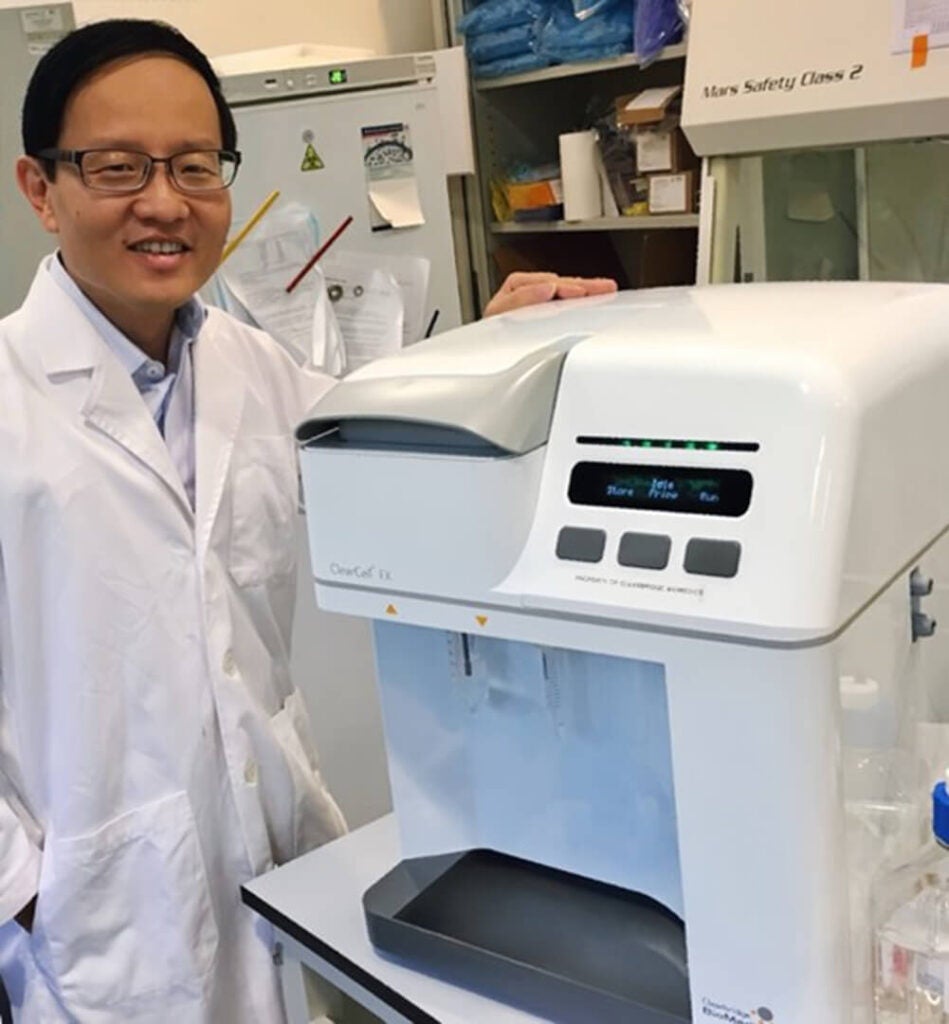
The ClearCell® System, together with the CTChip®, was developed as an advanced liquid biopsy platform to detect and isolate circulating tumour cells directly from patient blood samples.
Today, such cross-pollination across disciplines feels natural. Two decades ago, it was rare.
“At that point, people weren’t really into interdisciplinary research, because they didn’t quite understand the possibilities,” explained Prof Lim, who had to knock on clinicians’ doors and entice them to collaborate. That involved learning their jargon and painstakingly understanding the problems they were trying to solve — and then developing a solution rooted in his own forte, mechanics. Such interdisciplinary research is now commonplace, due in part to bodies like iHealthtech, the institute that Prof Lim heads as Director. Sited at NUS, it aims to bridge the gap from the laboratory to the clinic and market. Among the many projects in its pipeline, these are three that excite him:
MAKING SENSE: This project experiments with sensors that can be printed and implanted directly inside the body without the need for surgery. These laser-printed devices can monitor signals such as heart rate or bladder movement and, if placed near a tumour, even measure its stiffness and track the effectiveness of cancer therapy. The prototypes already work in animal models and degrade naturally after about 50 days. “We’ve shown that it works — we can print the sensor, and now we’re looking at how to further improve its performance and capabilities,” said Prof Lim.
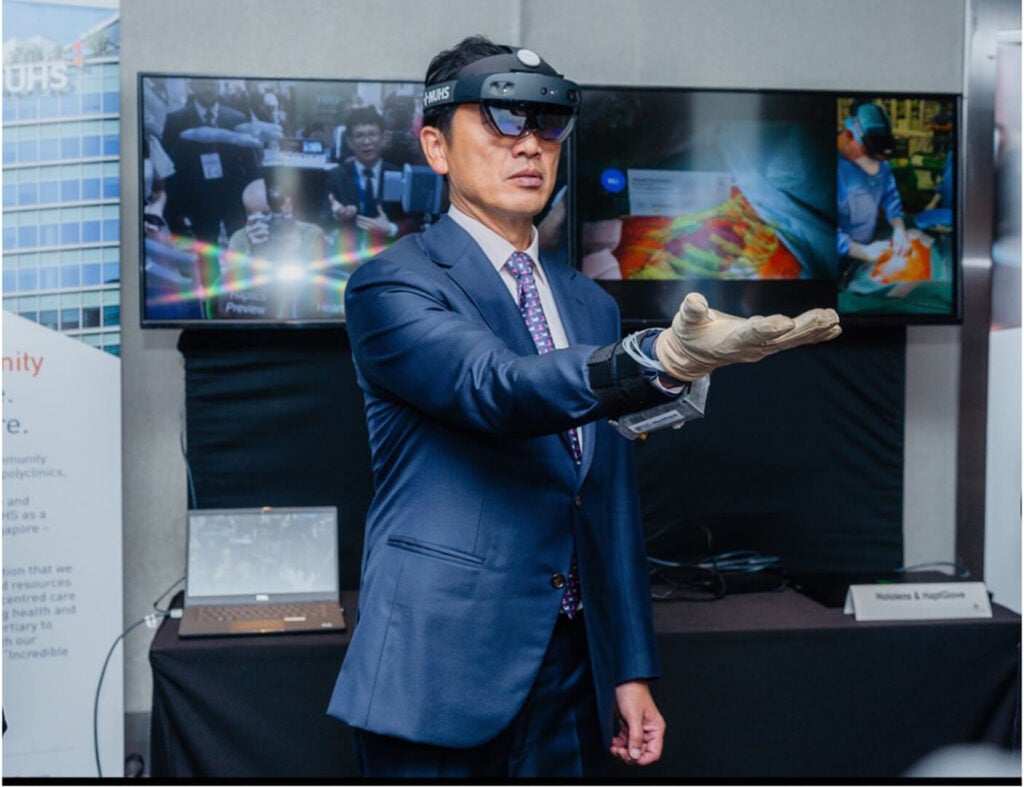
SEE & TOUCH: One drawback of teleconsultations is the inability for a doctor to physically examine their patient. Prof Lim and his team hope to change that with a haptic glove that allows doctors to “physically” examine patients during digital consultations. “Imagine entering a virtual reality consultation where you can see the doctor and the doctor can examine you through, say, palpation, as if in person,” he explained. The glove is already being tested for medical training and was recently trialled by Health Minister Mr Ong Ye Kung.
The haptic glove developed by Prof Lim and his team of researchers can be used by doctors in virtual examinations of their patients. Here it is trialled by Health Minister Mr Ong Ye Kung.
FEEL THE DIFFERENCE: Beyond diagnostics, technology can also help empower patients. Using MRI or CT scans, the team can create a 3D model of a patient’s organ and let them feel the difference between a healthy organ and one that is diseased. A patient with hypertensive heart disease, for instance, can compare the strong beat of a healthy heart with the weaker rhythm of their own. Someone with fatty liver disease can feel the contrast between supple, elastic tissue and their own, stiffer organ. “Hopefully, it will motivate them to adopt a healthier lifestyle,” Prof Lim noted.
TAKING FAILURE IN HIS STRIDE
But for every project that makes a splash, there are also some that end up failing.
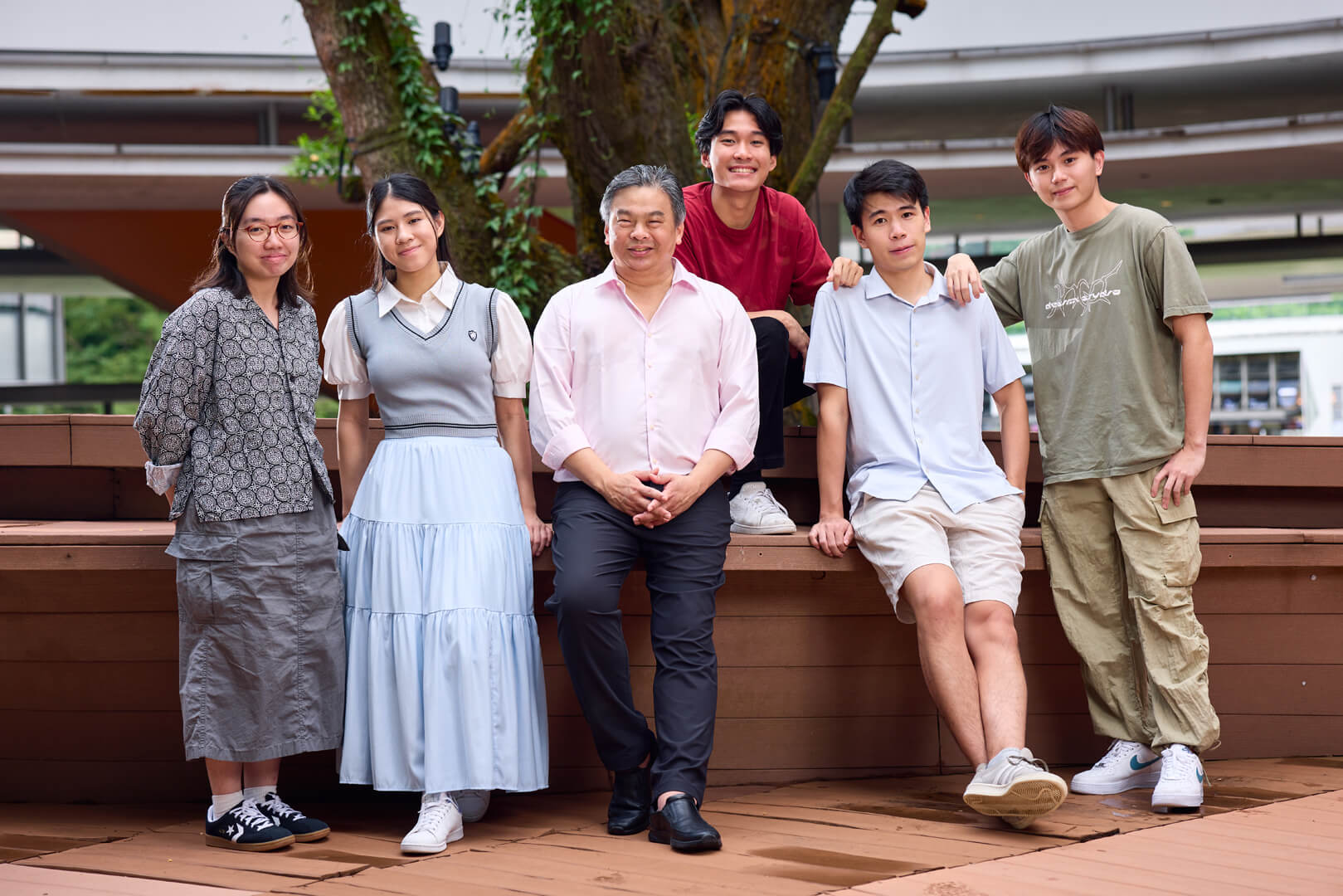
“Failure doesn’t really bother me, because I’ve had many along the way,” he explained. “It’s part of the process.” Accepting this is often something that comes with age and experience, but that does not stop Prof Lim from motivating younger colleagues when their projects come up short. “My words to them are often ‘Failure is really a step closer to success.’ If something can’t be done, let’s maybe find a new way or pivot to another approach,” he shared. Those words may sound familiar to the over 90 postgraduate students whom Prof Lim has mentored over the years. It’s a role that he values immensely, as it allows him to inspire the next generation of scientists and researchers, while also satisfying his own lifelong passion for innovation.
“I always encourage my students to pursue research they truly enjoy, as they will be immersed in that problem for the next two to four years,” he said, adding that his role as a mentor is to give them space to explore, then help them match their strengths and passions with meaningful projects. “Beyond that, I support them as they face challenges, pursue their ambitions, and even as they move on to become academics, industrial leaders or even entrepreneurs.”
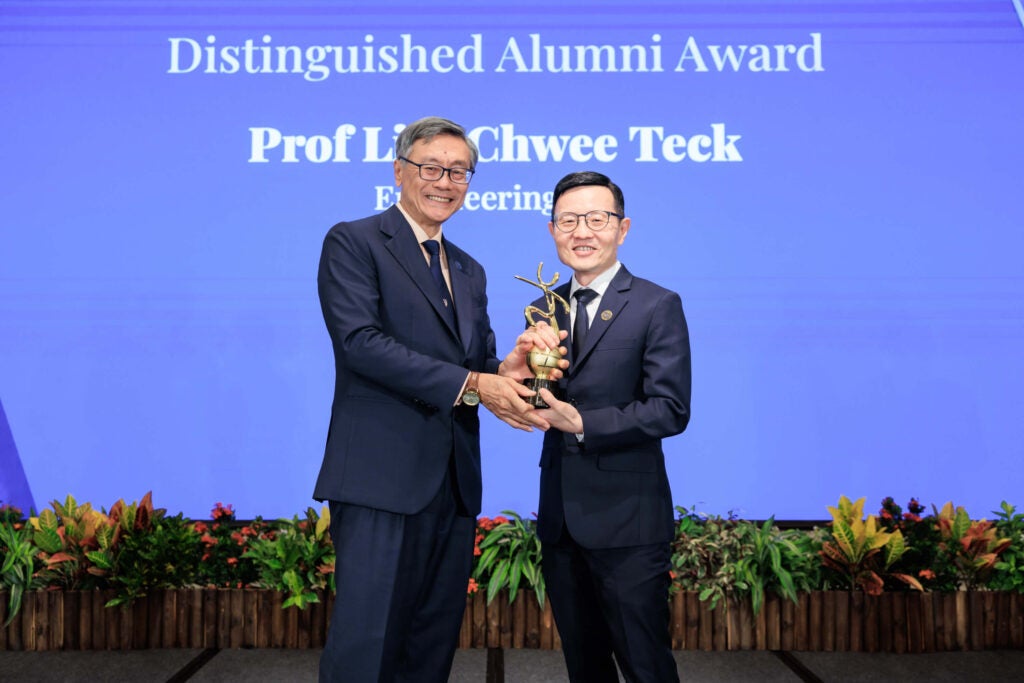
Prof Lim Chwee Teck receives the Distinguished Alumni Award from NUS President Prof Tan Eng Chye at the NUS Alumni Awards 2025.
“NOT ABOUT CHASING ACCOLADES”
Prof Lim’s commitment to nurturing future scientists, coupled with his ceaseless drive to uncover ‘what’s next’, has earned him a respected place in the scientific community. He and his team have been conferred more than 120 research awards and honours, among them the Lifetime Achievement Award at the Nature Awards for Mentoring in Science, Asia’s Most Influential Scientist Award by Fortune Times and the ASEAN Outstanding Engineering Achievement Award. In November 2025, he was also awarded the University’s Distinguished Alumni Award, which recognises alumni who have demonstrated excellence and leadership in their chosen field. He calls the recognition “humbling and gratifying”, but stresses that he is still driven by a passion for discovery and the desire to make a positive impact. “It’s about pursuing meaningful research that truly makes a difference; the recognition will come naturally.”
A CLASS LIKE NO OTHER
Prof Lim cannot help but smile when he recalls his NUS days in the late 1980s. “It was a close-knit batch,” he says of his Engineering ’90 classmates. Their bond was so remarkable that then-Dean Prof Andrew Nee quipped at their 35th anniversary that such a class comes along only once in 50 years. “We were very special,” Prof Lim said, remembering how they organised barbecues and National Day events, and even invited professors to join in the fun.
WINNING TOGETHER:
Notable breakthroughs from Prof Lim’s interdisciplinary research include:
Liquid Biopsy
Blending mechanics with medicine, Prof Lim designed a microfluidic chip that separates softer cancer cells from blood. The innovation gave rise to the ‘liquid biopsy’ — a simple blood draw that replaces invasive tumour sampling and allows doctors to track cancer more easily.
Smart Insole
Marrying engineering with workplace safety, his team and NUS startup FlexoSense built a sensor-equipped insole that detects slips and falls in real time. Trialled in Singapore’s maritime sector, it shows how cross-disciplinary research can prevent accidents before they happen.