

AlumNUS

Fighting for Fairness

From NUS Law to Parliament, private legal practice and pro bono work, Ms Charmaine Yap (Law ’18) has built a career as a white-collar defence lawyer and advocate for migrant workers. Now, as a Fulbright scholar at Columbia University, she plans to study labour and migration issues through the lenses of transnational governance and accountability.
Driven by a passion for justice sparked by the 2013 Little India riots, Ms Charmaine Yap (Law ’18) set her sights on advocating for those who have little power to speak up for themselves. The unrest drew her attention to the harsh realities faced by many migrant workers in Singapore, from dangerous transport conditions to wage disputes.

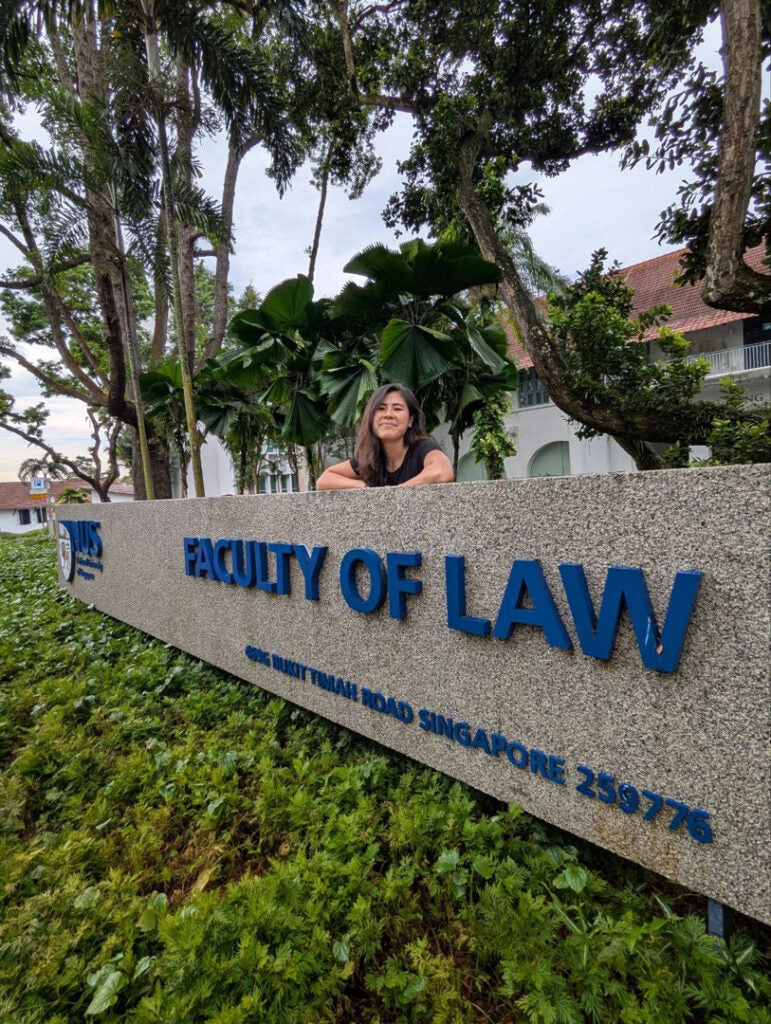
Ms Yap at the NUS Law Faculty at Bukit Timah Campus

During her studies at NUS Law, Ms Yap started to work with migrant worker advocacy groups. She first interned with Transient Workers Count Too in 2013, a non-profit organisation involved in advocacy, educational outreach, research and direct services for migrant workers. And in 2014, she began her long-running involvement with Justice Without Borders, helping to build up its Singapore operations as a legal fellow while she was still a law student, and eventually providing pro bono representation for domestic workers when she became a lawyer.

“Singapore is a country that is governed by rule of law, and the rule of law should apply equally to everyone — but the reality is that cultural barriers, language barriers and power imbalances often get in the way of this,” said Ms Yap. “I hope that our system will recognise those disparities that can lead to inequitable outcomes,” she adds.

FROM POLICY IDEAS TO REAL-WOLRD LAWS 

Ms Yap’s advocacy extended into the legislative arena in 2017, when she became a legislative assistant to then-Member of Parliament Louis Ng (Science ’02). In that role, she drafted speeches and parliamentary questions on issues ranging from migrant worker safety to social policy reform.

“When I first met Louis, I was on a gap year from law school. I was trying to figure out what I could do with my degree for the causes that I cared about,” she explained.

The experience in Parliament taught her that change often requires both behind-the-scenes — and  often long-drawn — negotiations as well as public advocacy. She saw firsthand the power of bringing stakeholders together and finding common ground, even on sensitive topics. “There’s definitely space for very passionate advocates. There’s also another form of quieter advocacy, where you move a little bit slower, but bring others along with you,” she said. “It can sometimes be a very painful process. But I think it is worthwhile, because through those constant conversations, you are slowly changing minds. In a healthy society, there must be space for different forms of advocacy, ultimately working towards the common goal of bringing about sustainable and systemic changes.”

One outcome she is particularly proud of was her role in helping draft the Good Samaritan Food Donation Act, a Private Member’s Bill introduced by Mr Ng to encourage food donations by providing liability protections for donors. Seeing it pass reinforced her belief that targeted reforms can make a real difference.

The process also showed her that policymaking is not an exclusive domain for those with years of legislative experience. “I think anyone with an interest in policy can get engaged in this,” she shared. You don’t actually need a legal or policy background.” Ms Yap ended her role as a legislative assistant in 2025 after Mr Ng decided not to seek re-election as a Member of Parliament in the most recent General Election.

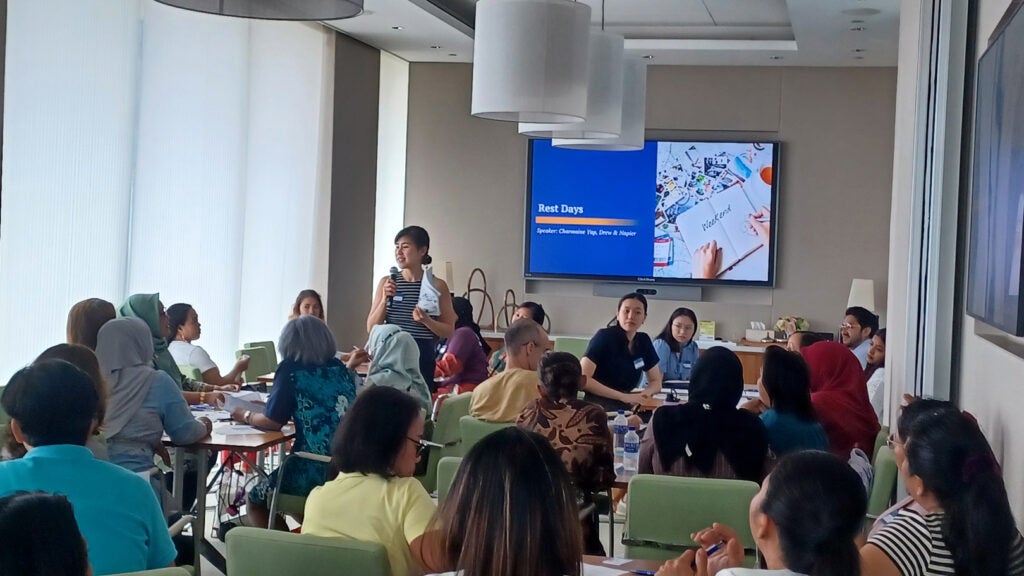
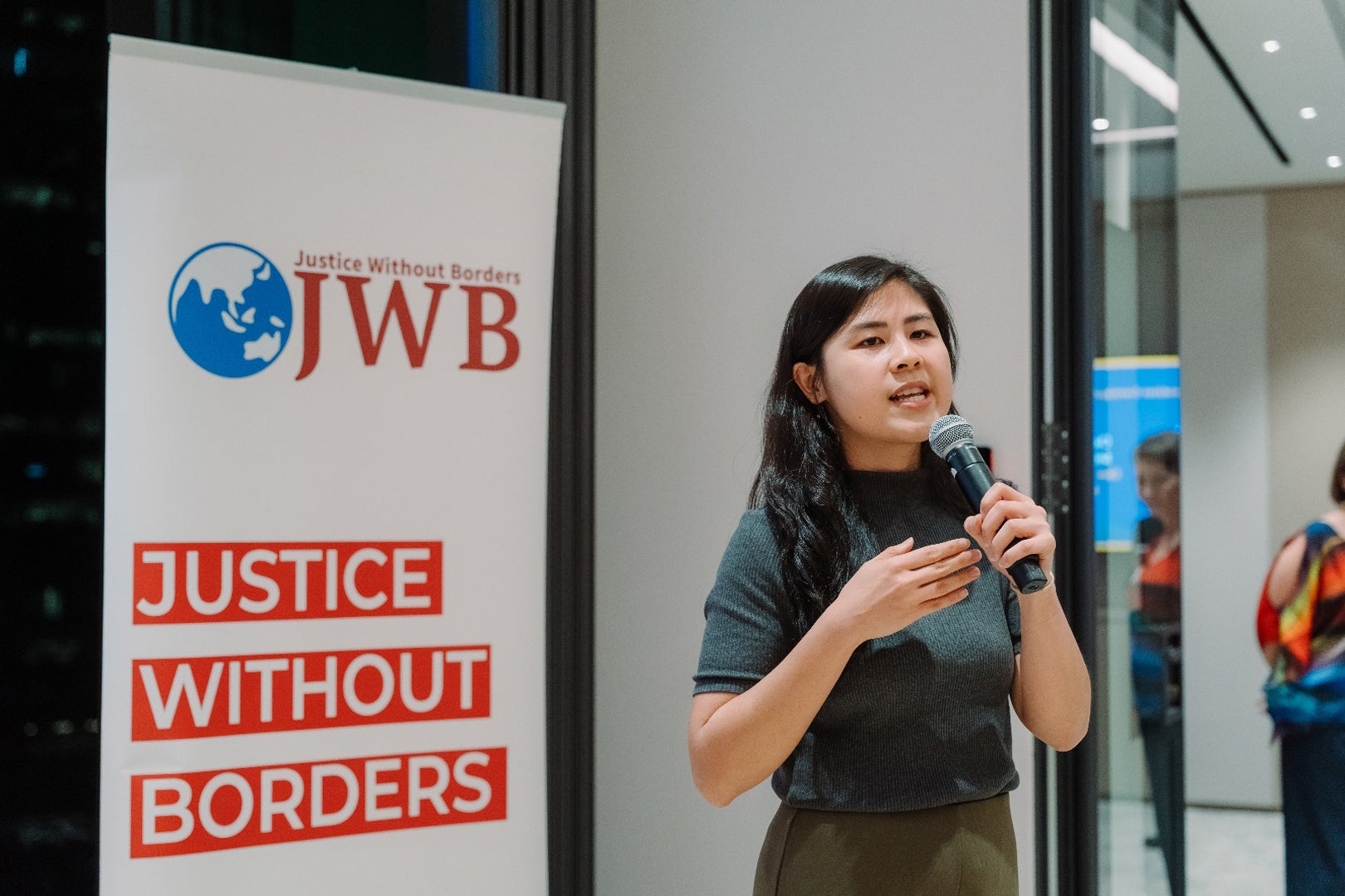
Ms Yap speaking as a trainer at Justice Without Borders Access to Justice Mentorship Programme for migrant domestic workers.

LAW IN PRACTICE AND PUBLIC SERVICE 

After graduation, Ms Yap began her legal career at Drew & Napier as a dispute resolution lawyer, handling white-collar investigations, commercial litigation and regulatory matters. She later joined global law firm Sidley Austin.

While her corporate work was not directly tied to her advocacy, it gave her deeper insight into how corruption operates across borders and how financial laws can be leveraged to address exploitation. “In some cases, the excessive recruitment fees that migrant workers have to pay [to] work in Singapore are a form of corruption. This distorts incentives and undermines our labour laws. We need to address these kickbacks that occur along the migration route,” she explained.

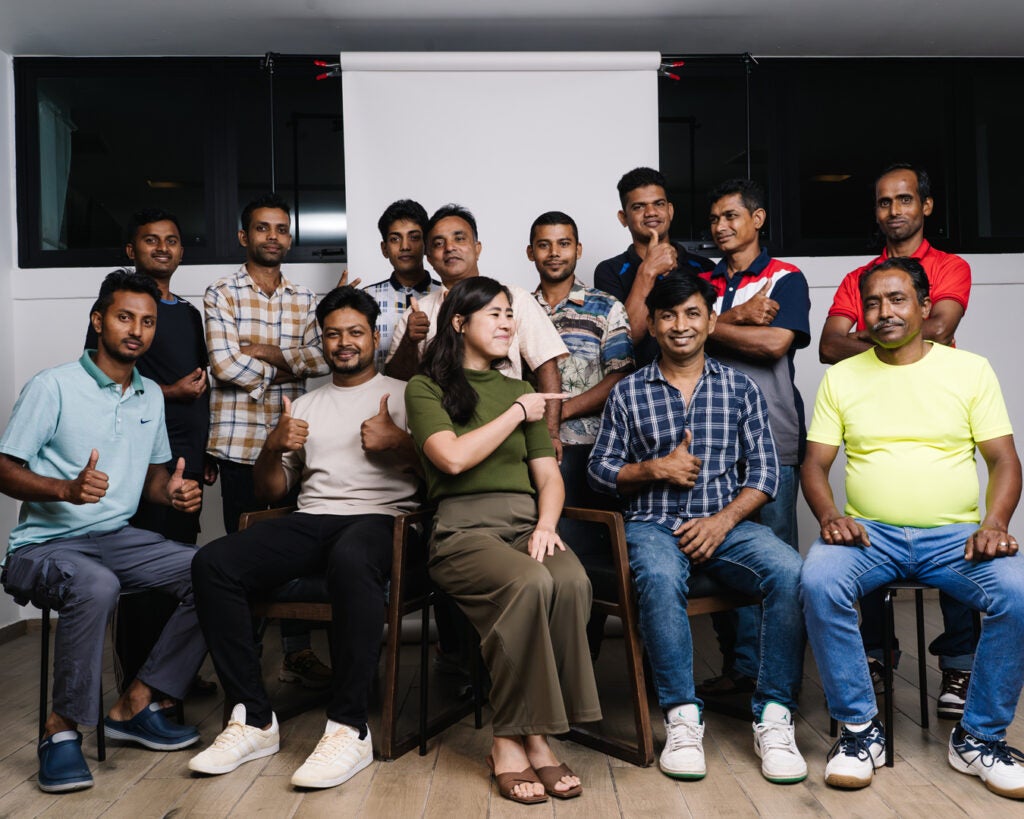
Ms Yap at a photoshoot organised for Nee Soon East conservancy cleaners.

Her commitment to migrant worker advocacy did not end when she entered full-time practice. During the COVID-19 pandemic, she led the legal and policy team for the COVID-19 Migrant Support Coalition. She worked on cases of unpaid salaries and forced repatriation and led a survey on dormitory conditions that contributed to government reforms. “The pandemic had a silver lining because it catalysed some of the changes we had been pushing for, from the electronic payment of migrant worker salaries to improving dormitory standards,” she said.

TAKING THE FIGHT GLOBAL 

In August 2025, Ms Yap left Sidley Austin to begin her Master of Laws (LLM) degree at Columbia Law School on a Fulbright scholarship. The Fulbright Program is the US government’s premier initiative for international academic and cultural exchange. Singaporeans who have received Fulbright awards include Ambassador-At-Large Professor Tommy Koh (Law ’61), Executive Director of AWARE Ms Corinna Lim (Arts & Social Sciences ’84), Chairman of the NUS Middle East Institute Mr Bilahari Kausikan (Arts & Social Sciences ’76), and former civil servant and policy leader Mr Philip Yeo (Engineering MSc ’74).

With the scholarship, Ms Yap hopes to bring together her private sector experience in financial crimes and corporate governance with her public interest work in labour and migration issues. 

Ms Yap at Columbia University

She intends to study how financial crime enforcement and corporate governance can be applied to combat labour exploitation, including illegal recruitment fees and debt bondage. “At Columbia, I’m hoping to speak with people from civil society, academia and international organisations to get a sense of the type of experiences or roles I need to take on that will allow me to work on issues that I care about,” she said. “I’m also curious to see how lawyers can work with national organisations, non-profits and civil society in order to advocate for issues.”

Wherever her path takes her next, Ms Yap remains committed to using the law as a tool to close the gap between legal ideals and lived realities for the most vulnerable in society.