AlumNUS

Nursing a Passion

Dr Brigitte Woo (Nursing ’11), the sole recipient from Asia of the Harkness Fellowship for 2024/2025, is driven by a commitment to uplifting her profession — including by researching how to adopt AI in nursing tasks.
WHO SHE IS: 
Dr Brigitte Woo is a former Research Fellow at the NUS Alice Lee Centre for Nursing Studies. She is NUS’ second Harkness Fellow and has been conducting research in health care policy and practice at the University of Pennsylvania since September 2024.

The daughter of a nurse, Dr Brigitte Woo grew up watching her mother at work and hearing what a great job it was. “I witnessed her life, her trajectory, her work,” Dr Woo recalled. “She’s a visionary: 20 years ago, she was already telling me that nurses don’t just do bedside work. They can be involved in leadership and research, and all these kinds of things.”

Back when Dr Woo was a child, there was no nursing degree programme available locally yet. She had initially set her sights on becoming a journalist, but in 2006, NUS welcomed its first cohort of Nursing undergraduates. Her mother’s words—that “the person who makes the most impact in the care of a patient is the nurse”—rang in her mind as she enrolled in the second batch of NUS Nursing students. “I never looked back,” she said.

Upon completing her degree, Dr Woo started work at the National University Hospital (NUH), where she was plunged into the world of ICU (intensive care unit) nursing right away. She stayed in this role for six years before pursuing her PhD full-time. Being in the surgical ICU “was a super-steep learning curve; it was the most difficult place,” she admitted. But today, she has become a passionate advocate for nursing, just like her mother.

Dr Woo is driven by a deep desire to change the way the world looks at her profession. “I feel very heartbroken by the public narrative — it’s bad,” she revealed. “A layman might think that ‘oh, a nurse just wipes the patient’s backside, brings them to the toilet, and that’s all’. But it’s so much more than that.” She believes that such perceptions need to change, and this is what drives her. “My research programme has always been focused on the professional development of nurses and advancing nursing practice through policy change,” she shared.

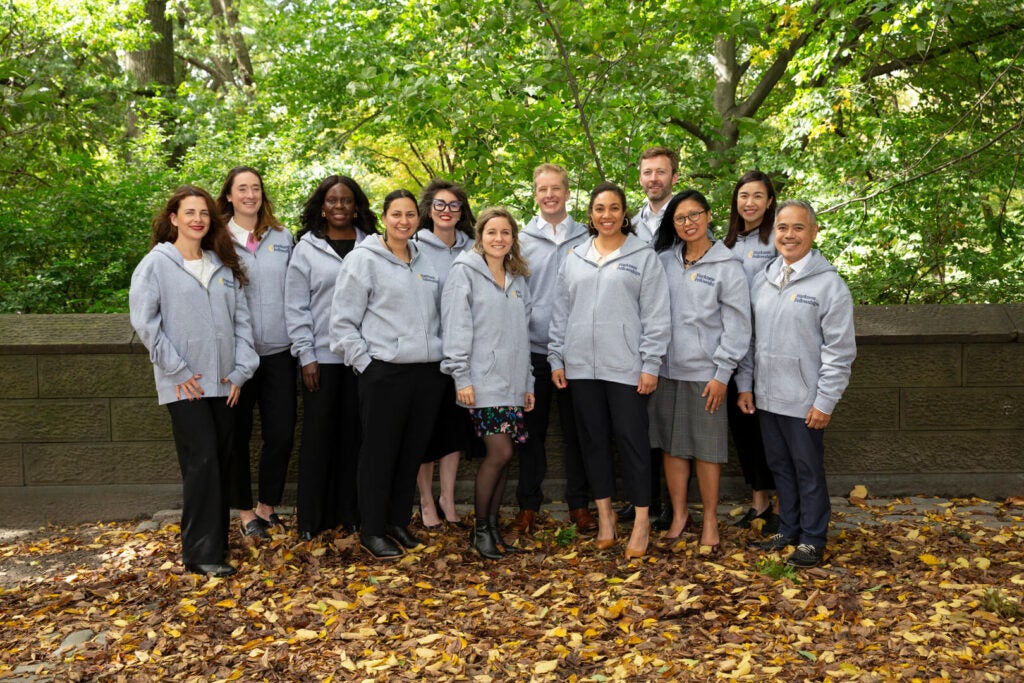
Dr Woo (second from right), alongside other 2024/2025 Harkness Fellows

THAT ‘MOONSHOT’ IDEA TURNED REALITY

In late 2023, Dr Woo applied for the Harkness Fellowship. Established in 1925 and administered by the Commonwealth Fund, the fellowship offers mid-career professionals opportunities for leadership development in the areas of healthcare policy and practice as well as opportunities to conduct a health policy or practice-related project in the US. Dr Woo was one of 12 participants selected from around the world for the 2024-2025 year.

She had two research proposals: one was a cross-analysis between the US and Singapore of present-day issues in nursing, and the other was what she calls her ‘moonshot’ idea. “At that time, AI was being introduced a bit more actively within healthcare, mainly in radiography, medicine and surgery, but not so much for nurses,” she explained. “And I thought, ‘What if we could deploy some sort of AI innovation for nurses? We always talk about how we have a nursing workforce shortage. How can we, then, with that fixed number of nurses, make sure that we are more effective?”

Having been a critical care nurse, Dr Woo recalled how much a burden documentation is in nursing. “In the ICU, especially, we have so much documentation,” she shared. “Sometimes we can even document down to the minute. So, you have a critically ill patient whose bedside you have to be at, but you also have to make sure everything is documented in a timely manner. Because in healthcare, if you don’t document it, it never happened. It really is a big cognitive load for nurses.”

Though not an AI expert, Dr Woo knew enough to draft a proposal about how large language models (LLM) like ChatGPT could potentially augment and optimise some nursing documentation tasks. Her mentor, Professor Wilson Tam, encouraged her to pitch the AI idea.

“He said, ‘It’s a once-in-a-lifetime opportunity; why not try something that is out of your comfort zone and see how it goes?’ I was selected for the interview because they found my proposal intriguing.”

Dr Woo moved to the US with her husband and their then four-year-old daughter last September. She conducted her research at the renowned Penn Medicine, which is part of the University of Pennsylvania Health System.

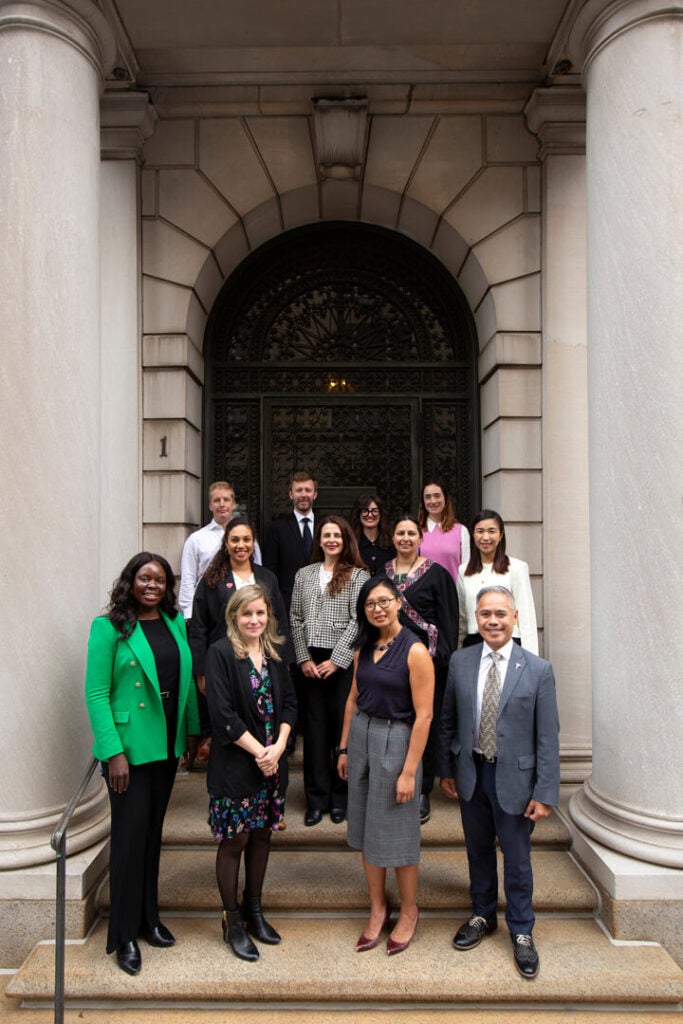
Dr Woo (furthest right, second row) and other Harkness Fellows visited the Harkness House in New York City, home to the Commonwealth Fund.

NAVIGATING RESEARCH IN A NEW LAND

Dr Woo’s research was conducted in multiple stages, beginning with the collection of nurses’ perceptions and understanding of LLMs, and their documentation behaviour at work. “There’s great agreement that the documentation burden is very high, and that if some documentation tasks are shifted to an AI tool, it will be helpful,” she said.

She added that the increase in documentation over the years is due to legal issues in the US, where medical lawsuits are commonplace. Because of the importance of documentation in such an environment, concerns include the trustworthiness of AI.

Her research has also surfaced the desire of nurses to simply speak and have their input automatically documented. AI technology — such as ambient scribe — already exists for this, but does not yet consider the complex circumstances in which nurses work. 


“All these add to the complexity of designing any innovation for nursing,” explained Dr Woo. “It’s been great here, and I’m excited to see how we can bring our foundational work into something of a prototype for the nurses at Penn Medicine.”

Conducting her research in the US was not quite what Dr Woo expected, but she is grateful for the research and stakeholder management experience she gained in Singapore that enabled her to get things done. She said that her research meant the need to “everyday sell koyok” (persuade). “I went from the top all the way to ground-level staff, doing presentations and proposals, trying to get interest and engagement in this work,” she said. “Keeping in mind that I only have 12 months to collect data, I had to be kind of pushy. But because it was an in-season topic, they lent me their time and gave me access to their nurses and the health system to conduct the research.”

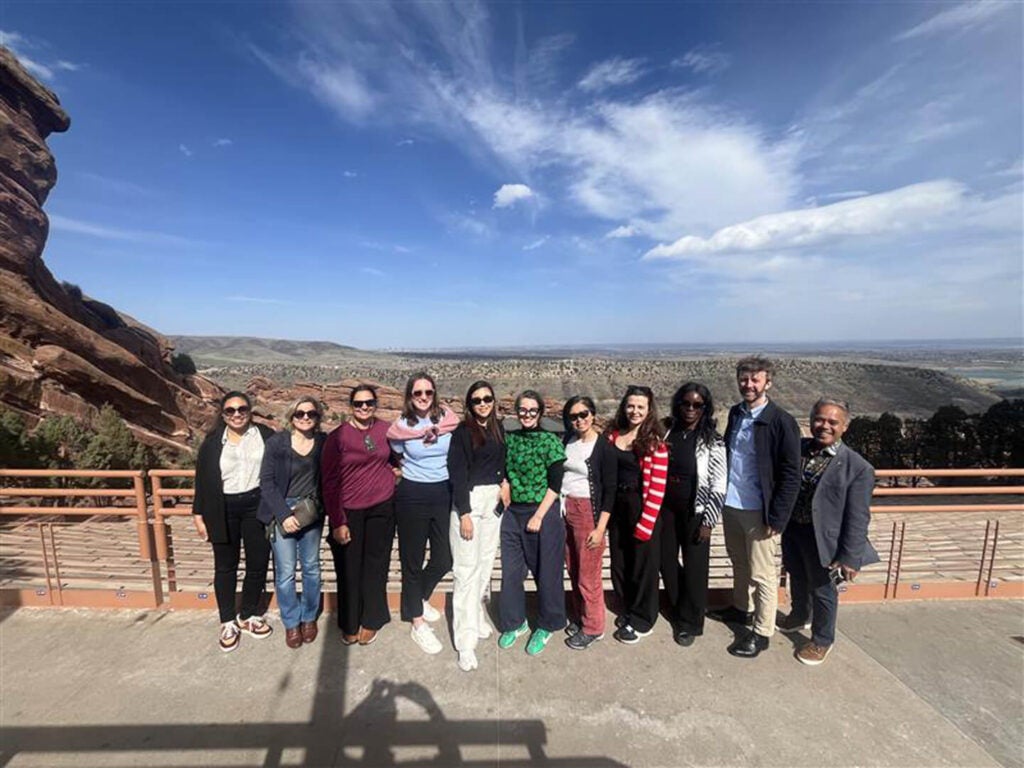
While in the US, Dr Woo and her cohort visited Red Rocks in Colorado.

There were ‘unintended learnings’ from her research, one of which is that critical thinking is being diminished in healthcare by the reliance on AI. “AI is here to stay, but the question is, how can we then teach critical thinking in a different way, and how can we teach our nursing and medical students to use AI tools safely?”

Her time in the US has only fanned the flame of her passion project, one she looks forward to diving into when she returns to Singapore this October: to improve the AI literacy of healthcare professionals in Singapore, to equip them with understanding the basics of how AI works, along with associated risks and ethical issues. “This is a gap we need to fill,” she said.

Dr Woo is committed to raising the profile of nursing through innovation. “There’s a lot of innovation designed first for doctors. Sadly, nursing is often an afterthought,” she noted. “I wish to be the person in Singapore who amplifies the voices of nurses in terms of designing, implementing and evaluating something that would work for nurses.”

She cites herself as an example of the change she wants to bring about. “Look at me, I’m a nurse. I tell people I’m a nurse by training but now I do research. I want people to see: ‘Hey, this nurse can be a Harkness Fellow’. So that the work of a nurse is recognised—and so we can do many good things for nursing.”