
AlumNUS

Preserving the Past, Inspiring the Future: Keeping NUS’ Heritage Alive

As NUS marks its 120th anniversary, Associate University Librarian and Head of Archives & Digital Preservation Mr Herman Felani bin Md Yunos (Arts & Social Sciences ’07) shares how he is helping to safeguard the University’s rich history — and why working at his alma mater is both a privilege and a passion.
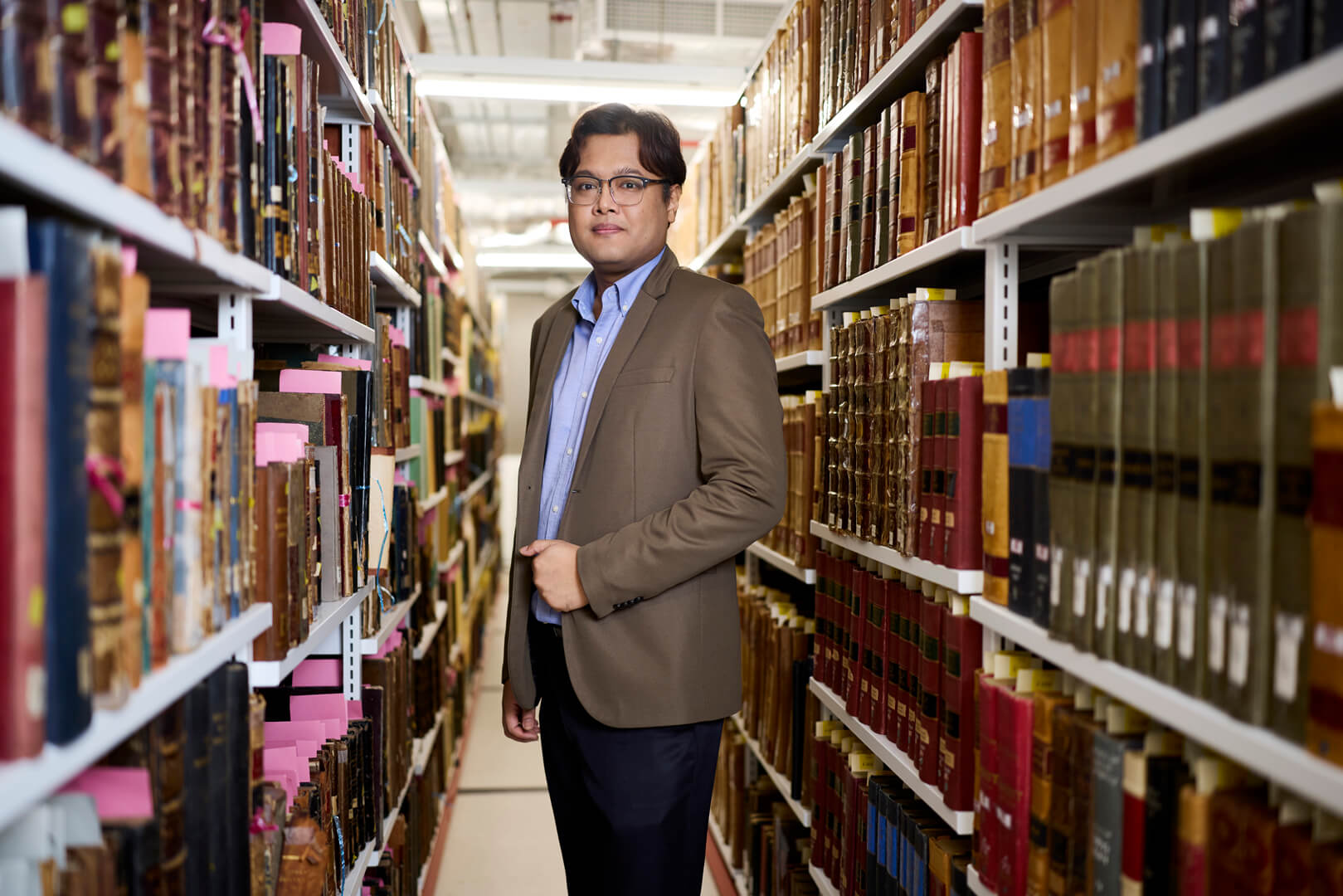
When Mr Herman Felani bin Md Yunos first stepped onto the NUS campus as a political science major, he never imagined that two decades later, he would still be here — not as a student, but as a key guardian of its legacy.

Now 42, Mr Herman is the Associate University Librarian and Head of Archives & Digital Preservation. But his love for libraries began much earlier. “I was a library club member in primary school and later became president of my library club in junior college,” he recalled. “While most kids loved the fiction section, my favourite was the reference section — I loved reading encyclopaedias, maps and atlases.” This early passion for information and preservation paved the way for a fulfilling career at NUS Central Library, which he joined in 2008 after a brief stint at the Ministry of Education.

BUILDING ON THE WORK OF PIONEERS

Much of Mr Herman’s work today builds on the foundation laid by mentors like Mr Tim Yap Fuan, a senior librarian who was instrumental in building the Singapore-Malaysia Collection. “Mr Tim joined the university in the mid-1980s and had a wealth of knowledge about our collections,” Mr Herman said. “I’m still learning from the work he left behind.”

Thanks to efforts of Mr Tim and others, NUS Central Library houses rare treasures such as old Chinese newspapers like Lat Pau (1887–1932) and Sin Chung Jit Poh (1935–1940) — materials not even found in the National Library — as well as the Yeap Chor Ee Collection, donated by the prominent Chinese banker who began his career as a barber in Penang. The collection includes items such as the share certificate of Ban Hin Lee Bank Pte Ltd — Penang’s first local bank founded by Mr Yeap — and the Estate of Yeap Chor Ee Endowment Trust Ledger, 1952–1958.

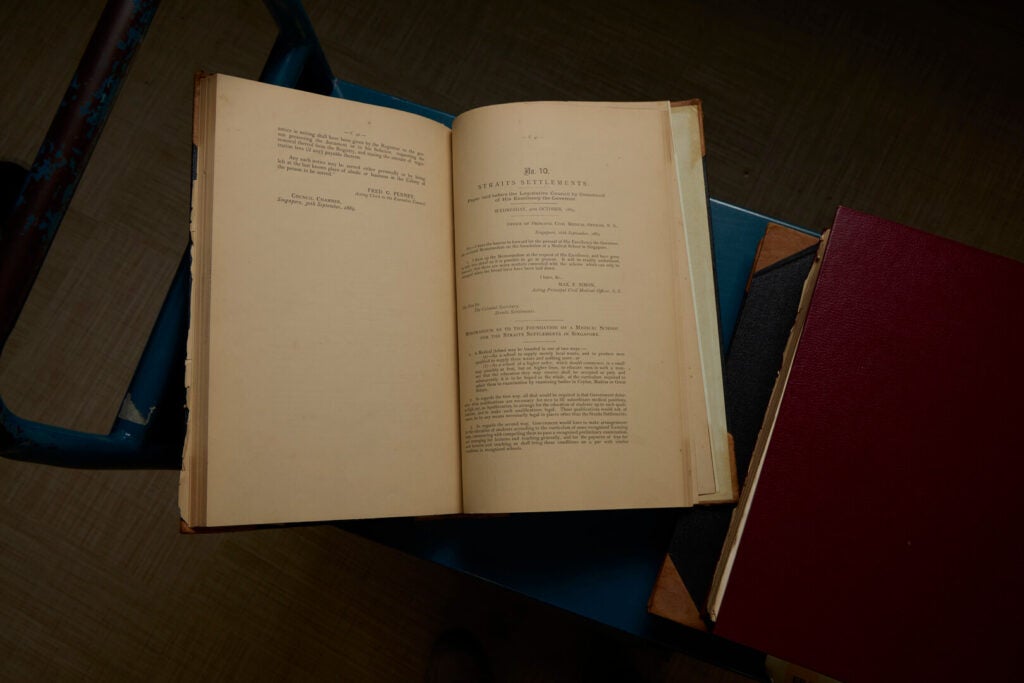
Within NUS Libraries, the earliest-dated document on the subject of the University's origins is the "Memorandum as to the foundation of a Medical School for the Straits Settlements in Singapore," dating to 1889.

MAKING HISTORY ACCESSIBLE — AND VISIBLE

Mr Herman wears many hats. His team not only collects, digitises and catalogues materials but also ensures they are accessible to researchers, students and the public. “Materials need to be described so that they can be searched easily by the public,” he explained. “Text is still the main way people search for things.”

Digitisation has opened up new opportunities — NUS Central Library’s 500 rare Southeast Asian materials, including the Edwin Thumboo Private Papers, Chinese Newspapers of Southeast Asia and books on Singapore’s history and heritage, can now be accessed by researchers worldwide via platforms like Digital Gems. However, Mr Herman remains mindful of the challenges. “Digitisation is resource-intensive,” he admitted. “We can’t digitise everything. Data centres consume a lot of power, so we have to make careful decisions about what to preserve.” Beyond books, the team is also digitising photographs, old posters and cassette recordings of prominent campus lectures.

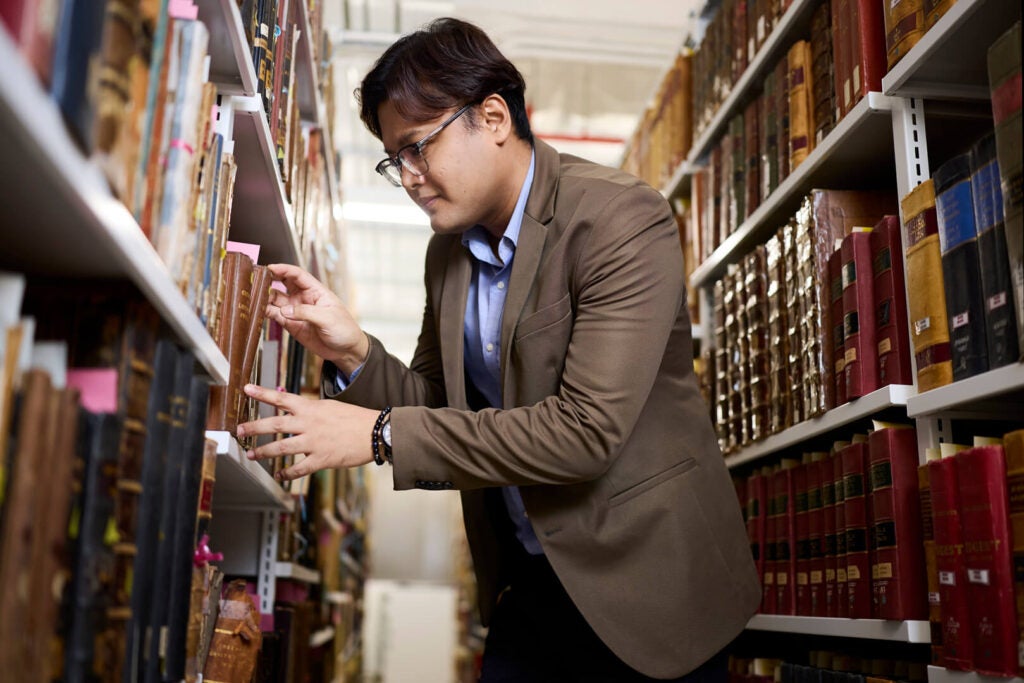
Mr Herman

HIGHLIGHTS FROM THE ARCHIVES

Some recent additions to the library archives are particularly fascinating. Two of Mr Herman’s colleagues travelled to Sulawesi, Indonesia, to digitise Bugis materials — including the Keris instruction from the 7th century and a ship captain’s log dated to the 1820s — which offer rare insights into early maritime trade in the region. Another meaningful contribution came from Ms Fenella Madoc-Davis, an Englishwoman who donated her late father’s hand-drawn book on birds — created while he was imprisoned in Singapore during the Japanese Occupation. “It’s not just the drawings but the story behind how he made the book under difficult conditions that makes it special,” said Mr Herman. The library recently hosted a talk and exhibition around these bird drawings, engaging both the public and natural history enthusiasts.

CURATING FOR TOMORROW 

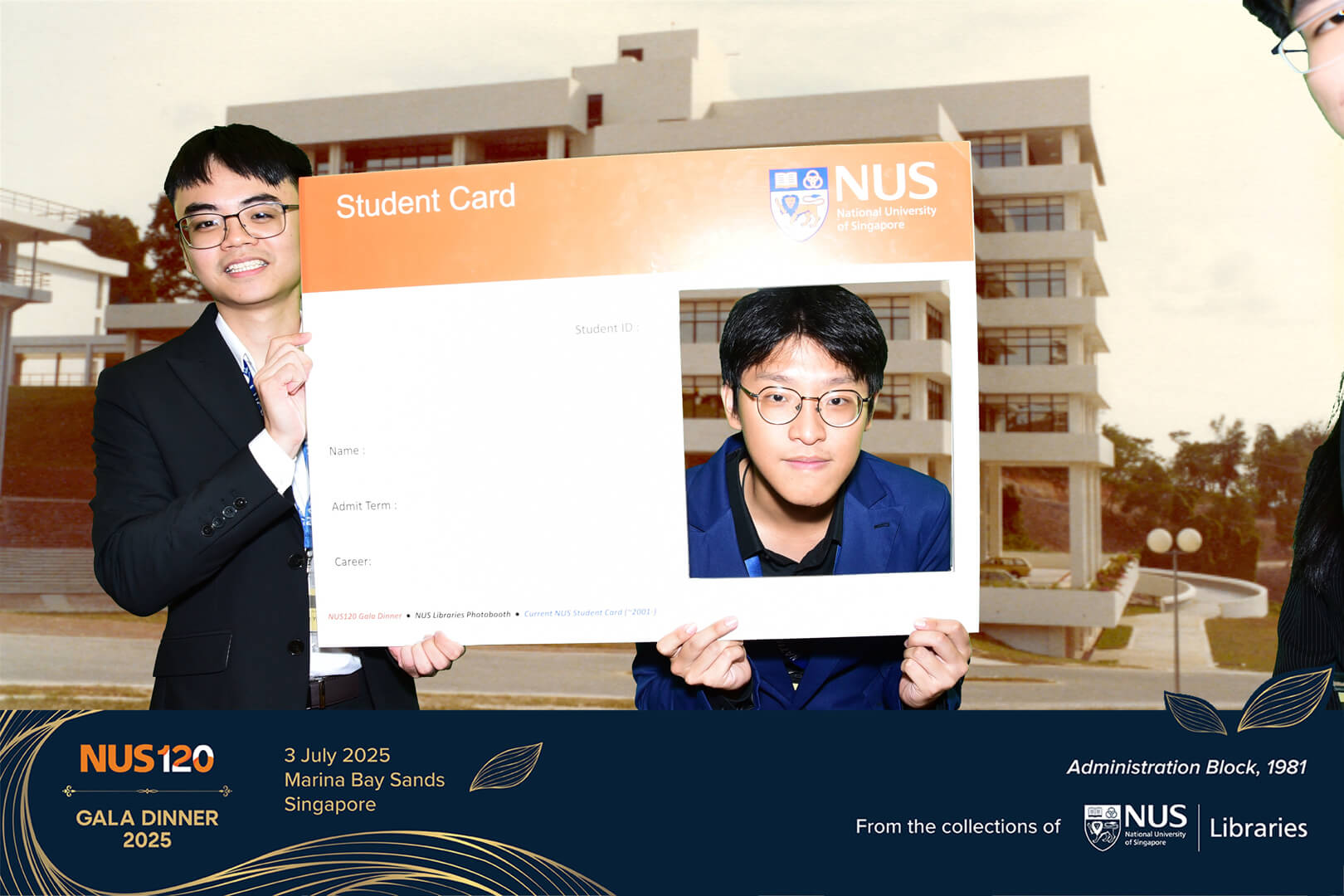
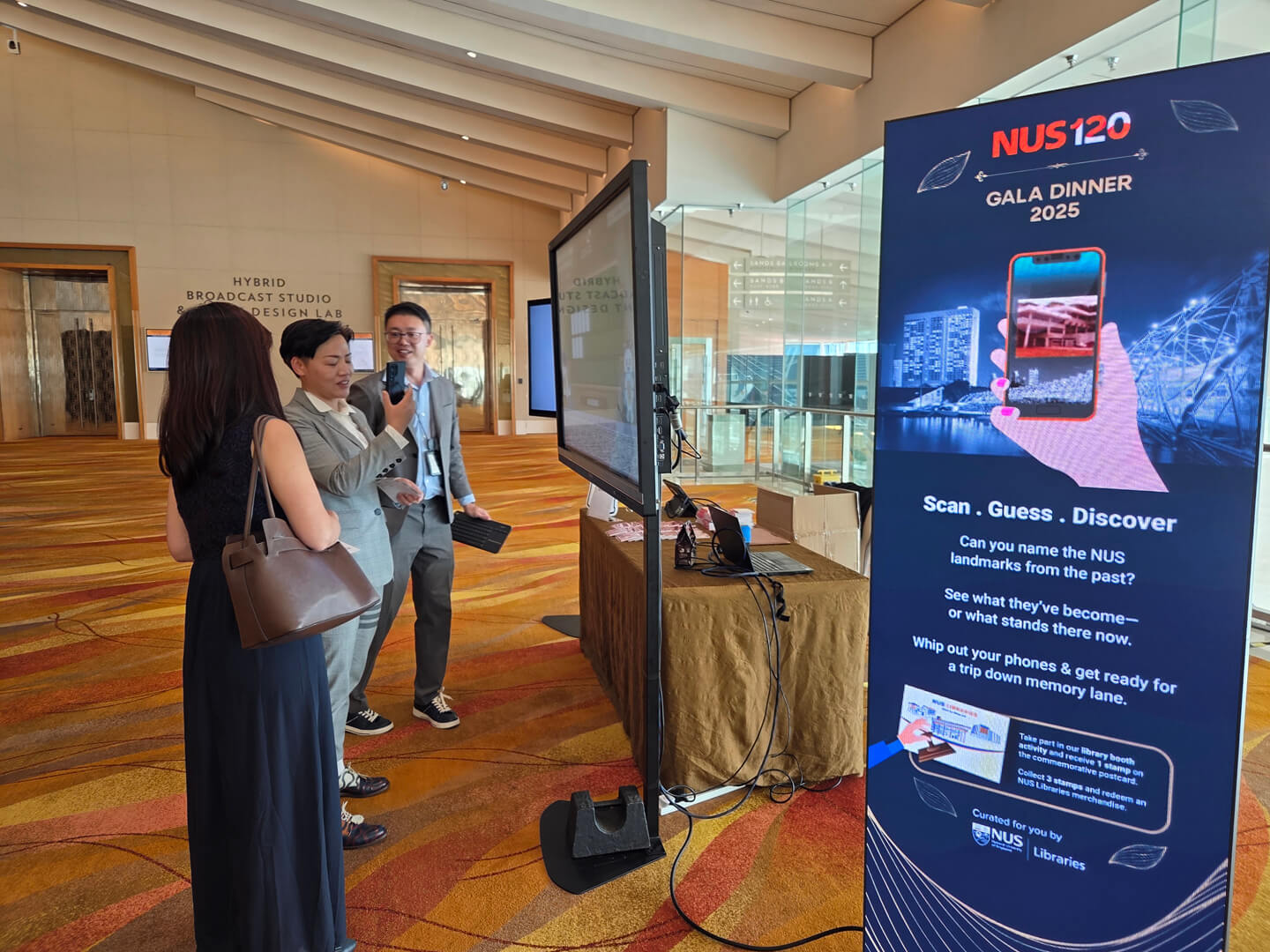
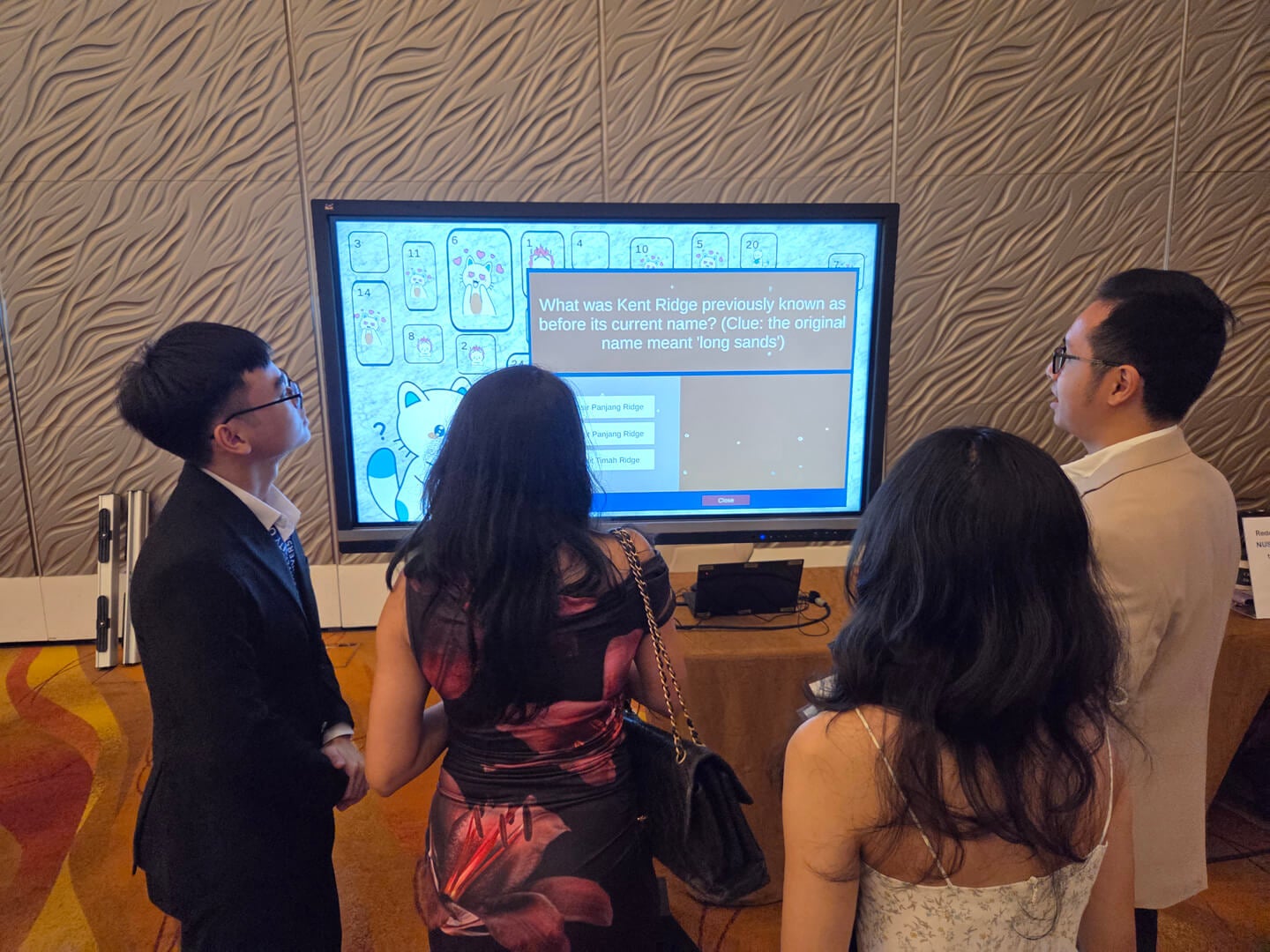
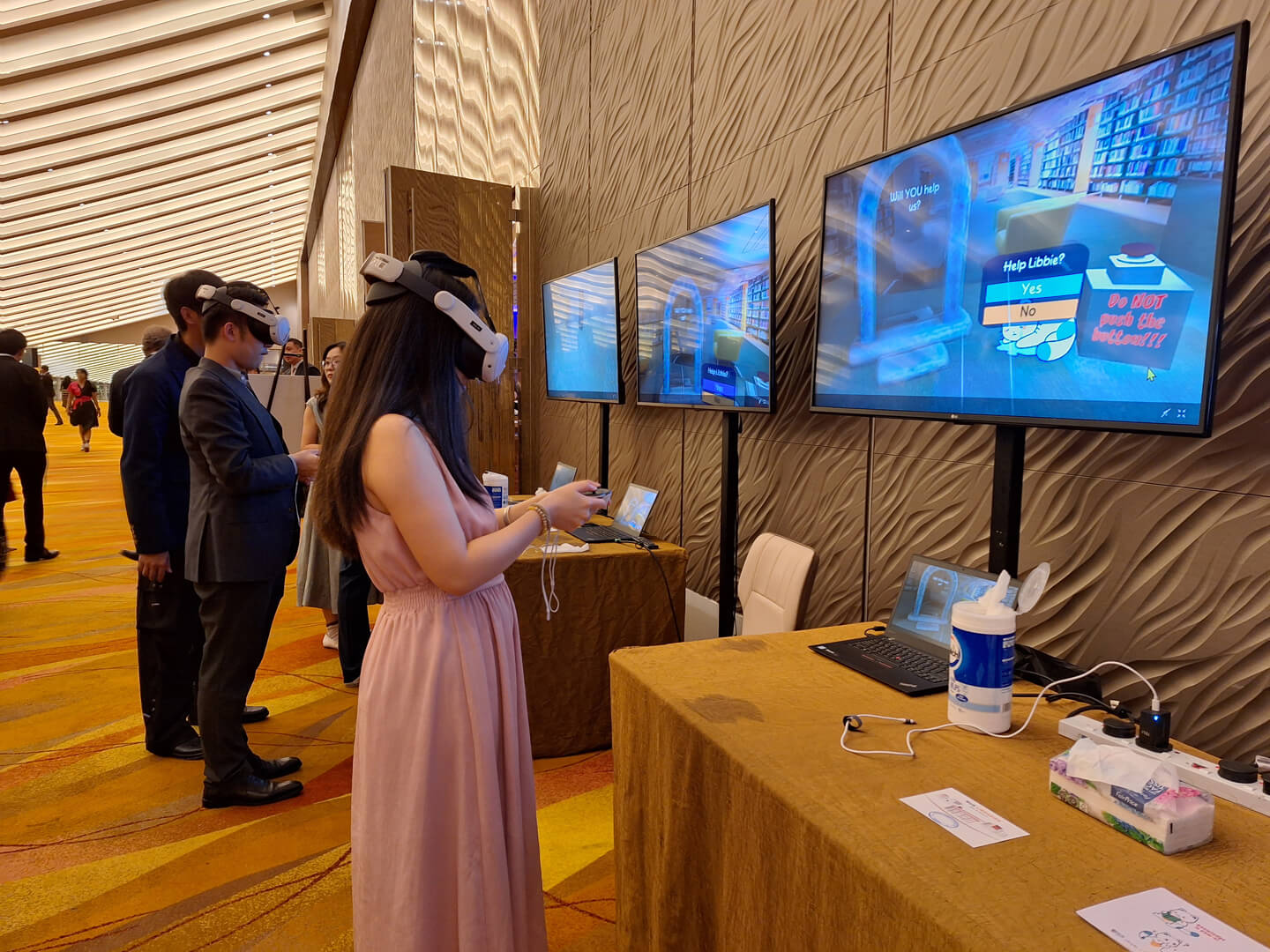
As part of NUS’ 120th anniversary celebrations this past July, Mr Herman and his team curated an exhibition for the NUS120 Gala Dinner. They showcased vintage posters from student productions and old photographs of campus life, offering alumni a nostalgic glimpse of their student days. A trivia quiz and possible virtual reality elements also added an interactive twist. “We want to make history more interesting and interactive,” said Mr Herman. “We hope alumni can see how learning and campus life have evolved.”

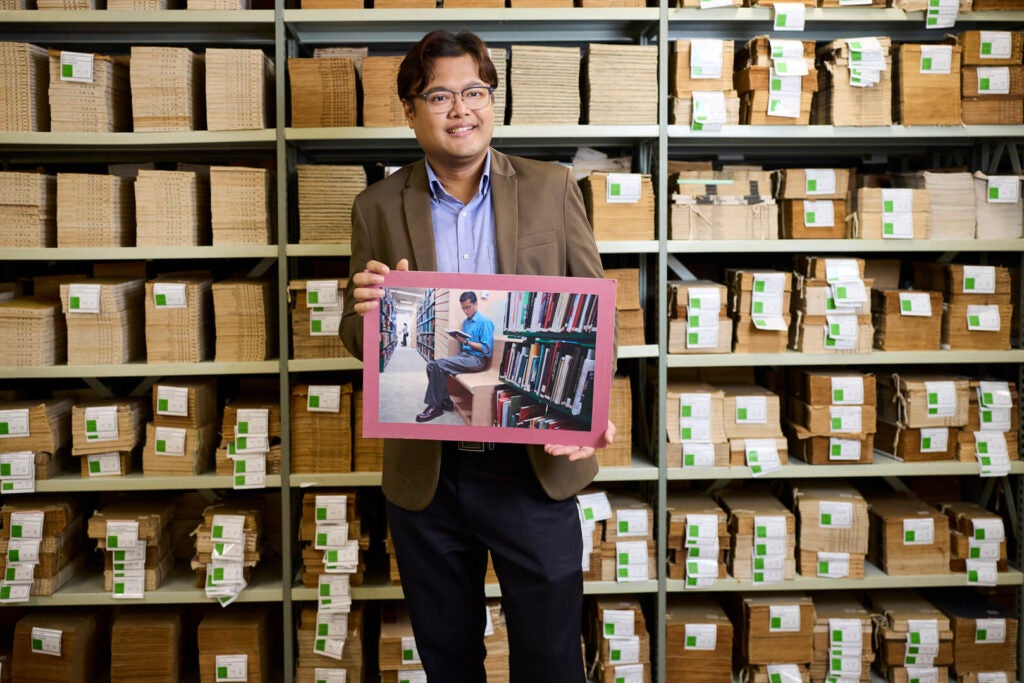
From student to staff: Mr Herman holding a photo of his younger self at NUS Central Library

A PERSONAL HOMECOMING 

For Mr Herman, working at NUS feels like a full-circle moment. “I’ve basically never left the campus,” he said with a laugh. “The library was one of the spots I was frequently in. Even during vacations, I’d come down just to do personal research.” He has a longstanding interest in vexillology — the study of flags — and heraldry, which focuses on coats of arms and armorial bearings. As an undergraduate, these hobbies often led him deep into the library’s Singapore-Malaysia Collection.

Today, one of the aspects of his job he treasures most is helping students. He fondly recalled assisting a student to print her exam cheat sheet before library hours and guiding another struggling polytechnic graduate on how to tackle university-level research — a simple conversation that led to a heartfelt postcard from the student when he travelled to South Korea. “Helping others, I think, is the best joy one can receive,” Mr Herman said with a smile.

INSPIRING THE NEXT GENERATION

As the library expands its digital footprint, Mr Herman remains committed to balancing technology with a human touch. By making history accessible, he hopes to not only preserve NUS’s past but also inspire future generations to explore, discover and continue the journey of learning. “Hopefully, those down the road in the future will find these things useful when they reach their milestones — like NUS200,” he said.

Check out NUS Libraries’ digitised special and rare collections in the Digital Gems repository: https://digitalgems.nus.edu.sg