AlumNUS

The Power of Everyday Leadership for Women

Women leaders share how everyday actions, quiet confidence, and authentic leadership can drive impact—regardless of title.
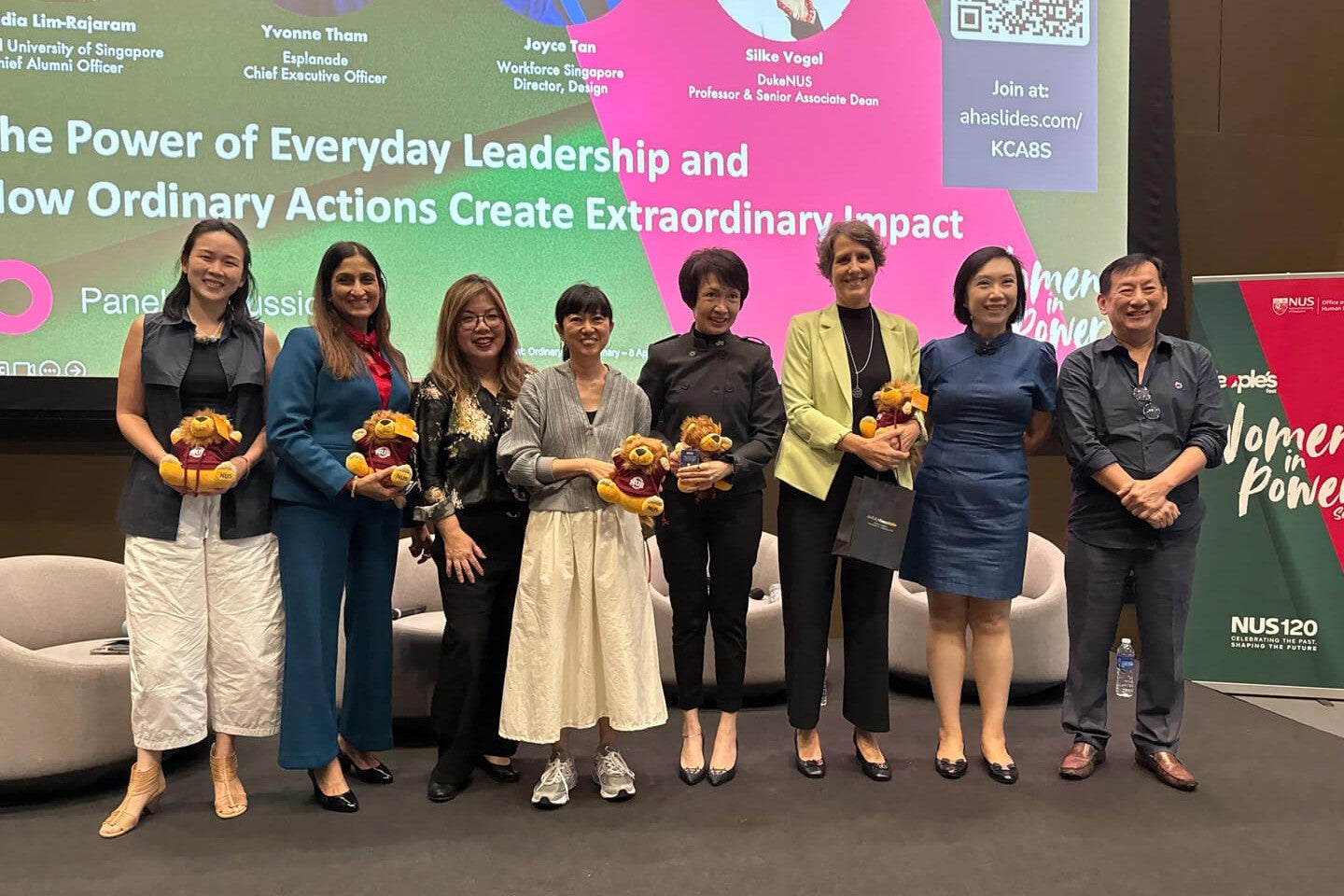

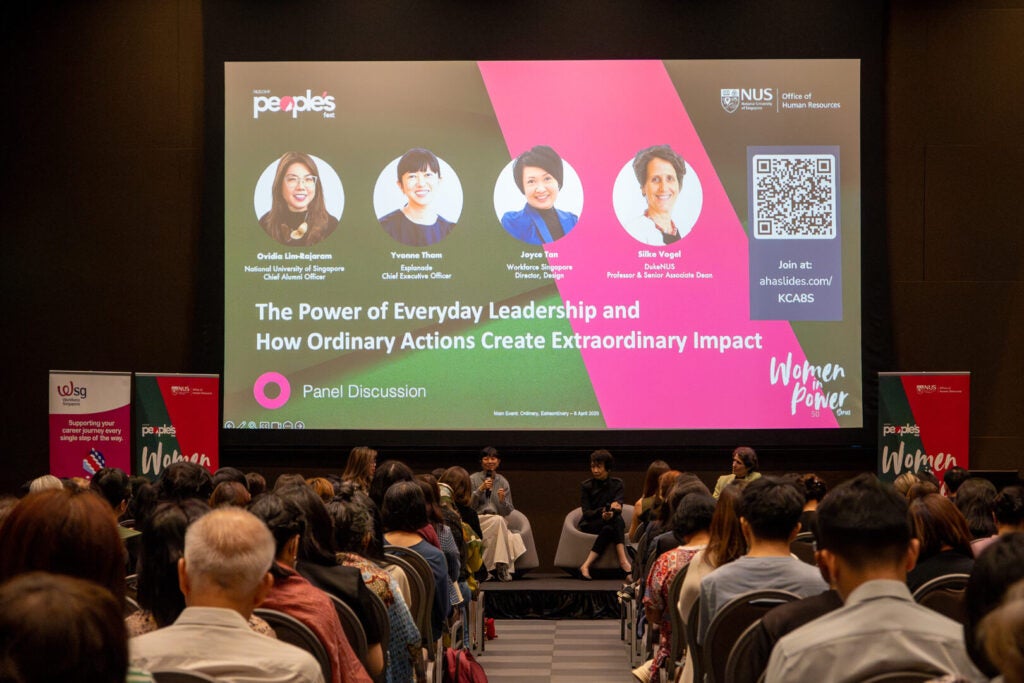
At the main event of the NUS Women in Power series, held on 8 April 2025 at Marina One West Tower, a panel of accomplished women leaders came together to unpack a powerful theme: “The Power of Everyday Leadership and How Ordinary Actions Create Extraordinary Impact.” The session focused not on bold titles or grand gestures— but on the small, deliberate choices women make every day to lead with empathy, resilience and clarity of purpose.

Moderated by Ms Ovidia Lim-Rajaram (Arts & Social Sciences ’89), Chief Alumni Officer at NUS and the University’s first female alumni leader, the panel featured Ms Yvonne Tham, CEO of The Esplanade Co. Ltd; Ms Joyce Tan (Arts & Social Sciences MA ’07), Director of Planning and Design Division at Workforce Singapore (WSG); and Professor Silke Vogel, Senior Associate Dean at Duke-NUS Medical School.

Together, they shared relatable stories of navigating leadership in male-dominated sectors, stepping into uncharted territories, and mentoring others along the way.

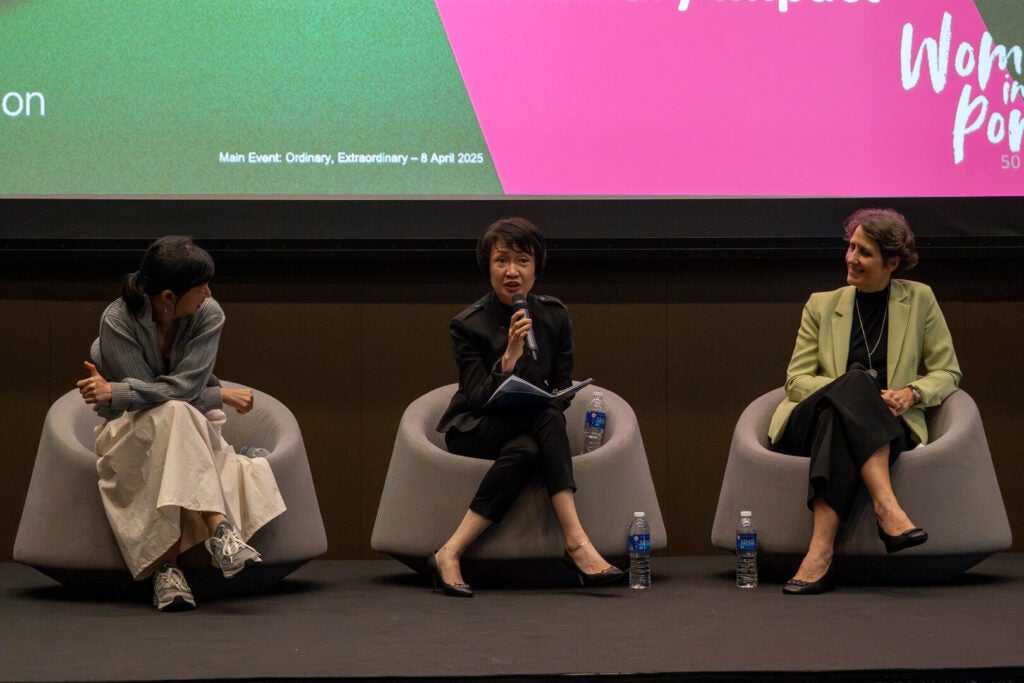
Ms Tan (centre) speaks to the audience on her career pivot.

REDEFINING LEADERSHIP THROUGH EXPERIENCE

Kicking off the session, Ms Lim-Rajaram kicked off the discussion by inviting the panellists to reflect on their leadership journeys, framing the session as an exploration of how women could lead in quiet yet powerful ways.

For Ms Tan, her journey was anything but conventional. “I started as an English teacher in MOE,” she said. “Today, I lead a tech and design division that builds user-centred workforce solutions.” The key, she explained, was reflecting on the transferable skills that helped her pivot.

“I realised problem-solving, active listening, empathy and multi-tasking—skills often associated with women—were critical in human-centred design,” she added. “These are leadership skills. Women already have them in their toolkit.”

Ms Tham (speaking, in grey sweater) discusses “leading up” and “stepping up” in the workplace.

FROM SUPPORT TO STEWARDSHIP 

Ms Tham, whose arts organisation is predominantly female, offered a different perspective. In the arts, sector women often dominate—but that doesn’t mean they automatically lead. “Many women are comfortable in supportive roles. But when asked to take the lead, they hesitate,” she observed.

She recalled how younger female colleagues told her, “I don’t have a vision, I’m not like you.” Her advice? “That’s exactly your strength. You listen, you’re close to the ground, and you don’t come in thinking you know it all. The vision will emerge—often from the very people you serve.”

Ms Tham also introduced two key leadership mindsets: “leading up” and “stepping up.” The first, she said, is about empowering the decision-makers above you. “In my early days in the public service, I realised that as the person doing the groundwork, I had the responsibility to make sure my boss had the best support to make the right decisions.”

But she also cautioned that staying in the support lane forever can limit growth. “At some point, you have to step up. Say yes to opportunities, even if you’re unsure. If you don’t take the role, someone else will—and you’ll end up reporting to them.”

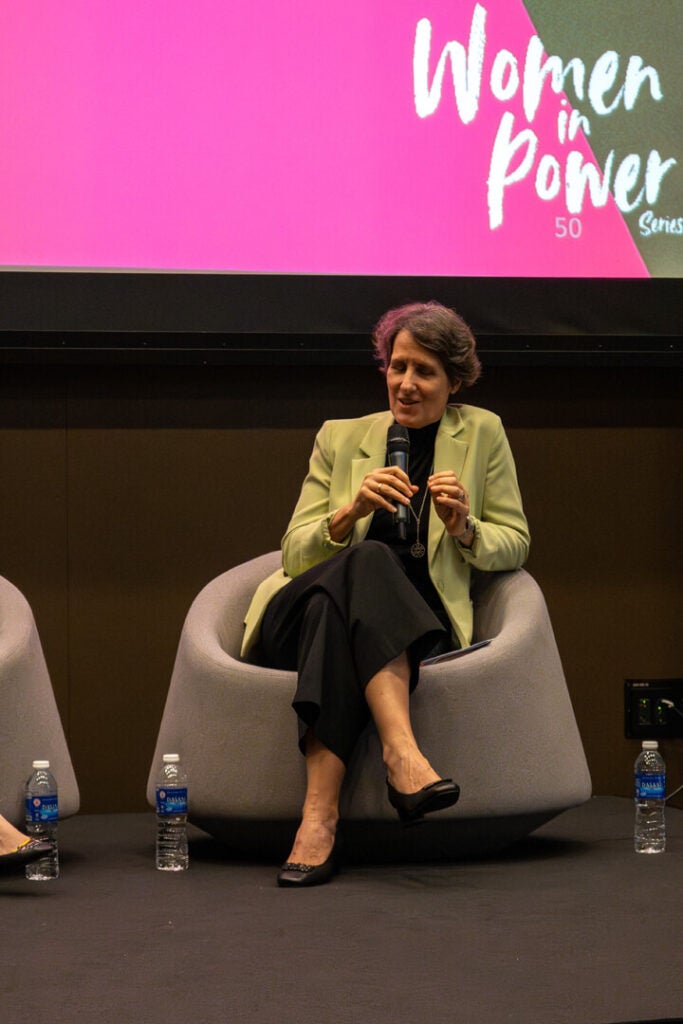
Professor Vogel discusses the impact mentorship had on her career.

THE IMPORTANCE OF MENTORSHIP AND VALUES

Professor Silke Vogel’s career started in the lab. With a PhD in science and a faculty post at Columbia University, she followed the classic academic trajectory—until it no longer felt right. “I felt stuck and isolated. I had no roadmap and no one to talk to,” she said candidly.

Her breakthrough came when she found a mentor who encouraged her to explore new paths: teaching, mentoring students, and administration. “That changed everything. I found joy working with people, and eventually landed in leadership.”

Now overseeing multiple graduate and regulatory programmes, Professor Vogel urges women to find mentors—and be one. “You don’t have to go it alone,” she said. “Women need allies who can reflect what they’re feeling, especially in high-stakes meetings where it’s easy to feel off-balance.”

She also emphasised the need to prepare strategically for meetings: “If you’re presenting an idea, get buy-in beforehand. Don’t walk into the room alone—bring an ally who can help reinforce your point.”

REAL SUPPORT LOOKS LIKE THIS

In a heartfelt moment during the Q&A, Ms Lim-Rajaram shared her experience of hiring a talented female candidate who was hesitant to accept a full-time role due to childcare commitments. “She told me she didn’t think she could do a full-time job. I spent a whole Sunday talking to her, asking what she needed.”

Ms Lim-Rajaram offered the woman flexible hours and remote work—and the outcome? “She’s thriving. She’s flying. And she still manages to take care of her family,” Ms Lim-Rajaram beamed. “We need to support women not just with words, but with action.”

SUPPORTING GEN Z IN THE WORKPLACE

During another Q&A, the conversation also turned to supporting Gen Z, who are tipped to be the next generation of women leaders. Professor Vogel emphasised the importance of offering work-life balance. “It may be hard to understand, but for Gen Z, it’s a priority,” she said.

Ms Tham added, “Stay curious. Ask questions. Don’t assume you know them. The more we listen, the more they open up.” Ms Lim-Rajaram echoed this: “They just want to be seen and heard. If you create that space, they’ll thrive.”

KEY TAKEAWAYS

As the panel drew to a close, each speaker shared a personal piece of advice, which is rooted in their leadership journeys:

  • “Think of someone who helped you in your career—and be that person for someone else,” said Ms Tham. She encouraged the audience to pay it forward, reminding us that leadership is also about lifting others and creating a culture of support, especially for emerging women leaders who may be navigating self-doubt or unfamiliar territory.
  • “Out of chaos, bring simplicity. Out of discord, bring harmony. And out of difficulty, see opportunity,” said Ms Tan, quoting one of her favourite leadership mantras. These words reflect her approach to problem-solving and leading through complexity.
  • “Evaluate opportunities strategically, but don’t be afraid to say yes. Build your support system before you step in,” advised Professor Vogel. She reminded participants that it’s okay to pause and assess an opportunity—but also to believe in themselves and take the leap when the time is right.